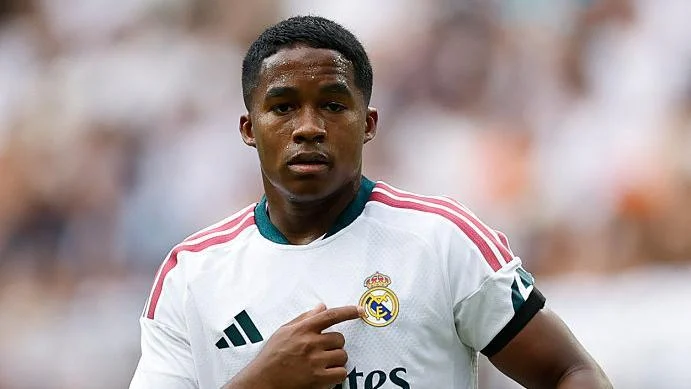
The future of Brazilian forward Endrick at Real Madrid has once again become a subject of intense debate within the European football landscape. Amid persistent rumors linking the young striker with a departure from the Santiago Bernabéu due to limited playing time, Fenerbahçe manager José Mourinho has stepped into the discourse with characteristic candor. The veteran Portuguese tactician has offered a robust defense of the player’s value to the reigning Spanish and European champions, asserting unequivocally that the club still holds an urgent requirement for the forward’s unique technical profile, despite his current difficulties in securing a regular spot in the starting lineup.
The conversation surrounding Endrick’s immediate career trajectory highlights the delicate balance elite football clubs must maintain between managing world-class depth and satisfying the developmental ambitions of rising global talents. As the winter transfer window approaches, stakeholders across the continent are closely monitoring the situation, weighing the player’s undeniable potential against the logistical hurdles of breaking into one of the most competitive attacking units in the history of the sport.
Main Facts and Current Status
At the heart of the ongoing speculation is Endrick’s current squad status under the tactical setup at Real Madrid. Having arrived in the Spanish capital with immense fanfare as one of South America’s most prodigious talents, the 20-year-old forward has found his path to the starting eleven heavily obstructed. The primary obstacle remains the presence of French superstar Kylian Mbappé, who has largely monopolized the central attacking role, rendering consistent minutes difficult to come by for the Brazilian youngster.
Consequently, Endrick has spent the majority of the current campaign serving as a high-profile option from the substitutes’ bench. While his talent is universally acknowledged by coaching staff and pundits alike, the scarcity of competitive minutes has inevitably fueled speculation regarding a potential exit. Reports from various sports outlets across Europe have suggested that intermediaries and rival clubs are actively exploring avenues to secure his services, either on a temporary loan basis or through a permanent transfer, to guarantee the player the developmental continuity essential at his formative age.
Chronology of Endrick’s European Journey
To fully understand the current friction surrounding Endrick’s career, it is necessary to examine the timeline of his transition to European football. The young forward initially signed a pre-agreement to join Real Madrid from Brazilian powerhouse Palmeiras while still a minor, officially making the transatlantic move upon reaching his eighteenth birthday. Expectations were astronomical, driven by his prolific goalscoring exploits in the Campeonato Brasileiro and his breakthrough performances for the Brazilian national team.
During his initial months in Madrid, Endrick demonstrated flashes of his prodigious talent, notably scoring crucial goals in brief substitute appearances in both La Liga and the UEFA Champions League. However, the sheer density of world-class attacking talent within the squad soon necessitated a strategic reassessment of his immediate development.
To ensure he maintained competitive match sharpness, the club sanctioned a temporary loan move during the previous season, sending him to French Ligue 1 side Lyon. That spell in France proved to be a vital proving ground for the youngster. Over the course of the campaign, Endrick accumulated 21 appearances for Lyon across all competitions, finding the back of the net on eight occasions. This productive stint not only validated his ability to adapt to the physical and tactical demands of European top-flight football but also elevated his market value and desirability among sporting directors across the continent. Upon his return to Real Madrid ahead of the current season, it was anticipated by many external observers that his French expedition would pave the way for a more prominent role within Carlo Ancelotti’s squad. Instead, tactical configurations and the arrival of further marquee names have conspired to keep him on the periphery, reigniting the cycle of transfer rumors.
José Mourinho’s Stance and Official Responses
It was against this backdrop of mounting speculation that José Mourinho addressed the media, offering a perspective that cuts through the noise of the rumor mill. Speaking to the esteemed Italian sports publication La Gazzetta dello Sport, the former Real Madrid manager did not mince words regarding the club’s current priorities and his personal assessment of the Brazilian forward.
"Begini, bagi saya, situasinya sangat jelas. Bagi saya, Real Madrid jauh lebih penting daripada Endrick," Mourinho stated, framing the debate from the institutional perspective of the club’s overarching ambitions. He quickly followed with an endorsement of the player’s character and professional utility, adding, "I deeply care about Endrick, I care about him very much, he is a fantastic guy. Real Madrid needs him, the Real Madrid coach needs him."
Mourinho elaborated on the dissemination of transfer rumors, pointing the finger at the multifaceted ecosystem of modern football media, agents, and interested clubs. According to the Portuguese coach, the narrative of an imminent departure is largely being manufactured externally rather than driven by sporting necessities within Valdebebas. "That is the answer. You already know it, those who write about it already know it, the agents know it, the clubs that send news to the newspapers also know it. You already know my answer," he remarked.
Crucially, however, Mourinho acknowledged the ultimate authority within the club’s hierarchy, conceding that the final decision regarding Endrick’s future rests not with the coaching staff, but with the executive board. "However, if the top management at Real Madrid, which means my superiors, decide to do something different, in modern football, you have to respect it," he concluded. While Mourinho’s current managerial post lies elsewhere, his deep historical ties to Real Madrid and his acute understanding of elite club dynamics lend significant weight to his analysis of how the Spanish giants operate under pressure.
Supporting Data and Squad Dynamics
An objective analysis of Real Madrid’s squad composition clarifies the structural challenges Endrick faces. Modern elite clubs competing across multiple fronts—including domestic leagues, domestic cups, and an expanded UEFA Champions League format—require immense squad depth. Injuries, fatigue, and tactical variations mean that secondary options frequently transition into key contributors over the course of a gruelling nine-month season.
Statistical indicators from Endrick’s brief appearances highlight an exceptional conversion rate relative to the minutes played. His efficiency in front of goal underscores why coaching staff are reluctant to sanction a permanent departure. Yet, professional footballers at the dawn of their international careers require sustained blocks of starting appearances to refine their positional awareness, tactical discipline, and physical endurance. The dilemma for Real Madrid’s sporting directors lies in balancing the immediate insurance policy that Endrick provides against the risk of stunting the growth of a player widely viewed as a cornerstone of the club’s long-term future.
Market Context and Broader Implications
The situation involving Endrick reflects a broader macro-trend in contemporary football economics. Elite clubs increasingly hoard young global talent, securing signatures before players reach peak valuation, but this practice frequently leads to developmental bottlenecks. The market for elite number nines is notoriously scarce, driving clubs to invest heavily in teenage prospects from South America and Eastern Europe.
For Real Madrid, the management of Endrick serves as a litmus test for their talent-retention and player-development strategies. A failure to provide adequate pathways to the first team for such prized assets can lead to player dissatisfaction, strained relationships with representation agencies, and potential demands for transfers that could diminish the club’s long-term leverage. Conversely, successfully integrating a player of Endrick’s caliber validates the club’s scouting network and reinforces its status as the ultimate destination for the world’s finest young athletes.
As the weeks progress toward the opening of the transfer window, the rhetoric from managers like Mourinho and the internal deliberations of the Real Madrid executive committee will be scrutinized intensely. Whether Endrick remains in the Spanish capital to fight for his place or seeks temporary sanctuary elsewhere to secure vital minutes, his next career move will carry significant ramifications for both his personal trajectory and the strategic planning of one of the world’s most scrutinized sporting institutions.