Socio Today
In a monumental achievement for Indonesian sport, archer Nurisa Dian Ashrifah has secured the nation’s first-ever gold medal in archery at the Asian Games. Competing at the 2026 Aichi-Nagoya Asian Games in Japan, Nurisa delivered a masterclass in focus and precision, clinching the top spot in the women’s individual compound archery event held at the Okazaki Chuo Sogo Park Multipurpose grounds on Thursday, October 1, 2026. This victory represents a significant milestone, marking the first time in the history of Indonesia’s participation in the quadrennial multi-sport event that an archer has stood at the top of the podium.

The final match against the formidable Filipina representative, Amaya Amparo Cojuangco, was a high-stakes encounter that tested the mental fortitude of both athletes. In a contest characterized by narrow margins, Nurisa maintained her composure throughout the rounds. The drama culminated in the final set, where Nurisa executed a perfect shot, landing her arrow squarely in the 10-point ring. This decisive action secured a 139-137 victory, cementing her place in Indonesian sporting history and triggering celebrations among the national contingent in Aichi.
Historical Context and Legacy
The road to this gold medal has been long and arduous for the Indonesian archery program. For decades, Indonesian archers have hovered near the pinnacle of success without quite reaching the summit. Prior to Nurisa’s triumph, the nation’s best showings in archery at the Asian Games included a silver medal for the men’s recurve team in 1982, a silver for the women’s recurve team in 1994, and an individual silver for recurve specialist Diananda Choirunisa during the 2018 Asian Games.

By breaking this multi-decade drought, Nurisa has not only elevated her own career but has also redefined the expectations for the sport in Indonesia. Her performance underscores the effectiveness of recent investments in specialized compound archery training, a discipline that requires distinct technical skills and equipment calibration compared to the more traditional recurve archery. Industry experts suggest that this win will likely serve as a catalyst for increased government funding and grassroots development programs for the compound discipline across the archipelago.
The Path to Victory: A Chronology
The competition at the Okazaki Chuo Sogo Park was intense from the outset. Nurisa entered the tournament as a focused contender, having spent months in high-altitude training camps in preparation for the specific climate and wind conditions of Aichi-Nagoya.

On the day of the final, the meteorological conditions were reported to be challenging, with gusting winds that forced athletes to make micro-adjustments in their aim. In the preliminary rounds, Nurisa navigated a competitive field, showcasing consistency in her arrow grouping. Her semifinal victory was particularly notable for the tactical discipline she displayed, refusing to be rattled by the pace of her opponents.
The gold medal match was a tactical chess game played with bows. By the third end, the score remained neck-and-neck, with neither archer willing to concede ground. As they entered the final end, the pressure reached a fever pitch. Cojuangco, an experienced campaigner, applied pressure with a sequence of strong scores. However, Nurisa’s ability to remain within her process—blocking out the surrounding noise and the weight of national expectation—allowed her to deliver the final 10-point shot that ultimately tilted the match in her favor.

Impact on the Medal Tally
Nurisa Dian Ashrifah’s gold medal is the fifth for the Indonesian delegation at the 2026 Aichi-Nagoya Asian Games, further strengthening the country’s standing in the regional medal table. The other gold medals for Indonesia have come from a diverse range of disciplines, highlighting the nation’s growing versatility in elite international sports.
The previous gold medalists include:

- The men’s badminton team, which showcased its continued dominance in the sport.
- The men’s doubles pair of Leo Carnando and Daniel Marthin, who outperformed regional rivals in a thrilling final.
- Rahmat Erwin Abdullah, who demonstrated world-class strength in the 75kg men’s weightlifting category.
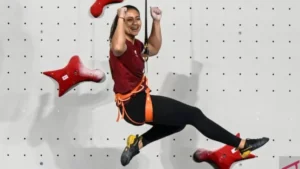
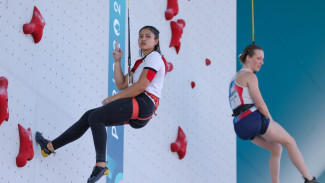
- Desak Made Rita Kusuma Dewi, who successfully defended her title in the women’s speed climbing event, cementing her status as a global powerhouse in the sport.
With these results, the Indonesian contingent is currently outpacing its performance targets for the games. Officials from the Indonesian National Sports Committee (KONI) have expressed pride in the athletes, noting that the diverse spread of gold medals across team sports, individual precision sports, and strength-based events reflects a holistic improvement in the national high-performance system.
Broader Implications for Indonesian Sport
The significance of this gold medal extends beyond the immediate excitement of the podium ceremony. In the professional sporting landscape, a gold medal in a technical event like compound archery provides substantial leverage for federations when negotiating sponsorships and facility access.
For the sport of archery in Indonesia, the victory is expected to boost participation numbers. Following the trend set by other successful Olympic and Asian Games sports, the "Nurisa Effect" is anticipated to drive a surge in interest among junior archers. Furthermore, the victory validates the coaching strategies employed by the national team, which have emphasized psychological training and data-driven performance analysis over the past three years.
As the games continue, the momentum from this victory is palpable. Indonesia still has several opportunities to climb further in the medal rankings. Among the highly anticipated events remaining are the esports final, where the national Mobile Legends: Bang Bang (MLBB) team faces a crucial matchup against Myanmar, and the men’s speed climbing event, which features the formidable duo of Veddriq Leonardo and Aditya Sri Syahrial.

Expert Analysis and Future Outlook
Sports analysts monitoring the 2026 Asian Games have noted that the level of competition in Aichi-Nagoya has reached new heights. The emergence of new talent from Southeast Asia in technical sports indicates a shift in the traditional power dynamics of the region, which were previously dominated by East Asian nations.
"Nurisa’s win is not an accident; it is the culmination of a deliberate strategy to diversify Indonesia’s medal sources," says one sports observer familiar with the regional circuit. "By investing in compound archery, they have found an area where technical discipline can overcome pure athletic volume. This is a blueprint for other emerging sports nations."

Looking ahead, the success of the Indonesian team in these games will be scrutinized as a precursor to their performance in the upcoming Olympic cycle. The ability to manage the mental pressure of a final, as demonstrated by Nurisa, is a prerequisite for success on the global stage. As the Indonesian public celebrates this historic achievement, the athletes remain focused on the remaining days of the competition, aiming to build upon this foundational success.
The story of the 2026 Asian Games will undoubtedly feature the name of Nurisa Dian Ashrifah prominently. Her poise under pressure and her technical precision have etched her name into the annals of Indonesian history. As the sun sets on the Okazaki Chuo Sogo Park, the Indonesian flag rises higher than ever before, signaling a new era of confidence and capability for the nation’s archery program. Whether this victory translates into further success in the coming years will depend on the continued support for the athletes and the maintenance of the high-performance infrastructure that enabled this breakthrough. For now, however, the nation can take pride in a job well done—a gold-standard performance that has finally broken the barrier.