Socio Today
Jakarta, Indonesia – In a significant move aimed at enhancing public service delivery and simplifying citizen access to essential documents, the Indonesian government has announced that a wide array of population administration services can now be processed without the previously mandatory introductory letters from neighborhood units (RT/RW) or sub-district offices (kelurahan). This policy, spearheaded by the Directorate General of Population and Civil Registration (Dukcapil) under the Ministry of Home Affairs, marks a pivotal step in Indonesia’s ongoing bureaucratic reform agenda, designed to cut red tape, accelerate processing times, and foster a more citizen-centric approach to governance across the vast archipelago.
The simplification targets key administrative processes that have historically required multiple layers of approval, often leading to delays, inefficiencies, and, at times, opportunities for unofficial fees. By largely eliminating the requirement for introductory letters, the government seeks to remove unnecessary bureaucratic hurdles, directly benefiting millions of Indonesians seeking to manage their civil registration affairs. This strategic adjustment aligns with broader national efforts to digitize public services and improve overall government accountability and transparency, reflecting a commitment to modernization in line with global best practices for administrative efficiency.
The Rationale Behind the Reform: Expediting Access and Enhancing Efficiency
Indonesia, with its immense population exceeding 270 million spread across thousands of islands, faces unique challenges in delivering consistent and efficient public services. The previous system, which often necessitated citizens obtaining multiple signed letters from local community leaders (RT/RW) before approaching the regional Population and Civil Registration Agency (Disdukcapil), was frequently cited as a major source of frustration. This multi-step process could consume significant time and resources for individuals, particularly those in remote areas or with limited mobility, or those needing to take time off work to navigate the administrative labyrinth.
The Ministry of Home Affairs and Dukcapil have consistently emphasized that the primary objective of this reform is to expedite public services and make it significantly easier for citizens to access critical population documents. The policy is rooted in the understanding that modern governance requires agile and responsive systems that prioritize citizen convenience. By streamlining these procedures, the government anticipates a reduction in processing times, a decrease in unofficial costs, and an overall improvement in the quality of public service experience. This move is a direct response to public demand for more efficient and less burdensome administrative processes, aiming to build greater trust between the government and its citizens.
Key Population Documents Now Exempt from Introductory Letters
The simplified procedure applies to a comprehensive list of crucial population administration documents, marking a broad shift in how these services are accessed. The change predominantly benefits individuals whose data is already integrated into the national population database.
-
Electronic National Identity Card (KTP-el): Citizens applying for a new KTP-el, conducting data recording (perekaman), or requesting changes to existing KTP-el information no longer need an introductory letter from their RT/RW. Applicants can now directly approach their local Disdukcapil office with the necessary supporting documents tailored to their specific service requirement. This direct access significantly reduces the initial steps involved in obtaining or updating this fundamental identification document, which is critical for almost all other civic activities.
-
Family Card (KK): The process for managing Family Cards, including changes in family member data, adding new family members (such as newborns), or updating specific data elements, can also be handled directly at the Disdukcapil. The elimination of the RT/RW letter for KK-related services is particularly impactful, as the Family Card serves as the foundational document linking individuals within a household and is often required for social welfare programs, school registrations, and other family-centric services.
-
Statement Letter for Change of Domicile (Surat Keterangan Pindah Domisili): Perhaps one of the most welcome changes, the process for residents moving to a new area (inter-regency, inter-provincial, or even within the same municipality) has been substantially simplified. Moving citizens are no longer required to obtain introductory letters from their RT/RW or kelurahan in their old or new domicile. Instead, they can directly submit their application to the Disdukcapil, providing their existing Family Card and completing the required forms for population transfer. This crucial simplification is explicitly guided by Presidential Regulation No. 96 of 2018 concerning Requirements and Procedures for Population Registration and Civil Registration, and Minister of Home Affairs Regulation No. 108 of 2019 on Technical Guidelines for Population Registration. These regulations form the legal bedrock for this significant administrative overhaul, reflecting a deliberate legislative effort to modernize population mobility processes.
-
Birth Certificate (Akta Kelahiran): The registration and issuance of birth certificates for newborns can now be directly processed through Dukcapil services. Required supporting documents typically include a birth certificate from a healthcare facility, the Family Card, and parents’ identification documents. The RT/RW introductory letter is no longer a primary requirement for individuals whose data is already captured within the national population administration system, making the vital step of officially registering a birth much smoother.
-
Death Certificate (Akta Kematian): Similar to birth certificates, the processing of death certificates is now a direct civil registration service available at the Disdukcapil. Applicants need to submit supporting documents as per prevailing regulations, such as a medical death certificate and the deceased’s identification documents. This simplification aims to ease the burden on grieving families by streamlining a necessary administrative process during a difficult time.
-
Child Identity Card (KIA): The creation of Child Identity Cards for minors also falls under the streamlined administrative services accessible directly through Disdukcapil. The requirements primarily involve family documents, and the RT/RW introductory letter is no longer needed, provided the child’s population data is already recorded in the system. The KIA is an important document that helps in identifying children and providing them access to various services.
Legal and Chronological Context: A Journey Towards Modern Governance
The policy to waive RT/RW introductory letters is not an isolated decision but rather the culmination of years of legislative and administrative reforms aimed at modernizing Indonesia’s population administration system. The foundation for these changes was largely laid with the enactment of Law No. 23 of 2006 on Population Administration, subsequently amended by Law No. 24 of 2013. These laws mandated a national population database, the issuance of a single National Identity Number (NIK) for every citizen, and the streamlining of various civil registration processes.
The specific regulations, Presidential Regulation No. 96 of 2018 and Minister of Home Affairs Regulation No. 108 of 2019, provided the crucial legal framework for implementing the simplified procedures, particularly concerning population movement and other civil registration acts. These regulations represented a clear directive from the central government to local authorities to reduce bureaucratic complexities. While the spirit of these regulations has been in place for a few years, Dukcapil’s recent reiteration and widespread public communication emphasize a renewed push for consistent and universal implementation across all regions. This ongoing effort reflects a gradual but steady progression towards a fully integrated and efficient e-government ecosystem, aiming to phase out outdated manual processes and reduce opportunities for discretion and potential malfeasance.
Official Statements and Expected Reactions
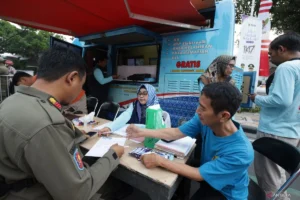
The Ministry of Home Affairs has consistently underscored that this simplification is an integral part of its broader strategy to enhance the quality of population administration services nationwide. Speaking on behalf of Dukcapil, officials have reiterated the government’s commitment to a "citizen-first" approach, emphasizing that the reforms are designed to make government services more accessible, transparent, and responsive to the needs of the populace. They encourage citizens to directly access Dukcapil services, either through physical counters at regional Disdukcapil offices or via the increasingly available digital platforms provided by local governments.
From the perspective of civil society organizations and public service advocates, this policy has been largely welcomed as a positive and long-overdue development. Many have consistently campaigned for reducing bureaucratic burdens, particularly those that disproportionately affect vulnerable populations or those with limited understanding of complex administrative procedures. While celebrating the move, these groups also emphasize the importance of consistent implementation across all regions, adequate public awareness campaigns, and robust digital infrastructure to ensure that no citizen is left behind. The expectation is that this policy will not only save citizens time and money but also enhance their trust in government institutions.
Challenges in Implementation and Digital Transformation Efforts
Despite the significant simplification, the Ministry of Home Affairs acknowledges that certain specific conditions may still necessitate an introductory letter from the RT/RW. This primarily applies to individuals who are entirely new to the population database, such as those without a registered National Identity Number (NIK) or who are not yet recorded in any Family Card. In such instances, the introductory letter serves as a crucial initial verification step to establish identity and residency before entry into the national system. Additionally, situations requiring special verification related to data accuracy or complex residency issues might also warrant local community leader involvement. These exceptions are crucial for maintaining the integrity of the population data system and preventing fraud.
To further accelerate the process and cater to a tech-savvy population, many regional governments across Indonesia have been actively developing and implementing online platforms for population administration services. These digital initiatives represent a forward-looking approach to public service delivery, minimizing the need for physical visits and offering greater convenience. For instance, the Provincial Government of DKI Jakarta has pioneered the "Alpukat Betawi" application, a comprehensive digital platform that allows residents to manage a wide range of population administration services from their smartphones or computers. This application, alongside physical service counters, exemplifies the dual approach of modernizing services while ensuring accessibility for all segments of society. Similar digital initiatives are being rolled out in other provinces and municipalities, gradually transforming the landscape of public administration.
Broader Implications and Future Outlook
The abolition of RT/RW introductory letters for most population administration services carries significant broader implications for governance, social equity, and economic development in Indonesia. By reducing the reliance on local intermediaries, the policy has the potential to:
- Reduce Corruption and Unofficial Fees: One of the persistent challenges in local bureaucracy has been the potential for unofficial payments or "facilitation fees" associated with obtaining various letters. By removing these mandatory steps, the policy aims to significantly curb such practices, leading to greater transparency and accountability.
- Enhance Data Accuracy and Integration: Streamlining the direct interface between citizens and Disdukcapil allows for more direct data input and verification, potentially improving the accuracy and completeness of the national population database. This enhanced data integrity is crucial for effective policy planning, resource allocation, and targeted social programs.
- Increase Citizen Inclusion: For marginalized communities, individuals with limited literacy, or those in remote areas, navigating complex bureaucratic processes can be a daunting task. This simplification can make essential services more accessible to these vulnerable groups, ensuring their fundamental rights to identity and civil registration are easily met.
- Shift the Role of RT/RW: While still vital for community cohesion and local information dissemination, the role of RT/RW leaders is gradually shifting from being gatekeepers of administrative access to becoming more focused on community development, social welfare, and local dispute resolution. This redefinition of roles can empower them to focus on core community-building activities.
- Boost Economic Efficiency: Time saved in administrative processes translates into increased productivity for individuals and businesses. A more efficient civil registration system contributes to an overall improved business environment and ease of living, indirectly supporting economic growth.
Looking ahead, this reform is expected to pave the way for further digitalization and integration of public services. The government’s vision is to create a seamless, interoperable system where citizens can access a multitude of services with minimal hassle, leveraging their unique National Identity Number (NIK) as the primary identifier. Continuous investment in digital infrastructure, cybersecurity, and public education campaigns will be critical to the sustained success of these reforms. While the journey towards a fully digitized and perfectly efficient bureaucracy is ongoing, the move to eliminate RT/RW introductory letters represents a decisive and positive stride towards a more responsive, transparent, and citizen-friendly public administration system in Indonesia.