Socio Today
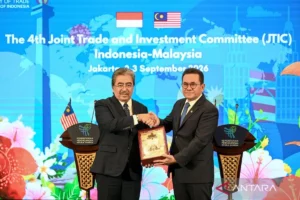
Bilateral cooperation stands as the bedrock of international relations, serving as the primary mechanism through which sovereign states navigate complex global challenges, pursue national interests, and foster mutual development. Defined fundamentally as a structured engagement between two parties, bilateralism transcends simple diplomatic pleasantries to encompass formal agreements, strategic partnerships, and deep-seated cooperation across sectors as diverse as macroeconomic policy, national security, education, and technological innovation. In an era of increasing geopolitical volatility, the ability of a nation to maintain robust, focused, and mutually beneficial bilateral ties remains a critical metric of its diplomatic efficacy.
The Indonesian Ministry of Foreign Affairs identifies bilateralism as the most direct instrument of statecraft. While multilateral frameworks—such as the United Nations, G20, or ASEAN—provide platforms for collective bargaining and norm-setting, bilateralism offers the agility required to tailor agreements to the specific needs of two partners. As of August 2025, Indonesia has solidified its standing on the world stage by establishing formal bilateral relations with 162 sovereign states and one special territory, reflecting a proactive "free and active" foreign policy designed to maximize economic and security dividends.
Defining the Mechanics of Bilateral Engagement
At its core, bilateralism is the diplomatic choreography performed between two states. Unlike multilateral arrangements, which often require reconciling the competing interests of dozens of nations, a bilateral partnership allows for the creation of precise, high-impact agreements. These are frequently formalized through various legal instruments, including Memoranda of Understanding (MoUs), legally binding treaties, and Strategic Partnership Agreements.
The structure of these relationships is rarely static. It often involves high-level institutionalized dialogue, such as Annual Leaders’ Dialogues, Joint Ministerial Commissions (JMC), and Senior Officials’ Meetings (SOM). These mechanisms ensure that agreements do not stagnate but instead evolve in response to shifting global realities, such as the transition to green energy, digital transformation, and emerging cybersecurity threats.
Strategic Objectives and Global Implications
The pursuit of bilateral ties is rarely driven by a single objective; rather, it is a multi-layered strategy intended to produce holistic national gains.
First, the reinforcement of diplomatic ties serves as a safety valve. When two nations maintain strong, transparent bilateral channels, they are better equipped to manage crises and prevent the escalation of misunderstandings. Second, the economic imperative is perhaps the most visible driver of bilateralism. Through bilateral trade agreements and investment treaties, nations can bypass regional gridlock to secure preferential access to markets, attract Foreign Direct Investment (FDI), and integrate into global supply chains.
Third, human capital development remains a pillar of these partnerships. Scholarship programs, academic exchanges, and vocational training initiatives funded through bilateral cooperation programs significantly boost the domestic capabilities of developing nations. Fourth, the transfer of technology acts as a force multiplier. By partnering with technologically advanced nations, emerging economies can leapfrog traditional development stages in sectors like telecommunications, renewable energy, and precision agriculture.
Finally, security and stability are the silent guarantors of these relationships. In an age of transnational crime, piracy, and terrorism, intelligence sharing and joint security drills between two nations provide a level of operational focus that broad-reaching multilateral security pacts often struggle to achieve.
Chronology and Case Studies in Practice
The evolution of Indonesia’s bilateral footprint provides a roadmap for how middle powers successfully navigate the international system. A significant example is the relationship between Indonesia and the Netherlands. Historically rooted in a complex colonial past, the modern bilateral relationship has been recalibrated toward a forward-looking agenda. Recent engagements have prioritized high-tech infrastructure, water management (a sector where the Netherlands holds world-class expertise), and the transition toward a circular economy.
Similarly, Indonesia’s relationship with Papua New Guinea (PNG) serves as a model for regional stability. The implementation of the Annual Leaders’ Dialogue since 2022 has transformed a traditionally quiet border relationship into a vibrant, multi-dimensional partnership. By focusing on cross-border trade, public health initiatives, and infrastructure connectivity, the two nations have successfully mitigated risks of border friction while fostering economic development in underdeveloped regions.
The timeline of these engagements typically follows a set trajectory:
- Diplomatic Recognition and Initial Dialogue: Establishing a baseline for communication.
- Framework Building: The signing of an overarching Memorandum of Understanding (MoU) to define areas of cooperation.
- Institutionalization: The creation of permanent committees or secretariats (e.g., JMC) to oversee progress.
- Implementation and Review: Regular, high-level summits to adjust goals and resolve bottlenecks.
Bilateral vs. Multilateral: A Complementary Approach
A common misconception in international relations is that bilateralism and multilateralism are mutually exclusive. In practice, they are highly complementary. A state may engage in a multilateral forum to advocate for global standards, while simultaneously pursuing bilateral deals to implement those standards with key partners.
For instance, while Indonesia is a key member of ASEAN, it leverages its bilateral ties with individual member states to accelerate specific initiatives—such as the regional digital payment interoperability project—which might otherwise be slowed down by the consensus-based requirements of the larger ASEAN bloc. Similarly, the growing influence of the BRICS (Brazil, Russia, India, China, and South Africa) bloc does not preclude members from maintaining strong bilateral agendas with non-members, such as the US or the EU. The objective is to maintain a diverse portfolio of diplomatic assets.
Data-Driven Analysis of Global Trends
Current trends indicate an increasing preference for "minilateralism"—a subset of bilateralism that involves small, flexible groupings of states. However, the traditional bilateral model remains the gold standard for substantive, deep-tier cooperation.
As of late 2025, global data suggests a shift in the focus of bilateral agreements. Whereas the decade prior was dominated by trade liberalization and tariff reduction, current agreements are increasingly centered on:
- Energy Transition: Partnerships focused on the supply of critical minerals and the development of battery manufacturing ecosystems.
- Cybersecurity: Agreements aimed at protecting national digital infrastructure from state-sponsored and criminal hacking groups.
- Food Security: Following global supply chain disruptions, nations are increasingly signing bilateral agricultural cooperation agreements to ensure stable food imports and share climate-resilient farming techniques.
Official Perspectives and Future Outlook
The Indonesian Ministry of Foreign Affairs, through various official statements, has emphasized that bilateralism is not merely a diplomatic routine but a vital component of the "National Interest First" strategy. By maintaining a network of 162 bilateral partners, Indonesia effectively de-risks its foreign policy. If one partnership faces a temporary setback, the stability provided by the broader network ensures that the national economy and security apparatus remain insulated from localized shocks.
Furthermore, reactions from regional observers suggest that Indonesia’s balanced approach is viewed as a stabilizing force in the Indo-Pacific. By refusing to align exclusively with any single power bloc, Indonesia has become a preferred partner for various nations looking to engage in trade and technology transfers without the strings of "bloc politics."
Implications for the Future
As the international system continues to evolve toward a more fragmented, multipolar structure, the utility of bilateralism will only increase. Nations that can effectively manage a large portfolio of bilateral relationships will be better positioned to navigate future shocks.
For the reader, it is essential to recognize that behind every high-level summit or photo-op between leaders lies a complex machinery of civil servants, trade negotiators, and academic researchers working to operationalize these ties. The success of these relationships is measured not by the rhetoric of the agreements, but by the tangible outcomes: the number of jobs created, the quality of infrastructure built, and the relative peace maintained across borders.
In conclusion, bilateral cooperation remains the most effective tool for states to achieve specific, actionable goals. It is a pragmatic, flexible, and essential component of modern diplomacy that allows nations to tailor their foreign policy to their unique national requirements. Whether it is through the transfer of green technology, the management of shared resources, or the strengthening of trade ties, bilateralism continues to be the primary engine of international progress in the 21st century. As Indonesia continues to expand its diplomatic footprint, the strategic depth of these 162 bilateral relationships will undoubtedly serve as a critical pillar of its continued emergence as a global player.