Socio Today
In a significant stride toward bridging the energy and infrastructure gap in rural Indonesia, Pertamina New & Renewable Energy (Pertamina NRE) has officially inaugurated a comprehensive sustainability project at SDN 091686 Gunung Bayu, located in the Bosar Maligas District of Simalungun, North Sumatra. The initiative, executed under the company’s flagship Sekolah Energi Berdikari (SEB) program, represents a strategic integration of renewable energy technology with essential public health infrastructure, effectively resolving chronic utility challenges that have hindered the school for over a decade.
The project, which was formally handed over to the school administration on Thursday, September 24, introduces a 2.8 kWp Photovoltaic (PV) solar power system, a high-capacity 5 kWh battery storage solution, a deep-well water pump system, and a complete renovation of the school’s sanitation facilities. This intervention marks a turning point for 85 students and 15 faculty members who had previously struggled with the absence of reliable electricity and clean water for nearly 15 years.
A Chronology of Institutional Neglect and Renewed Hope
The narrative of SDN 091686 Gunung Bayu is reflective of many rural educational institutions in remote regions of Indonesia that face systemic infrastructure deficits. For the past decade and a half, the school operated under severe resource constraints, lacking basic grid connectivity and a dedicated water source.
The timeline of the intervention began with a site assessment conducted by Pertamina NRE teams to identify critical bottlenecks in the school’s operational capacity. Following the identification of these gaps, the implementation phase focused on an "integrated solution" approach. Rather than addressing energy and water as siloed problems, the technical team synchronized the installation of the solar array to power the borehole pump, ensuring that the school’s water security is now directly tied to renewable energy generation.
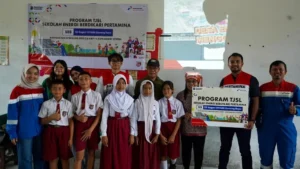
By September 2024, the hardware installation was completed, culminating in the symbolic handover ceremony between Arief Mulizar, Senior Officer at Pertamina NRE, and Jelita Tampubolon, the principal of SDN 091686. This event served not only as a delivery of physical assets but as a formal commitment to the long-term maintenance of the facility through capacity-building workshops.
Technical Specifications and Environmental Impact
The technical deployment at SDN 091686 is designed for off-grid resilience. The 2.8 kWp solar PV system, complemented by a 5 kWh battery bank, is calibrated to support both the administrative lighting needs of the school and the high-draw requirements of the borehole water pump.
The environmental and economic implications of this project are quantifiable and significant. Based on projections released by Pertamina NRE, the solar installation is expected to yield an annual cost efficiency of approximately IDR 5.182 million. In terms of environmental sustainability, the shift from potential fossil-fuel-based generators or, in this case, the transition to an electrified state from a state of total energy deficiency, contributes to a projected reduction in carbon emissions of roughly 3,192 kg CO2e per year.
These figures illustrate the "dual-benefit" model that Pertamina NRE seeks to replicate across its national portfolio. By lowering operational overheads, the school can reallocate its limited budget toward educational materials, teacher development, or infrastructure maintenance, thereby creating a cycle of reinvestment enabled by energy savings.
Perspectives from Stakeholders and Local Governance
The response from the local educational community has been one of profound relief and optimism. Principal Jelita Tampubolon highlighted that the lack of water and electricity had historically rendered the school’s toilets non-functional, creating significant hygiene risks and discouraging student attendance.
"The impact of this assistance goes beyond the physical installation of panels and pipes," Tampubolon stated during the ceremony. "It is about restoring the dignity of the learning environment. For 15 years, our students lacked basic hygiene facilities. Today, the operationalization of the borehole and the renovation of the toilets mean we can finally provide a sanitary and welcoming environment for our children."
Ismail Hutasulut, the Head of Gunung Bayu Village, echoed these sentiments, framing the project as a model for future public-private partnerships. He emphasized that while the aid is centered on a single school, the ripple effect on the surrounding community’s morale is substantial. Hutasulut expressed a formal request for the expansion of such programs, suggesting that the success of the SEB initiative at SDN 091686 could serve as a template for other institutions in the Simalungun Regency that continue to face similar infrastructure barriers.
Strategic Objectives of the Sekolah Energi Berdikari (SEB) Program
The SEB program, overseen by Susanto August Satria, Manager of Corporate Communication & Stakeholder Relations at Pertamina NRE, is a cornerstone of the company’s broader Environmental, Social, and Governance (ESG) framework. The core philosophy of the program is to move beyond "philanthropy" toward "empowerment."
"We are not merely donating infrastructure; we are building capacity," explained Satria. "Through our educational sessions on off-grid solar PV operation and maintenance, we are training the school staff to become the stewards of their own energy future. Sustainability is not just about the technology—it is about the knowledge and community ownership required to keep that technology functioning for decades."
The curriculum provided by Pertamina NRE during the installation process included hands-on training for teachers and local village representatives on how to monitor battery health, optimize energy usage during peak sunlight hours, and perform basic troubleshooting on the solar inverters. This pedagogical component is crucial, as many rural electrification projects in developing nations fail due to a lack of technical maintenance support after the original project managers depart.
Implications for National Rural Development
The intervention at SDN 091686 is a micro-example of the macro-challenges facing Indonesia’s energy transition. While the government of Indonesia has set ambitious targets for Net Zero Emissions (NZE) by 2060, the reality on the ground—particularly in rural Sumatra—requires decentralized energy solutions.
The integration of renewable energy with water and sanitation (WASH) is particularly noteworthy. By leveraging solar power to provide clean water, Pertamina NRE is tackling two of the United Nations Sustainable Development Goals (SDGs) simultaneously: SDG 7 (Affordable and Clean Energy) and SDG 6 (Clean Water and Sanitation).
This approach offers several strategic advantages:
- Resilience: Solar-powered pumps provide a reliable, cost-effective water supply that is not susceptible to the intermittent nature of regional electricity grids.
- Cost-Efficiency: By eliminating the reliance on grid-connected electricity or high-cost water delivery services, the school gains long-term financial stability.
- Capacity Building: The focus on local maintenance ensures that the community is not dependent on external service providers for minor repairs.
As Indonesia continues to navigate the complexities of energy equity, the success of the SEB program at SDN 091686 Gunung Bayu provides a clear blueprint for how corporations can contribute to regional development. By aligning ESG objectives with the tangible, daily needs of remote educational facilities, Pertamina NRE is demonstrating that the energy transition is not merely a high-level policy concern, but a practical tool for improving the quality of life in the nation’s most isolated classrooms.
Looking forward, the scalability of this model remains the primary indicator of its long-term success. With dozens of schools in the Simalungun Regency and across North Sumatra still struggling with similar infrastructure gaps, the expectation from local authorities is that this project will serve as the first of many. As the energy landscape continues to evolve, the integration of renewables into the social infrastructure of rural Indonesia will likely remain a critical driver of the nation’s socio-economic progress.