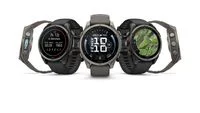
The landscape of professional-grade wearable technology underwent a significant shift on Tuesday, October 27, as Garmin officially introduced its latest flagship lineup, the Fenix 9 and Fenix 9 Pro, to the Indonesian market. Positioned as the pinnacle of multisport GPS smartwatches, the new series arrives with a suite of advancements aimed at high-performance athletes, mountaineers, and fitness enthusiasts who demand extreme reliability in the most challenging environments. With a starting price point of approximately IDR 18 million, the series signifies Garmin’s continued commitment to integrating aerospace-grade materials with sophisticated biometrics and navigation software.
A Legacy of Exploration and Technical Evolution
The Fenix series has long been considered the gold standard for outdoor multisport watches. Since the inception of the line, Garmin has systematically improved the balance between rugged durability and aesthetic sophistication. The launch of the Fenix 9 and 9 Pro represents the culmination of years of iterative development, responding to the growing demand for watches that can perform as well in a boardroom as they do on a summit at 5,000 meters.
Historically, Garmin has focused on incremental improvements in sensor accuracy and battery longevity. However, this iteration marks a departure by focusing heavily on display technology, chassis weight-to-strength ratios, and internal processing power. The introduction of titanium casing in the Pro models—a first for this specific tier—underscores the company’s focus on reducing physical fatigue during long-duration endurance events.
Architectural and Display Innovations
The most striking visual update in the Fenix 9 Pro series is the integration of an AMOLED display capable of reaching 3,000 nits of peak brightness. This level of luminosity ensures that data remains readable even under the direct, harsh glare of the midday sun at high altitudes. The 51mm variant features a 1.5-inch display, which Garmin asserts is the largest in the history of the Fenix line. By utilizing thinner bezel architecture, the engineers have managed to increase the screen-to-body ratio by 15 percent without necessitating an increase in the physical diameter of the watch casing.
Furthermore, the integration of a specialized LED flashlight—featuring a green light mode—addresses a common pain point for night-time trekkers and runners. The green light is specifically engineered to preserve the user’s natural night vision, a feature heavily favored by professional tactical operators and serious alpinists. This attention to detail highlights the company’s shift from generic fitness tracking toward specialized mission-critical equipment.
Performance Metrics and Advanced Training Analytics
Beyond the physical hardware, the Fenix 9 and 9 Pro series introduce a sophisticated suite of performance analytics. The "Stamina Tracking" suite, comprising stamina zones and stamina curves, provides users with real-time data on their remaining physical exertion capacity. This is derived from a complex analysis of the user’s long-term fitness history, VO2 Max, and instantaneous heart rate variability.
The rowing and rucking modules have also received substantial updates. For rowing enthusiasts, the inclusion of VO2 Max metrics and power curve analysis allows for a more granular breakdown of stroke efficiency. For those involved in rucking—a growing fitness trend—the watch now allows users to input specific pack weights, adjusting the caloric burn calculations and strain intensity metrics accordingly. This level of customization ensures that the data provided is actionable rather than purely descriptive.
Connectivity and Safety in Remote Environments
The Fenix 9 series places a heavy emphasis on safety and connectivity, acknowledging that its users often operate in areas where cellular coverage is intermittent or non-existent. The introduction of LiveTrack Notifications enables friends, family, or coaches to monitor an athlete’s progress in real-time, providing peace of mind during solo excursions.
Complementing this is the Garmin Locate feature, which integrates with the Garmin Messenger app to share precise geographic coordinates. When paired with the watch’s onboard multi-band GPS and SatIQ technology—which dynamically selects the best GPS mode to balance battery life and accuracy—the device serves as a redundant safety tool. The internal 64GB storage, coupled with a 50 percent increase in RAM over previous models, allows for high-fidelity topographic maps to be rendered and panned 30 percent faster than previous generations. This fluidity in navigation is critical when navigating complex terrain where every second of orientation matters.
Official Statements from Garmin Leadership
During the launch event, Sky Chen, Regional Director of Garmin Southeast Asia, emphasized that these devices are not merely luxury accessories but essential tools for high-stakes environments. "Fenix 9 and Fenix 9 Pro are designed for those who refuse to accept limits," Chen stated. "We have listened to the feedback from our professional athlete community to create a device that allows them to train with more precision and explore further into the unknown with confidence."
The strategic release of this product in Indonesia reflects the country’s burgeoning interest in professional-grade outdoor sports. With the rise of local ultra-marathon events and competitive mountaineering, the market for high-end wearables has matured significantly, moving away from entry-level fitness trackers toward devices that offer deep, actionable performance data.
Durability and Technical Specifications
The structural integrity of the Fenix 9 series remains a core selling point. With a 10 ATM rating, the devices are engineered to withstand pressures equivalent to a depth of 100 meters, making them suitable for high-speed water sports and scuba diving. The use of Sapphire Crystal across the series provides industry-leading scratch resistance, essential for users who frequently navigate rocky, abrasive environments.
The battery efficiency, particularly in the Solar variants, remains the benchmark for the industry. The 51mm Fenix 9 Pro Solar can achieve an unprecedented 51 days of use in smartwatch mode, provided the user utilizes the solar charging capabilities effectively. This battery performance effectively eliminates "range anxiety" for athletes participating in multi-day expedition races or thru-hikes.
Market Implications and Competitive Landscape
The launch of the Fenix 9 series positions Garmin to maintain its dominance in the premium outdoor smartwatch sector. While competitors continue to iterate on general-purpose smartwatches, Garmin’s decision to double down on specialized metrics—such as the aforementioned rucking load adjustments and stamina curves—solidifies its niche.
From an economic perspective, the IDR 18 million price point positions the watch as a high-tier investment. However, for the target demographic of professional athletes and dedicated adventurers, the cost is justified by the reduction in the need for secondary devices, such as handheld GPS units or separate, specialized training monitors. The consolidation of navigation, biometrics, and communication into a single, wrist-mounted unit represents a significant leap in wearable efficiency.
Looking Ahead: The Future of Biometric Monitoring
The integration of advanced sensors—including a barometric altimeter, gyroscope, thermometer, and heart rate monitor—positions the Fenix 9 as a central hub for personal health data. As the software continues to evolve, the potential for integration with third-party coaching platforms and medical-grade diagnostics is immense. The current release is not just a hardware upgrade; it is a platform expansion that will likely see continued software updates, further enhancing the utility of the device over its product lifecycle.
In conclusion, the Garmin Fenix 9 and Fenix 9 Pro serve as a testament to the company’s engineering prowess. By balancing the demands of extreme durability with the requirement for precise, real-time data, Garmin has provided a comprehensive solution for the modern adventurer. As these devices begin to populate the wrists of the Indonesian athletic community, their performance in the field will be the ultimate test of their advertised capabilities. For now, the series stands as a definitive marker of where high-end sports technology currently resides.