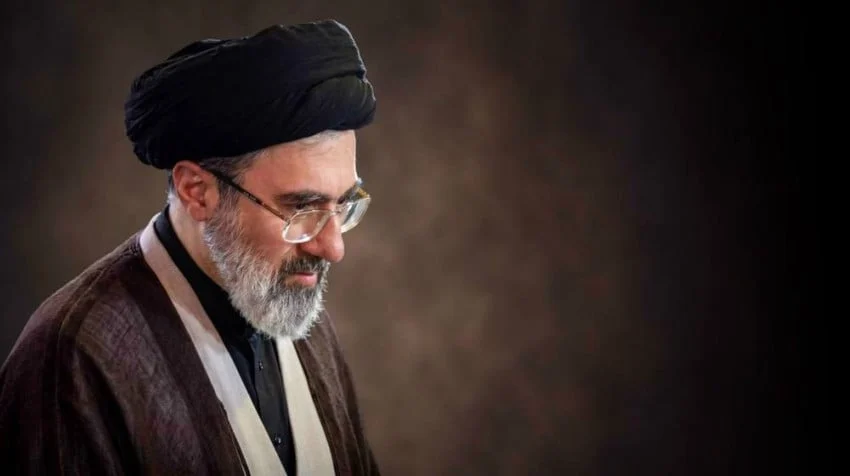
TEHRAN — In a sweeping address that outlines a transformative geopolitical and domestic roadmap, Ayatollah Seyyed Mojtaba Khamenei has issued a compelling call to action for the Islamic Republic of Iran, urging the nation’s scientific, academic, and athletic elites to shatter conventional barriers and position Iran as a preeminent global superpower. The comprehensive vision, articulated during a high-profile cultural and national observance coinciding with the anniversary of the martyrdom of Lady Fatimah Zahra, establishes a deliberate strategy centered on intellectual dominance, technological self-reliance, and the reshaping of the global order.
Addressing a distinguished gathering of Iran’s top-tier scientific medalists, academic achievers, and international athletic champions, Ayatollah Khamenei underscored the vital nexus between intellectual capital and national sovereignty. The event served not merely as a celebration of localized achievements, but as a formal unveiling of a strategic doctrine aimed at shifting the epicenter of global knowledge production toward Tehran. By harnessing the collective potential of Iran’s youth and intellectual diaspora, the leadership seeks to cement the country’s status as an undeniable technological and geopolitical heavyweight on the international stage.
The timing of the address is particularly significant, coming amid heightened geopolitical friction in the Middle East and ongoing economic pressures stemming from international sanctions. By pivoting the national narrative toward scientific breakthroughs, technological innovation, and athletic excellence, the Iranian leadership is projecting an image of resilience, ambition, and forward-looking strategic planning designed to resonate both domestically and across the broader Global South.
The Strategic Foundation: Defining the True Elite
At the core of Ayatollah Khamenei’s roadmap is a redefined concept of societal leadership and elite responsibility. In his address, he challenged contemporary notions of privilege associated with high intelligence and academic aptitude, arguing that true elitism is fundamentally rooted in public service and collective advancement rather than individual distinction.
"The true elite are not those who—merely because of their extraordinary talent and intelligence—consider themselves more privileged than others, or who think solely of transient personal desires," Khamenei stated. "An elite is a figure who possesses a profound commitment to developing their capabilities, views themselves as a useful member of society, and utilizes their talent and potential for the progress of both themselves and their community."
This philosophical framing is designed to mobilize Iran’s highly educated youth away from brain-drain tendencies—a persistent challenge for the nation over the past several decades—and channel their intellectual output directly into solving tangible domestic and national security challenges. By emphasizing that knowledge must be transformable into practical solutions, the leadership is fostering an ecosystem where academic research is inextricably linked to state-level industrial, medical, and technological autonomy.
Areas of Scientific Focus and Technological Sovereignty
Iran’s strategic push toward superpower status is not merely rhetorical; it is backed by measurable advancements in high-technology sectors that have steadily developed despite decades of comprehensive economic and trade restrictions. Ayatollah Khamenei pointed directly to several advanced scientific domains where Iranian researchers have made significant inroads, transforming theoretical science into applied industrial capabilities.
Key sectors highlighted in the strategic framework include:
- Stem Cell Research and Biotechnology: Iran has consistently maintained a regional leadership position in regenerative medicine, cloning technologies, and stem cell applications, driven by institutions such as the Royan Institute.
- Nanotechnology: Ranked consistently among the top global producers of nanotechnology research and commercial applications, Iran has integrated nano-materials into textiles, construction, medicine, and environmental remediation.
- Aerospace and Defense Technology: Despite stringent arms embargoes, the country has developed a robust indigenous aerospace sector, capable of designing, manufacturing, and launching domestic satellites into orbit utilizing homegrown carrier rockets.
- Nuclear Science and Energy: Iran’s civilian nuclear program, encompassing uranium enrichment, radioisotope production for medical diagnostics, and heavy-water technology, remains a cornerstone of its technological self-sufficiency narrative.
- Artificial Intelligence and Humanities: Recognizing the paradigm-shifting nature of modern computing, the state has prioritized AI research, advanced mathematics, and computational sciences alongside targeted developments in the humanities.
The integration of these disparate fields forms a cohesive infrastructure designed to insulate the Iranian economy from external shocks while projecting hard and soft power globally. By demonstrating competence across cutting-edge scientific disciplines, Tehran aims to alter the traditional dependency models that have historically bound developing nations to Western or Eastern technological hubs.
The Role of Athletics and Soft Power
Beyond the laboratory and the university lecture hall, Ayatollah Khamenei’s vision assigns a critical role to Iran’s international athletes in projecting national vitality and cultural values onto the world stage. The leadership specifically lauded the achievements of Iranian competitors in global science Olympiads—spanning astronomy, mathematics, physics, chemistry, biology, computer science, and AI—while reserving high praise for the nation’s sports delegation.
Significantly, the address highlighted the performance of female Iranian athletes, emphasizing their role in projecting an image of capability, strength, and cultural identity internationally. By excelling in global sporting arenas while adhering to traditional Islamic dress codes, female athletes are framed as cultural ambassadors who challenge Western media narratives regarding the status and agency of women in contemporary Iranian society.
This dual-track approach—combining hard scientific output with soft power projection through sports and cultural diplomacy—forms the backbone of Iran’s strategy to cultivate favorable public opinion across the Islamic world and among non-aligned nations.
Chronology of Iran’s Technological and Scientific Drive
To understand the weight of Mojtaba Khamenei’s recent pronouncements, it is necessary to examine the historical trajectory of Iran’s science and technology policies over the past four decades:
- Post-Revolutionary Era (1979–1990s): Following the Islamic Revolution, Iran faced severe brain drain and a desperate need to rebuild its higher education infrastructure. The government initiated massive expansions of universities, leading to a dramatic increase in literacy rates and higher education enrollment, particularly among women.
- The Biotechnology and Nano Boom (2000–2010): Recognizing the limitations of an oil-dependent economy, the Iranian government established the Iran Nanotechnology Innovation Council (INIC) and prioritized biotech investments. During this decade, Iran’s scientific publication output grew at one of the fastest rates in the world, frequently outpacing regional competitors.
- Aerospace and Nuclear Milestones (2008–2015): Iran successfully launched its first domestically built satellite, Omid, into orbit in 2009 using the Safir launch vehicle, entering the elite club of space-faring nations. Concurrently, advancements in nuclear technology led to major diplomatic confrontations, culminating in the 2015 Joint Comprehensive Plan of Action (JCPOA).
- The Post-Sanctions Resilience Phase (2018–Present): Following the United States’ withdrawal from the JCPOA and the reimposition of maximum-pressure sanctions, Iran accelerated its policy of a "Resistance Economy." This period saw increased reliance on domestic knowledge-based companies, resulting in significant breakthroughs in medical equipment manufacturing, pharmaceutical self-sufficiency, and advanced drone and missile technology.
Regional and International Implications
The articulation of a roadmap toward superpower status by a central figure like Mojtaba Khamenei carries profound implications for regional geopolitics in the Middle East. As regional dynamics shift toward multipolarity—marked by the expansion of BRICS, the normalization of diplomatic ties across West Asia, and the relative decline of unipolar Western hegemony—Iran is positioning itself as a central node in an alternative technological and economic network.
Analysts note that Tehran’s emphasis on technological self-reliance is designed to reassure domestic constituencies while signaling to regional adversaries and international partners that economic sanctions have failed to cripple the country’s intellectual infrastructure. By fostering deep-tech capabilities in AI, aerospace, and biotechnology, Iran seeks to establish asymmetric deterrence capabilities that extend far beyond conventional military hardware.
Furthermore, the focus on capturing the global center of knowledge production aligns with broader civilizational discourses prevalent in Iranian political thought, which seek to revive the historical Golden Age of Islamic science through modern institutional frameworks.
Economic and Practical Challenges Ahead
Despite the ambitious nature of the roadmap, independent economists and policy analysts point out significant structural hurdles that Iran must overcome to realize its superpower ambitions. Chief among these is the ongoing severity of economic isolation, inflation, and currency depreciation, which severely limits the financial resources available for large-scale research and development initiatives.
Additionally, while Iran continues to produce a massive pool of engineering and scientific graduates, the persistent economic climate has fueled a secondary wave of brain drain, with skilled professionals frequently migrating to Europe, North America, and the Persian Gulf states in search of higher remuneration and professional stability. Retaining this critical mass of talent will require structural economic reforms, enhanced funding for research institutions, and a more integrated approach to commercializing domestic innovations.
Moreover, the integration of Iran’s scientific apparatus into the global community remains constrained by international non-proliferation controls, cyber-security barriers, and secondary sanctions that restrict collaborative research partnerships with Western academic institutions. Consequently, Tehran has increasingly pivoted its academic and technological partnerships toward Eastern superpowers, notably China and Russia, as well as nations within the Global South.
Conclusion: A Long-Term Vision for the Islamic Republic
Ayatollah Seyyed Mojtaba Khamenei’s comprehensive blueprint for transforming Iran into a global superpower represents a continuation and refinement of decades-long state policies aimed at achieving comprehensive national self-sufficiency. By synthesizing scientific prowess, youth mobilization, athletic excellence, and ideological resilience into a single strategic doctrine, the Iranian leadership is attempting to chart a course through persistent external pressures.
Whether this roadmap can successfully navigate the formidable economic and geopolitical headwinds facing the country will depend heavily on the state’s capacity to translate intellectual potential into practical, scalable industrial power. For now, the message from Tehran is unequivocal: Iran intends to leverage its human capital and technological grit to alter its geopolitical standing, demanding recognition not merely as a regional actor, but as an emerging global superpower of the twenty-first century.