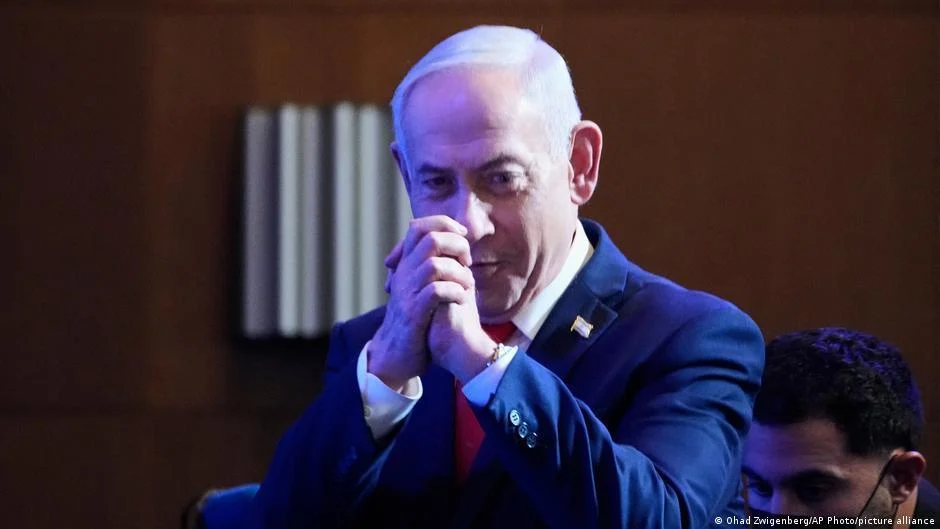
The political landscape of Israel faces yet another period of intense friction and profound uncertainty following the release of the final official results of the country’s legislative elections held on October 27. While the right-wing coalition led by long-serving Prime Minister Benjamin Netanyahu managed to secure a narrow plurality, the outcome fell short of the crucial threshold required to form a stable majority government in the Knesset. This parliamentary deadlock plunges the nation into a familiar pattern of political maneuvering, high-stakes coalition talks, and the persistent threat of prolonged governmental paralysis.
According to the official announcement made by the Central Election Commission (CEC) on Friday morning, October 30, following a rigorous audit of votes and the resolution of initial complaints, Netanyahu’s coalition emerged ahead of the opposition bloc. However, the inability to cross the 61-seat threshold in the 120-seat parliament leaves the path to power deeply obstructed. The results highlight a deeply polarized electorate and elevate the political leverage of minority parties, particularly Arab-led factions, whose historic surge in representation has positioned them as potential kingmakers in the unfolding legislative drama.
Record Voter Turnout Reflects Deep Societal Polarization
The 2026 legislative elections saw an unprecedented surge in civic engagement, defying expectations of voter fatigue amid ongoing regional and domestic challenges. Data published by the CEC revealed that voter turnout reached an impressive 77.9 percent among eligible voters—representing approximately 7.3 million citizens. A total of 5,716,655 valid ballots were cast and counted, marking the highest participation rate recorded in Israel in several decades.
Political analysts attribute this high turnout to the intense polarization characterizing Israeli society. Voters on both sides of the political spectrum recognized the high stakes of the election, viewing the ballot box as a critical instrument to steer the nation’s trajectory. This high level of mobilization directly translated into definitive seat distributions within the Knesset, solidifying ideological divides rather than bridging them.
Detailed Breakdown of Knesset Seat Allocation
The final electoral tally confirmed that Benjamin Netanyahu’s right-wing alliance secured a total of 53 seats. Within this coalition, Netanyahu’s own Likud party maintained its position as the largest single faction in the parliament, capturing 27 seats. The remaining seats in Netanyahu’s bloc were distributed among allied religious and nationalist factions: Shas secured 6 seats, United Torah Judaism obtained 7 seats, Otzma Yehudit claimed 7 seats, and Religious Zionism also won 6 seats.
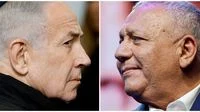
In opposition, the centrist and left-leaning bloc, spearheaded by Gadi Eisenkot and the Yashar Party, put up a formidable performance. The Yashar Party itself won 21 seats, contributing to a total opposition bloc of 48 seats. The broader opposition landscape includes the B’Yachad party with 12 seats, the Democratic Party with 8 seats, and Yisrael Beytenu with 7 seats.
Notably, the electoral map was significantly reshaped by the performance of Arab-Israeli parties. The Joint List and the Ra’am party achieved a historic milestone by securing a combined total of 19 seats in the Knesset. This represents nearly double the 10 seats they held in the previous parliamentary term. Individually, the Joint List secured 11 seats, while Ra’am captured 8 seats.
The Arithmetic of Paralysis and the Missing Majority
Despite Netanyahu’s coalition capturing 53 seats, the arithmetic of the Knesset remains hostile to the incumbent Prime Minister’s immediate return to power. To form a functioning government, a coalition must command an absolute majority of at least 61 seats in the 120-member parliament. Netanyahu’s bloc falls eight seats short of this magic number.
Similarly, the primary opposition bloc led by Gadi Eisenkot holds 48 seats. While mathematically larger than Netanyahu’s individual bloc, the opposition is equally distant from a 61-seat majority on its own. Consequently, the 19 seats held by the Arab-Israeli parties—the Joint List and Ra’am—represent the decisive variable in the parliamentary equation.
In theory, if the anti-Netanyahu opposition were willing to forge a coalition or secure parliamentary backing from the Arab-Israeli factions, a viable majority could be constructed. However, deep-seated ideological reservations, historical precedents, and political optics have historically complicated or outright prevented such cross-divide alliances, leaving both major blocs searching for alternative paths to governance.
Controversy, Allegations of Interference, and Electoral Integrity
The period immediately following the close of the polls was marred by sharp rhetoric, unverified accusations, and fierce political sparring. Late Thursday evening, prior to the official release of the final results, figures within Netanyahu’s political orbit leveled serious allegations against the Arab-Israeli parties. The claims alleged that the Joint List and Ra’am had received illicit foreign funding from Qatar aimed at influencing voter behavior and effectively "buying votes."
These allegations triggered swift and vehement denials from the targeted parties. Representatives from both the Joint List and Ra’am categorically rejected the accusations, labeling them as desperate attempts to undermine their legitimate electoral gains. Official authorities from Qatar likewise dismissed the claims as baseless fabrications.
Opposition leader Gadi Eisenkot sharply criticized the accusations propagated by Netanyahu’s camp, accusing the incumbent Prime Minister of attempting to "delegitimize" the democratic outcome of the election and cast doubt on the integrity of the electoral process for political survival.
Addressing the swirling rumors and allegations of foreign financial interference, the Central Election Commission issued a definitive statement on Friday morning. Acting CEC Director Dean Livne firmly dismissed the claims, asserting the absolute integrity of the vote-counting process.
"The reports circulating throughout the day are entirely unfounded," Livne declared, reassuring the public that the electoral administration operated with total transparency and adherence to strict legal frameworks.
Chronology of the Transition and Next Steps
The official release of the election results initiates a strictly regulated constitutional timeline managed by the office of the Israeli presidency. According to the established procedure, the CEC will formally submit the certified final results to Israeli President Isaac Herzog on Wednesday, November 4.
Upon receiving the official documents, President Herzog will initiate formal, structured consultations with the leaders of all political parties elected to the new Knesset. These consultations are designed to gauge the recommendations of each faction regarding who should be tasked with forming the next government.
Following these consultations, President Herzog will formally designate one lawmaker—typically the leader of the party or coalition deemed to have the best statistical chance of assembling a stable government—with a 28-day mandate to build a ruling coalition. If the designated candidate fails to secure a majority within this timeframe, a 14-day extension may be granted.
Implications for Governance and the Threat of Repeat Elections
The absence of a clear majority points toward protracted, high-stakes coalition negotiations that are widely expected to consume weeks of intense political bargaining. Netanyahu, a veteran of complex coalition talks, will seek to peel away lawmakers from opposing factions or induce compromise among reluctant allies. Simultaneously, the opposition will explore alternative alignments to break the deadlock and prevent Netanyahu from retaining power.
Should neither side succeed in forming a government that commands the confidence of the Knesset, Israel risks plunging back into a cycle of chronic political instability. This scenario could ultimately trigger an unprecedented round of repeat general elections, mirroring the protracted political crises that paralyzed the nation in previous years. As the political class prepares for the formal handover of results to President Herzog, the immediate future of Israeli governance remains precarious, balancing on the edge of legislative compromise or renewed electoral combat.