For seasoned global travelers who have exhausted standard itineraries across Western Europe, Southeast Asia, and North America, the pursuit of authentic, uncommercialized exploration often requires looking toward the margins of international tourism. While the vast majority of vacationers prioritize destinations boasting robust public transportation networks, luxury accommodations, and frictionless entry requirements, a select group of adventurous globetrotters deliberately seek out nations defined by geographic isolation, complex bureaucratic hurdles, and stringent geopolitical barriers.
Visiting these restricted territories is rarely convenient. Bureaucratic red tape, mandatory guided tours, strict visa prerequisites, and limited infrastructure routinely deter the average tourist. Yet, for those willing to navigate these formidable logistical challenges, these nations offer a rare glimpse into preserved cultures, dramatic landscapes untouched by mass tourism, and deep historical narratives largely shielded from the modern globalized economy.
This comprehensive review examines seven of the world’s most challenging countries for international travelers, detailing the administrative realities of visiting them, the historical contexts that shaped their isolation, and the compelling cultural and geographical rewards that justify the arduous journey.
Navigating the Kingdom of Bhutan: High Value, Low Impact Tourism
Nestled in the Eastern Himalayas between the economic powerhouses of China and India, the Kingdom of Bhutan has deliberately chosen to prioritize cultural preservation and environmental conservation over unrestricted mass tourism. Established in the early 1970s under the fourth King of Bhutan, the nation’s foundational tourism philosophy centers on the concept of "Gross National Happiness" rather than gross domestic product.
To enter Bhutan, independent travel is strictly prohibited. International visitors must coordinate their itineraries exclusively through registered Bhutanese tour operators or authorized international partners. Furthermore, the government enforces a strict Sustainable Development Fee (SDF) levied per tourist, per night, alongside mandatory upfront payments for visa processing and prepaid tour packages. These financial barriers are explicitly designed to deter budget backpackers and encourage high-value, low-impact tourism that safeguards the Himalayan ecosystem and traditional Buddhist heritage from degradation.
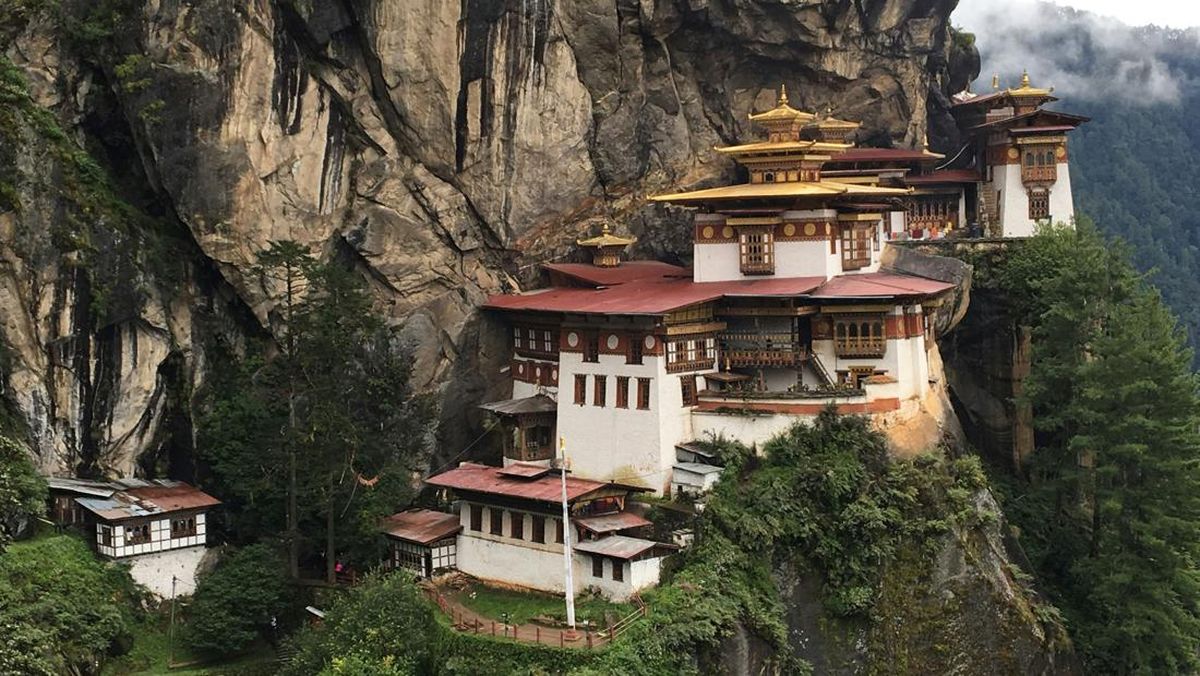
Despite these stringent prerequisites, travelers who secure entry are rewarded with pristine landscapes. Bhutan remains the world’s only carbon-negative country, with over 70 percent of its landmass permanently covered by forests. Key historical and geographical highlights include the iconic Tiger’s Nest Monastery (Paro Taktsang) clinging dramatically to a granite cliffside, the majestic Punakha Dzong situated at the confluence of two rivers, and the sweeping vistas of the Dochula Pass.
For optimal weather conditions, tourism experts recommend scheduling visits between October and December, a window characterized by crisp alpine air, brilliant blue skies, and clear views of snow-capped peaks. January and February offer profound solitude accompanied by sub-zero temperatures, while the monsoon season from June to September blankets the valleys in lush, vibrant greenery. Culinary exploration in Bhutan centers heavily on fiery local staples such as ema datshi (a potent stew of chili peppers and locally produced cheese) and momo (steamed dumplings).
Angola: Overcoming Infrastructure Gaps to Uncover West African Treasures
Located on the southwestern coast of Africa, Angola presents a starkly different set of travel challenges compared to the serene Himalayan kingdom of Bhutan. Emerging from a devastating 27-year civil conflict that concluded in 2002, the nation has steadily worked to rehabilitate its political stability and economic foundation. However, decades of conflict and subsequent underinvestment have left Angola with severely constrained tourism infrastructure, limited domestic transport networks, and complex bureaucratic entry protocols.
Securing a visa for Angola historically ranks among the most demanding administrative hurdles on the African continent, often requiring extensive documentation, letters of invitation, proof of accommodation, and mandatory international vaccination certificates, including proof of yellow fever immunization. Once inside, travelers frequently encounter rudimentary road networks outside major urban centers and a lack of standardized tourist amenities.
Nevertheless, Angola’s tourism potential is vast and largely untapped. The capital city of Luanda, frequently cited in global economic surveys for its high cost of living, offers a fascinating architectural juxtaposition where Portuguese colonial-era structures blend seamlessly with modern Atlantic-facing skyscrapers and bustling traditional markets. Beyond the capital, adventurous travelers can explore the otherworldly landscapes of Kissama National Park, home to successfully reintroduced herds of elephants, giant sable antelopes, and diverse bird species, as well as the dramatic canyon formations of Tunda Valala and the roaring Kalandula Falls.
Belarus: Navigating Eastern Europe’s Complex Bureaucratic Landscape
Often described in political commentary as Europe’s last centralized state, Belarus presents a fascinating dichotomy for international travelers. For decades, the nation maintained some of the most restrictive visa regimes in the region, requiring formal letters of invitation, hotel booking confirmations, and exhaustive security clearances that deterred independent exploration.
In recent years, however, the Belarusian government has experimented with selective visa-liberalization measures to stimulate foreign exchange and tourism. Notably, citizens of various nationalities, including travelers from Indonesia, have been granted targeted visa-free entry provisions for short-term stays, provided they meet strict financial solvency requirements—such as demonstrating sufficient funds for the duration of their stay—and possess valid health insurance policies compliant with local regulations. For stays exceeding these temporary exemptions, travelers must navigate a rigorous long-term visa application process managed through diplomatic missions.
Travelers who successfully enter Belarus are met with a deeply preserved Slavic cultural heritage that feels entirely distinct from Western Europe. The country’s landscape is defined by vast, dense forests, tranquil lakes, and remarkably well-preserved medieval architecture. Notable points of interest include the UNESCO World Heritage-listed Mir Castle and Nesvizh Castle complexes, which showcase centuries of European dynastic history, alongside the haunting memorials of the Brest Fortress and the pristine wilderness of the Belovezhskaya Pushcha National Park, home to the endangered European bison.
Turkmenistan: Exploring the Autonomous Realm of Central Asia
Sandwiched between the Caspian Sea, Iran, Uzbekistan, and Kazakhstan, Turkmenistan is among the least visited nations on Earth, shaped heavily by the idiosyncratic legacy of its first president-designate, Saparmurat Niyazov. During his authoritarian rule, Niyazov reshaped the societal fabric of the country, renaming months of the calendar, constructing colossal marble monuments, and embedding his personal philosophy into the national identity.
Gaining independent entry into Turkmenistan is virtually impossible. The nation does not issue standard tourist visas for independent travelers. Instead, visitors must rely on authorized local tour operators to secure a specialized letter of invitation, which subsequently permits the issuance of a restricted transit visa typically limited to a duration of five days. Throughout the journey, travelers are frequently required to remain accompanied by an officially licensed government guide.
Despite these severe administrative constraints, Turkmenistan offers some of the most surreal and unforgettable geographical sights in Central Asia. The capital, Ashgabat, holds a Guinness World Record for possessing the highest concentration of white marble-built structures globally, creating a futuristic, sterile, and hyper-monumental urban landscape. Deep within the vast expanse of the Karakum Desert lies the Darvaza Gas Crater—universally known as the "Gates of Hell"—a massive fiery sinkhole created by a Soviet drilling accident in 1971 that has burned continuously for decades, casting an eerie orange glow across the desert night.
Korea Utara (North Korea): The Ultimate Frontier of Controlled Tourism
As the world’s most isolated and tightly controlled sovereign state, the Democratic People’s Republic of Korea (North Korea) occupies a unique space in international geopolitics and global tourism. Despite severe diplomatic tensions and comprehensive international sanctions, the state maintains a strictly regulated tourism sector targeted at curious travelers seeking to witness one of the last remaining orthodox socialist systems firsthand.
Independent travel within North Korea is completely prohibited. International visitors must book all arrangements through specialized tour agencies—predominantly operating out of neighboring China—and travel strictly within organized groups accompanied by government-appointed minders. These guides dictate itineraries, monitor photography, and ensure adherence to local laws and customs.
The primary motivation for visiting North Korea is the profound sociological and historical experience it provides. The capital city, Pyongyang, serves as a grand theatrical display of Juche ideology, featuring monumental architecture, expansive public squares, the imposing Ryugyong Hotel, and an immaculate metro system adorned with socialist-realist mosaics. Cross-border excursions to the Demilitarized Zone (DMZ) at Panmunjom offer a visceral reminder of the Cold War division of the Korean Peninsula. While the bureaucratic process for securing a tourist visa through authorized Chinese operators is relatively straightforward for non-journalists, the psychological and physical parameters of travel within the country require strict adherence to protocol.
Iran: Unveiling a Rich Heritage Behind Strict Diplomatic Gates
Iran possesses one of the world’s most ancient and continuous civilizations, boasting an extraordinary wealth of historical monuments, diverse landscapes, and legendary Persian hospitality. However, geopolitical friction and complex administrative procedures make tourism to the country a demanding undertaking.
To obtain an Iranian tourist visa, applicants must first secure an official authorization code issued by the Ministry of Foreign Affairs in Tehran. This code can only be requested through accredited Iranian travel agencies. Furthermore, diplomatic policies dictate specific restrictions for travelers holding passports from certain nations, and individuals with recent travel stamps from specific countries may face enhanced scrutiny or outright denial of entry. Additionally, independent travel is restricted for citizens of certain nations, necessitating pre-booked guides or verified itineraries.
Travelers who navigate these diplomatic hurdles are universally rewarded with an exceptionally rich cultural experience. From the breathtaking, mirror-tiled mosques of Isfahan and the ancient Persepolis ruins in Shiraz to the bustling bazaars of Tehran and the desert oasis city of Yazd, Iran offers an architectural and historical depth surpassed by few other destinations. Culinary traditions highlight complex flavors featuring saffron, pomegranate, and aromatic herbs, while the warmth and generosity of the local populace routinely challenge prevailing global media narratives.
Eritrea: Africa’s Hidden Architectural Gem Under Strict Surveillance
Located in the Horn of Africa along the Red Sea coast, Eritrea gained independence from Ethiopia in 1993 following a protracted 30-year liberation struggle. Since then, the nation has operated under a tightly controlled political framework characterized by extensive national service programs and severe restrictions on domestic and international movement.
Eritrea’s visa application process is notoriously difficult, requiring formal sponsorship, detailed itineraries, and approval from governmental bodies. Furthermore, foreign journalists face near-insurmountable barriers to entry, and even standard tourists must frequently secure internal travel permits to journey outside the capital city.
Yet, those who manage to visit discover an exceptionally unique destination. The capital, Asmara, is globally renowned as an open-air museum of early 20th-century modernist and Art Deco architecture, constructed largely during the Italian colonial period in the 1930s. The city’s pristine pastel buildings, vintage cafes, and palm-lined boulevards offer a surreal aesthetic unlike anywhere else on the African continent. Beyond the capital, Eritrea features the dramatic escarpments descending toward the Red Sea port of Massawa, alongside bustling local markets where precious metals such as gold and silver trade at exceptionally accessible local rates.
Implications and the Future of Restricted Tourism
The existence of these heavily restricted destinations highlights a persistent tension in the modern globalized era: the balance between sovereign national security, cultural preservation, and the economic benefits of international exchange. While nations like Bhutan and Turkmenistan utilize administrative barriers as a deliberate tool to protect their internal stability and environmental heritage from the destabilizing effects of overtourism, others like North Korea, Iran, and Eritrea maintain stringent controls driven by geopolitical isolationism and state security frameworks.
For the global tourism sector, these nations represent the ultimate frontier. As commercial aviation routes expand and digital connectivity narrows the globe, these seven countries remind modern travelers that genuine exploration still demands patience, respect for local laws, and a willingness to step far beyond the comfortable confines of conventional itineraries.