Socio Today
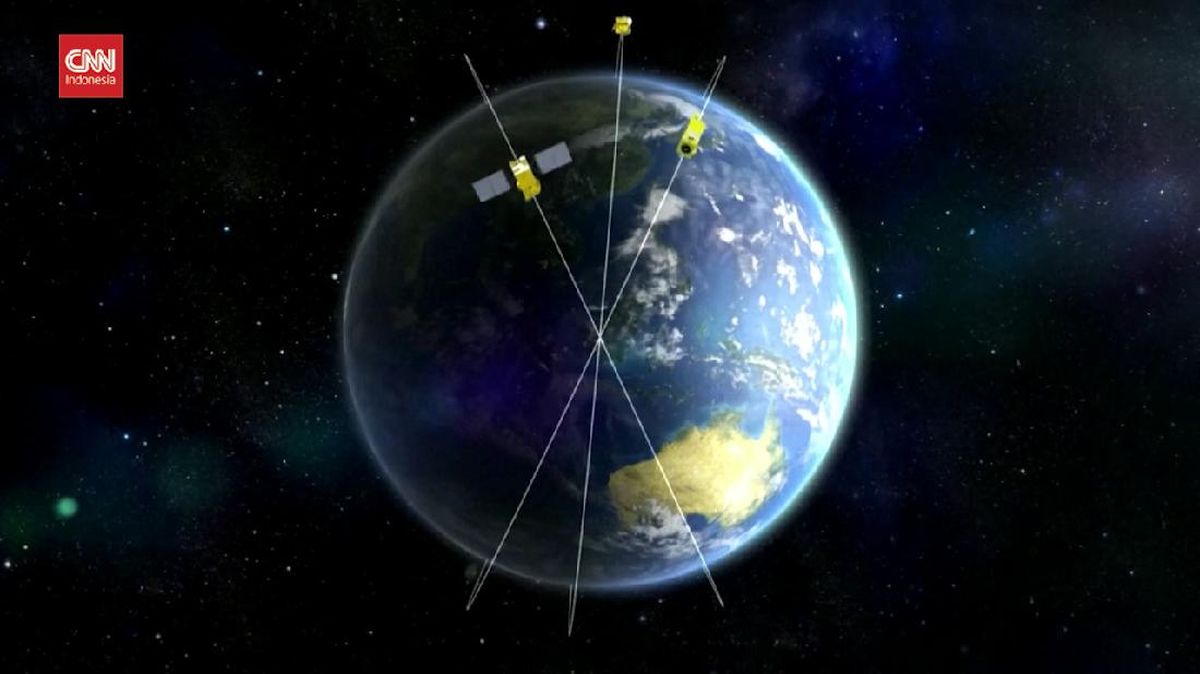
Shanghai, China – China has officially commenced the construction of an ambitious satellite-based artificial intelligence (AI) computing network in Earth’s orbit, marking a significant leap in its technological prowess and strategic vision. The launch of the first constellation for the "Xingshu Plan" (星枢计划), spearheaded by Shanghai Xingshu Tiansuan Space Technology, aims to establish a vast orbital infrastructure capable of processing data directly in space, rather than relying solely on ground stations. This pioneering approach is set to revolutionize data handling for AI and remote sensing applications, with the long-term objective of deploying a constellation of approximately 1,000 satellites.
The announcement, made on Saturday, July 18, 2026, during a future computing forum at the prestigious World AI Conference (WAIC) and High-level Meeting on Global AI Governance in Shanghai, positions China at the forefront of space-based computational innovation. Company representatives stated that this initial launch brings China significantly closer to the commercial operation of a space-based computing network, promising reduced data transmission latency and alleviating the burden on terrestrial communication infrastructure. Unlike traditional satellite systems that transmit raw data back to Earth for processing, the Xingshu Plan’s satellites are designed to perform complex computations, including AI algorithms, in orbit. Only the refined results or critical insights will then be relayed to ground stations, a paradigm shift with profound implications for speed, efficiency, and real-time application deployment.
Revolutionizing Data Processing: The Paradigm Shift to In-Orbit Computing
The conventional model for satellite data acquisition involves orbiting platforms capturing vast quantities of raw data – images, spectral readings, communication signals – and then transmitting these unrefined datasets down to Earth. This process often necessitates powerful ground stations, extensive data storage facilities, and robust communication networks to handle the immense volume of information. The subsequent processing, analysis, and application of AI algorithms occur predominantly on terrestrial supercomputers or cloud platforms. This traditional workflow, while effective, introduces inherent delays, consumes considerable bandwidth, and places significant strain on ground-based computational resources.
The Xingshu Plan champions a fundamentally different approach: in-orbit computing, often referred to as "space-based edge computing." By embedding advanced AI processors and computational capabilities directly onto the satellites, data can be analyzed and processed at the source, closer to where it is collected. This architectural innovation delivers several critical advantages. Firstly, it drastically reduces data transmission latency. For applications requiring real-time insights, such as disaster monitoring, critical infrastructure surveillance, or defense intelligence, milliseconds can make a substantial difference. By eliminating the round trip for raw data to Earth and back, decision-making processes can be accelerated exponentially.
Secondly, in-orbit processing dramatically improves bandwidth efficiency. Instead of streaming gigabytes or terabytes of raw data, the satellites can transmit highly compressed data, summarized insights, or even direct actionable intelligence. This not only frees up valuable communication bandwidth but also reduces the energy expenditure associated with data downlink, extending satellite operational life and optimizing resource allocation. Thirdly, it offers enhanced resilience and autonomy. A network of intelligent satellites capable of processing data independently can operate more robustly, even if communication with ground stations is temporarily disrupted.
However, implementing in-orbit computing presents formidable technical challenges. Space is an unforgiving environment characterized by extreme temperatures, vacuum conditions, and high levels of radiation. AI processors and associated hardware must be specially designed or "radiation-hardened" to withstand these harsh conditions without degradation or malfunction. Power consumption is another critical factor; onboard power generation (primarily solar panels) is limited, necessitating highly energy-efficient AI chip architectures, such as low-power ASICs (Application-Specific Integrated Circuits) or neuromorphic chips designed for sparse computation. Thermal management also becomes crucial, as heat generated by processing units needs to be efficiently dissipated in a vacuum. China’s successful deployment of the first Xingshu constellation suggests significant advancements in overcoming these complex engineering hurdles.
The Xingshu Plan: A Multi-Phase Blueprint for Celestial Computing
The name "Xingshu," which translates from Chinese as "star center" or "hub of stars," aptly reflects the project’s ambitious scale and central role in China’s future space infrastructure. The plan is meticulously structured into multiple phases, each designed to progressively expand the network’s capabilities and reach.
The initial Verification Phase serves as a crucial testbed for the underlying technologies and operational concepts. As reported by China Daily, this phase is designed to include two dedicated computing satellites and 12 "edge computing" satellites. The computing satellites would house more powerful processing units, while the edge computing satellites would perform preliminary data filtering and processing closer to the data collection points. The primary objective of this phase is to validate the inter-satellite communication links, demonstrate the efficacy of in-orbit data processing, and confirm the reliability of the AI algorithms in the space environment. Lessons learned from this phase will inform the design and deployment of subsequent stages.
Following successful verification, the project will transition into its Commercial Phase. This stage targets a significant expansion of the constellation, aiming for 50 computing satellites and 100 edge computing satellites. The goal here is to establish commercial viability, offering initial data processing services to a range of clients across various sectors. Potential customers could include government agencies, scientific research institutions, agricultural enterprises, and environmental monitoring organizations. This phase will focus on building out a more robust, redundant, and globally accessible network, proving the business model for space-based AI.
The ultimate vision for the Xingshu Plan is the Final Operational Phase, which envisions a colossal network of approximately 1,000 satellites. Such a massive constellation would provide unprecedented global coverage, ensuring near-continuous data acquisition and processing capabilities. The sheer number of satellites would offer high redundancy, enhancing system reliability and mitigating the impact of individual satellite failures. This scale would also enable distributed computing architectures across the constellation, potentially allowing for even more complex and data-intensive AI tasks to be performed in space, truly establishing a "star center" for orbital intelligence. This compares in ambition to existing mega-constellations like SpaceX’s Starlink for internet connectivity, but with a fundamental shift towards computational processing as its core service.
China’s Strategic Imperative: AI Leadership and Space Dominance
The Xingshu Plan is not an isolated endeavor but an integral component of China’s broader national strategy to achieve global leadership in artificial intelligence and solidify its position as a major space power. In 2017, Beijing unveiled its "New Generation Artificial Intelligence Development Plan," a comprehensive roadmap aiming for China to become the world’s primary AI innovation center by 2030. Projects like Xingshu directly contribute to this overarching goal by providing critical infrastructure for advanced AI applications.
The implications of space-based AI computing are inherently dual-use, serving both civilian and military applications. For civilian purposes, enhanced remote sensing capabilities can revolutionize precision agriculture, enabling real-time monitoring of crop health, optimizing irrigation, and predicting yields with greater accuracy. Environmental monitoring would benefit immensely, allowing for rapid detection and tracking of deforestation, pollution spread, and the impacts of climate change. For defense and intelligence, the ability to process vast amounts of reconnaissance data in orbit translates into significantly faster threat detection, real-time target identification, and enhanced situational awareness for military operations. This provides a strategic advantage by reducing the time from data collection to actionable intelligence.
Economically, the Xingshu Plan is expected to spur innovation in China’s high-tech industries, fostering the development of advanced satellite technology, AI hardware, and data processing algorithms. It will create new markets for space-based services, from commercial remote sensing to specialized AI analytics. Geopolitically, the timing of the announcement, coinciding with President Xi Jinping’s presence at the World AI Conference, underscores the national importance of this initiative. Xi Jinping has consistently emphasized China’s ambition to lead the global AI governance landscape and set new standards for technological advancement. The Xingshu Plan serves as a tangible demonstration of this commitment, showcasing China’s capacity to innovate at the intersection of two critical future technologies: space and AI.
Furthermore, this project aligns seamlessly with China’s impressive advancements in its broader space program. Over the past decade, China has achieved remarkable milestones, including the successful deployment of the Tiangong Space Station, multiple lunar missions (Chang’e series), the Tianwen-1 Mars mission, and the full operationalization of its indigenous Beidou navigation satellite system. The Xingshu Plan adds another sophisticated layer to this comprehensive space infrastructure, cementing China’s role as a formidable player in the global space arena.
A New Space Race: Global Competition in Orbital AI
While China’s Xingshu Plan represents a significant advancement, the concept of space-based computing and AI is a frontier that multiple global actors are actively exploring. The competitive landscape for orbital AI is intensifying, signaling a new "space race" not just for launch capabilities or satellite numbers, but for superior data processing and AI capabilities in space.
Prominent among these is Elon Musk’s SpaceX, particularly through its affiliation with xAI. xAI, founded with the ambitious goal of "understanding the true nature of the universe," will undoubtedly require immense computational power and access to vast datasets. While Starlink’s primary function is global internet connectivity, its massive constellation of low Earth orbit satellites provides a potential platform for integrating edge computing capabilities. Industry analysts speculate that future iterations of Starlink or dedicated xAI space assets could leverage this infrastructure for in-orbit data processing, feeding the colossal data demands of advanced AI models. The synergy between SpaceX’s launch capabilities, Starlink’s network, and xAI’s AI research creates a powerful contender in this nascent field.
Beyond these major players, other nations and private consortia are also investing in related technologies. The European Space Agency (ESA) has ongoing research into distributed satellite systems and advanced onboard processing for earth observation. Various U.S. defense research projects, such as the Defense Advanced Research Projects Agency’s (DARPA) Blackjack program, explore the concept of resilient, distributed sensing and processing architectures in low Earth orbit for military applications. These initiatives reflect a global recognition of the strategic value in reducing latency and increasing autonomy for space-based assets. The competition is not merely about launching more satellites, but about who can effectively deploy and manage sophisticated AI processing at the very edge of space, transforming raw data into actionable intelligence with unprecedented speed. This technological arms race underscores the critical importance of innovation and investment in both space infrastructure and AI research.
Transformative Applications Across Sectors
The capabilities unlocked by the Xingshu Plan’s in-orbit computing network are poised to deliver transformative benefits across a multitude of sectors, extending far beyond traditional remote sensing.
In environmental monitoring, the ability to process data in real-time could revolutionize how humanity tracks and responds to ecological changes. For instance, the network could instantaneously detect illegal deforestation activities, pinpoint sources of pollution, or monitor the rapid progression of climate-related phenomena like glacial melt or desertification. This real-time intelligence would enable faster intervention and more effective policy responses.
For disaster management, the implications are profound. In the aftermath of natural catastrophes such as earthquakes, tsunamis, or wildfires, rapid assessment of damage is paramount for directing rescue efforts and humanitarian aid. Satellites with in-orbit AI could quickly analyze imagery, identify affected areas, map safe routes, and assess infrastructure damage, transmitting critical information to responders on the ground with minimal delay, potentially saving countless lives.
Agriculture stands to gain significantly through enhanced precision farming. The network could monitor crop health at an unprecedented scale and detail, detecting early signs of disease, pest infestations, or nutrient deficiencies across vast agricultural lands. This allows farmers to apply resources like water and fertilizer more efficiently, reducing waste and increasing yields.
In urban planning and infrastructure management, the constellation could track urban expansion, monitor traffic patterns in real-time, and assess the structural integrity of bridges, roads, and other critical infrastructure, providing data for smarter city development and proactive maintenance.
The defense and security sector would see a massive upgrade in capabilities. Real-time processing of surveillance data could provide enhanced situational awareness for military operations, facilitate early warning systems for missile defense, and enable rapid identification of potential threats or targets. The reduced latency would be a game-changer for critical decision-making in dynamic operational environments.
Finally, scientific research would also benefit, particularly in fields like astronomy and geology, where vast amounts of raw data are collected. Processing these datasets in orbit could accelerate discoveries by providing scientists with pre-analyzed, refined information, allowing them to focus on deeper insights rather than raw data management.
Challenges, Ethical Dilemmas, and the Path Forward
Despite the immense promise of the Xingshu Plan, its realization and long-term operation present a complex array of challenges, encompassing technological, economic, regulatory, and ethical dimensions.
One of the most pressing concerns is space debris. A constellation of 1,000 satellites, when combined with existing and planned mega-constellations, significantly contributes to orbital congestion. This raises the risk of collisions, potentially triggering a cascading effect known as the Kessler syndrome, where each collision generates more debris, making low Earth orbit unusable for future generations. International efforts and strict adherence to space sustainability guidelines will be crucial.
The regulatory and governance framework for space-based AI is still nascent. Questions abound regarding international norms for such powerful dual-use technologies. Who owns the data processed in orbit? What are the protocols for data sharing? How will disputes over satellite operations or potential interference be resolved? The development of robust international agreements will be essential to prevent conflict and ensure responsible use of this technology.
Data security and sovereignty are also paramount. Processing sensitive information in orbit introduces new vulnerabilities. Protecting against cyberattacks, ensuring the integrity of AI algorithms, and safeguarding national and commercial data from unauthorized access or exploitation will require advanced encryption and robust cybersecurity measures. The potential for surveillance by nations operating such systems also raises privacy concerns.
From an economic perspective, the sheer cost of launching, maintaining, and eventually deorbiting a thousand-satellite constellation is immense. While commercial viability is a goal, the initial investment and ongoing operational expenses are substantial, requiring sustained government support and private sector engagement. The environmental impact of increased rocket launches also warrants consideration.
Technological hurdles, while partially addressed by the initial launch, remain formidable. Miniaturization of powerful AI hardware, developing resilient software for autonomous satellite operation, and ensuring secure, high-speed inter-satellite communication links are ongoing areas of research and development. The extreme space environment continues to pose significant engineering challenges.
Finally, the ethical considerations surrounding advanced AI, especially when deployed in critical applications from space, cannot be overlooked. Issues such as algorithmic bias, the implications of autonomous decision-making in military contexts, and ensuring equitable access to the benefits of such technology must be addressed proactively through international dialogue and responsible policy-making.
Conclusion
China’s Xingshu Plan represents a monumental stride into the future of space technology and artificial intelligence. By pioneering in-orbit computing on such a vast scale, China is not only enhancing its domestic capabilities in remote sensing and AI but is also fundamentally reshaping the global landscape of data processing and intelligence gathering. The project underscores Beijing’s unwavering commitment to achieving global AI leadership and leveraging its burgeoning space program for strategic advantage.
As the Xingshu constellation expands and matures through its verification, commercial, and operational phases, its impact will reverberate across scientific, economic, and geopolitical spheres. It signifies a new era where data processing moves from ground-bound centers to orbital platforms, promising unprecedented speed and efficiency. However, this technological leap also brings with it critical responsibilities and challenges related to space sustainability, international governance, and ethical deployment. The Xingshu Plan is more than just a satellite network; it is a declaration of intent, signaling China’s formidable role in shaping the future of AI and space, compelling the world to grapple with the profound implications of intelligence operating in orbit.