Socio Today
Depok, currently a thriving city within the West Java province of Indonesia, holds a narrative far more complex than its modern administrative status suggests. While it was formally established as an independent municipality on April 27, 1999—formerly serving as a district within the Bogor Regency—the region possesses a unique historical legacy that predates the modern Indonesian state. Behind its current urban facade lies a nearly forgotten era where Depok functioned as a de facto independent entity, complete with its own governing body and a president, marking a rare and peculiar chapter in the colonial history of the East Indies.
The Origins of a Colonial Enclave
The genesis of this unique political structure can be traced back to the late 17th century. In 1696, Cornelis Chastelein, a wealthy Dutch merchant and a high-ranking official of the Dutch East India Company (VOC), purchased a massive tract of land measuring 12.44 square kilometers for the sum of 2.4 million guilders. This purchase was not merely a real estate acquisition; it was a private land grant, known as particuliere landerijen (private estate). This legal status granted Chastelein near-sovereign control over the territory, effectively insulating it from the direct administrative reach of the Dutch colonial government in Batavia.
Chastelein, a devout Christian, brought with him a large number of enslaved people from various parts of the Indonesian archipelago, including Bali, Makassar, and the Ambonese islands. Under his direction, these laborers transformed the dense, uncharted wilderness of Depok into a productive agricultural expanse. The scope of this land was vast, stretching from the current boundaries of Depok to parts of what is now Pasar Minggu in South Jakarta and even reaching toward Gambir in Central Jakarta.
The Testament of 1714 and the Birth of a Community
The trajectory of the region shifted dramatically upon Chastelein’s death. In his final will and testament, dated June 28, 1714, the merchant took the unprecedented step of granting his enslaved workers their freedom. Furthermore, he bequeathed them the land, along with livestock, tools, and the homes they had built. This act of manumission was rooted in his religious convictions, yet it created a complex social vacuum.
To prevent infighting and ensure the continued productivity of the estate, Chastelein appointed a man named Jarong van Bali to oversee the community. This group of freed individuals—many of whom adopted the surnames of their former master, such as Jonathans, Laurens, and Leander—evolved into a distinct social class known as the "Depok Dutch" or Belanda Depok. They maintained a unique culture, blending European traditions with indigenous influences, and established a governance structure that would eventually evolve into a formal state-like entity.

The Rise of the Republic of Depok (1913–1952)
By the early 20th century, the descendants of the original community sought to formalize their administrative autonomy. In 1913, they established a governing body known as Het Gemeente Bestuur van Het Particuliere Land Depok (The Municipal Government of the Private Land of Depok).
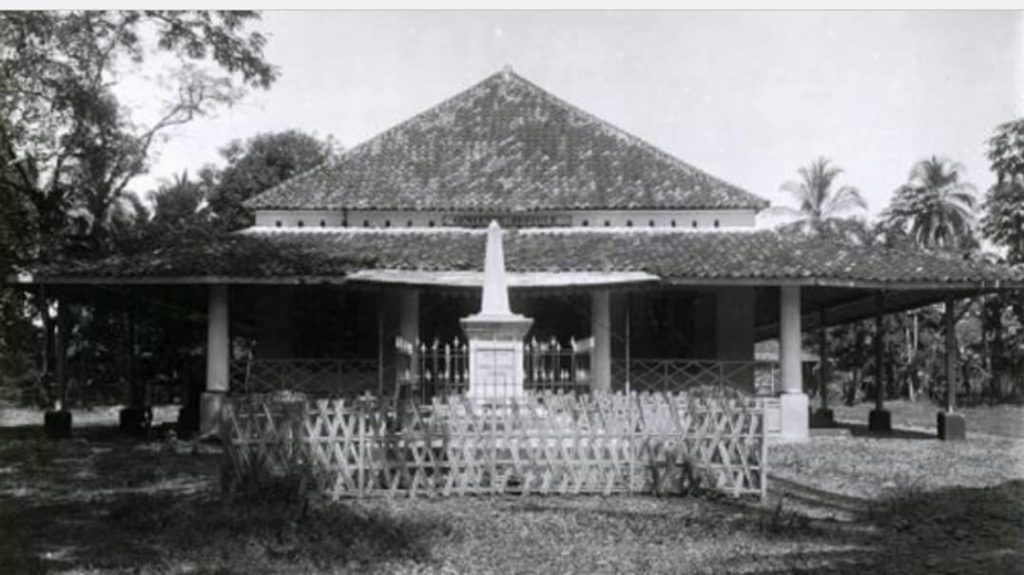
This administration was remarkably progressive for its time, operating under a democratic framework where a president was elected by the populace every three years. The seat of government was located at the site now known as Kilometer 0, symbolically marked by the Depok Monument. Adjacent to this site stood the official government buildings, which have since been repurposed for public utility, notably serving as the Harapan Hospital.
The presidency was the cornerstone of this mini-republic. Historical records confirm the tenure of several leaders:
- Gerrit Jonathans (1913): The inaugural president under the formal democratic charter.
- Martinus Laurens (1921): Focused on maintaining the agricultural output of the estate.
- Leonardus Leander (1930): Navigated the growing tensions of the pre-war era.
- Johannes Matjis Jonathans (1952): The final president, who oversaw the dissolution of the estate’s private status.
Socio-Political Implications and Governance
The structure of the "Republic of Depok" was unique because it lacked a vice-presidential office. Instead, the president was supported by a secretary, and the administrative framework was designed by Batavia-based lawyers to ensure legal compliance with the broader colonial land laws while maintaining internal autonomy.
This period of self-governance serves as a fascinating case study in colonial administration. Unlike the typical hierarchical structures of the Dutch East Indies, Depok operated as a "state within a state." The inhabitants were not merely residents; they were shareholders of the land, a concept that provided them with a sense of identity and security that was largely unavailable to the surrounding indigenous populations.
The Transition to the Indonesian Republic
The status of Depok as a private entity became increasingly untenable following the proclamation of Indonesian independence in 1945. As the new nation began to consolidate its administrative districts, the existence of a "private state" within its borders required resolution.
In 1952, the final president, Johannes Matjis Jonathans, formally signed the deed of surrender, transferring the administrative control of the land to the Republic of Indonesia. This moment marked the end of the particuliere landerijen era. The transition was not just administrative; it signaled the integration of the unique "Belanda Depok" community into the broader national identity of the Indonesian people.
Historical Analysis and Legacy
While the modern city of Depok celebrated its 22nd anniversary as a municipality in 2021, the historical reality is that the region’s administrative roots extend back over 300 years. The historical significance of this period lies in its reflection of the diverse colonial history of Indonesia. The "Republic of Depok" is often cited by historians as a prime example of how private economic interests, when combined with specific cultural and religious ideals, could create transient, alternative political systems.
The legacy of this era remains visible in the city today. The descendants of the original 12 families continue to maintain local cultural traditions, and landmarks like the Tugu Depok (Depok Monument) serve as silent witnesses to the time when this area operated as a sovereign, albeit small, republic.
Broader Context of Colonial Land Ownership
The existence of Depok as a private entity was part of a larger, often contentious system of land ownership in the East Indies. During the 18th and 19th centuries, the Dutch colonial government frequently sold large tracts of land to private investors to raise revenue, leading to the creation of "private lands" that were largely exempt from government oversight. This often resulted in the exploitation of laborers. However, the case of Depok stands out as an anomaly because of the specific bequest of land and liberty to the workers by the original owner.
Recent academic discourse on the topic highlights the importance of preserving these local histories. As urbanization continues to transform the landscape of Depok, the preservation of the physical remnants of the 1913 administration is essential for understanding the city’s identity. Local heritage groups have frequently called for better protection of the surviving colonial-era architecture, arguing that these structures are not just relics of the past but essential components of the national historical narrative.
Conclusion: A City with a Multi-Layered History
The story of Depok is one of evolution—from a colonial wilderness to a private estate, then to an autonomous administrative unit, and finally to a key urban center in the Greater Jakarta area. While it is now a bustling city defined by its proximity to the capital and its massive student population, its past as a self-governing republic remains an integral part of its character. Recognizing this history allows for a more nuanced understanding of how modern Indonesian cities have been shaped by their complex colonial predecessors. As the city continues to expand, the memory of the "Presidents of Depok" serves as a reminder of the region’s long-standing tradition of community organization and the enduring legacy of a unique, if ephemeral, experiment in self-governance.