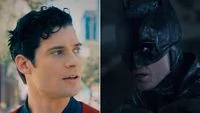
The cinematic landscape of DC adaptations currently finds itself at a unique crossroads, characterized by the coexistence of two distinct creative visions: the grounded, neo-noir realism of Matt Reeves’ "The Batman" universe and the expansive, interconnected DC Universe (DCU) spearheaded by James Gunn and Peter Safran. Recent remarks by Robert Pattinson, the actor behind the cape and cowl in the Reeves-directed franchise, have brought to the forefront the creative friction inherent in maintaining these separate entities. Pattinson has publicly expressed skepticism regarding the feasibility of integrating his version of Bruce Wayne into the broader DCU, specifically alongside David Corenswet’s Superman.
This dialogue underscores a growing tension for Warner Bros. Discovery and DC Studios as they navigate the complexities of "Elseworlds" branding—a strategy designed to allow filmmakers creative autonomy outside of the primary shared continuity.
The Philosophical Divide: Grounded Noir vs. Cosmic Spectacle
The core of the issue, according to Pattinson, lies in the tonal density of the world created in 2022’s "The Batman." Pattinson described the production process as an immersive, psychologically taxing endeavor. The film, which focused on a younger, more vulnerable iteration of Bruce Wayne navigating a labyrinthine Gotham City, relied heavily on atmosphere, practical lighting, and a grounded detective narrative.
"I think it would be somewhat difficult to transplant this version of Bruce into a world beyond his own," Pattinson stated in a recent interview. He noted that the specificity of the world-building—where the "darkness" of the narrative informs both the visual aesthetic and the performance—makes the character feel singular. The psychological residue of playing a character defined by trauma, isolation, and a relentless, gritty pursuit of justice has, by Pattinson’s own admission, created a boundary that is difficult to cross.
This perspective highlights the fundamental difference between the "Elseworlds" Batman and the DCU’s Superman. While David Corenswet’s Superman is being positioned as a beacon of hope within a larger, potentially cosmic and fantastical shared universe, Pattinson’s Batman operates in a reality where the supernatural is largely absent. Forcing a character rooted in psychological realism into a world populated by gods and aliens risks undermining the narrative integrity that both Matt Reeves and Robert Pattinson have worked to establish.
Chronology of the DC Cinematic Split
The current state of DC cinema is the result of a strategic pivot initiated when James Gunn and Peter Safran took the reins of DC Studios in late 2022. The timeline of these developments provides context for the current separation:
- March 2022: "The Batman" is released to critical and commercial acclaim, grossing over $770 million globally and establishing a self-contained "Bat-verse."
- November 2022: James Gunn and Peter Safran are appointed co-CEOs of DC Studios, tasked with creating a cohesive 10-year plan for the DCU.
- January 2023: Gunn announces the "Gods and Monsters" chapter of the DCU, confirming that "The Batman" and its associated spin-offs (such as "The Penguin") will exist under the "DC Elseworlds" banner, separate from the primary continuity.
- 2025-2026: Development continues on the DCU’s flagship projects, including the casting of David Corenswet as the new Superman, while simultaneously, pre-production and filming for "The Batman Part II" accelerate.
- September 2026: Robert Pattinson voices the difficulty of bridging these worlds, effectively solidifying the creative divide between the two franchises.
The Implications for Warner Bros. Strategy
The decision to keep Pattinson’s Batman separate from the DCU is not merely an artistic choice; it is a calculated business strategy. By maintaining two distinct versions of the Caped Crusader—Pattinson in the "Elseworlds" films and an as-yet-uncast actor for the DCU’s "The Brave and the Bold"—Warner Bros. avoids the risk of confusing the general audience while catering to different demographic segments.
From an industry perspective, this "multi-track" approach allows the studio to mitigate risk. If one iteration of the character fails to resonate, the other remains a viable asset. Furthermore, it avoids the "crossover fatigue" that has occasionally plagued other comic book cinematic universes, where characters are forced into team-up movies before their individual narratives have been fully explored.
However, the strategy is not without its challenges. The primary obstacle is brand dilution. For casual moviegoers, having multiple versions of the same iconic character can lead to confusion regarding the "canon" of the DC brand. Despite this, the success of "The Batman" has proven that audiences are capable of discerning between different interpretations of a character, provided the quality of the filmmaking remains high.
Looking Ahead: The Batman Part II and Beyond
As Pattinson prepares for the release of "The Batman Part II," currently slated for February 18, 2028, expectations remain high. Pattinson has teased that the sequel will deviate significantly from the structure of the first film, describing it as a "sharp turn" that nevertheless maintains the essential DNA of the original. This indicates that Reeves is committed to evolving the character’s arc rather than simply repeating the successful formulas of the past.
Meanwhile, the DCU is moving forward with its own slate. Following the release of the horror-thriller "Clayface" in October 2026, the studio is preparing for the 2027 release of "Man of Tomorrow," the direct follow-up to the debut of Corenswet’s Superman. The studio’s ability to successfully juggle these disparate threads will determine the long-term health of the DC franchise.
Analytical Perspective: Can Coexistence Work?
Industry analysts suggest that the separation of Pattinson’s Batman from the DCU is the correct move for the creative integrity of the character. Matt Reeves’ approach to the Batman mythos is highly stylized and singular; it requires a level of control that might be lost in the high-stakes, interconnected nature of a shared universe.
The "Elseworlds" label acts as a protective layer, shielding these stories from the demands of mandatory crossovers. By allowing these worlds to remain distinct, DC Studios preserves the ability to tell stories that are focused on character development rather than franchise maintenance.
Furthermore, the physical and psychological toll described by Pattinson provides a rare, candid look into the craft of acting for a major franchise. When an actor invests so deeply in the darkness of a character, it is logically consistent that they would view the prospect of integrating that character into a lighter, more action-oriented team-up movie with apprehension. It is a reminder that behind the massive global marketing campaigns, these projects are, at their core, the result of individual performances that require immense emotional labor.
Conclusion
The comments made by Robert Pattinson regarding the integration of his Batman into the DCU serve as a definitive statement on the current state of superhero cinema. It is a reality where creative vision is increasingly prioritized over the necessity of a shared universe. As audiences look forward to the release of "The Batman Part II" and the burgeoning DCU slate, the distinction between these two worlds will likely become even more defined.
For now, fans of the character can expect two very different, yet equally ambitious, approaches to the legacy of the Dark Knight. Whether or not this bifurcated path remains sustainable in the long term remains a question for the future. However, for the present, the commitment to distinct storytelling and artistic autonomy appears to be the guiding philosophy for both Matt Reeves and the leadership at DC Studios. As the industry evolves, the "Elseworlds" experiment may well become the blueprint for how major studios manage their most valuable intellectual properties in an era of franchise saturation.