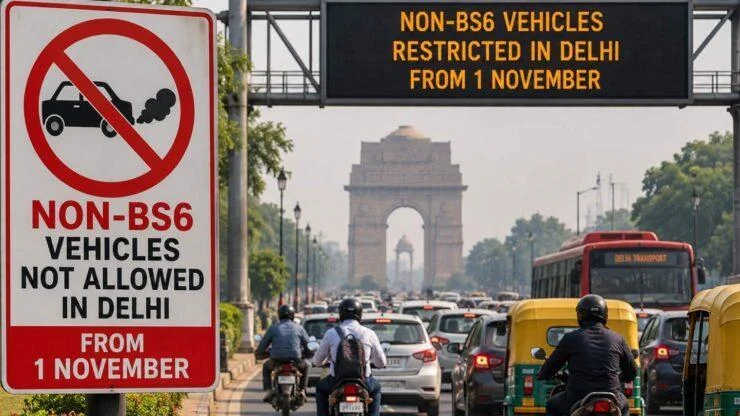
The government of India’s National Capital Territory of Delhi has announced a sweeping series of vehicular restrictions slated to take effect in November 2026, aimed at preventing the annual spike in toxic smog that routinely cripples the region during the winter months. Under the newly unveiled Winter Action Plan (WAP), all incoming commercial and private vehicles registered outside Delhi that fail to meet the stringent Bharat Stage 6 (BS6) emission standards will be strictly barred from entering the capital territory. This aggressive environmental maneuver is designed to act as a defensive shield for millions of residents against hazardous particulate matter, offering a compelling case study for rapidly growing urban centers across the globe—including Jakarta, Indonesia—that grapple with chronic air quality deterioration.
The policy, which targets the primary mobile sources of nitrogen oxides and fine particulate matter (PM2.5), will remain in enforcement through January 31, 2027. By drawing a hard regulatory line at the BS6 threshold, Delhi environmental authorities are compelling regional commuters and interstate transport operators to modernize their fleets or find alternative logistics routes that bypass the metropolitan core.
Chronology and Phased Implementation of the Winter Action Plan
The rollout of the WAP is structured as a multi-tiered chronological intervention designed to escalate pressure on pollution sources as meteorological conditions worsen. Historically, Delhi’s air quality index (AQI) plummets between November and February due to a combination of falling temperatures, low wind speeds, temperature inversions, and regional agricultural burning. Recognizing this predictable seasonal crisis, municipal authorities have established a rigorous timeline for compliance and enforcement.
Beginning in November 2026, checkpoints at all major arterial entry points into Delhi will be heavily manned by traffic police and environmental inspectors equipped with automated license plate recognition systems and remote sensing technology. Vehicles flagged as non-compliant with BS6 norms and originating from neighboring states such as Haryana, Uttar Pradesh, and Punjab will be turned away immediately.
From November 2026 through January 31, 2027, the ban on older, high-emission vehicles will be enforced continuously. To ensure absolute compliance, the Delhi administration has integrated fuel dispensing with environmental certification. Motorists entering the capital must hold a valid Pollution Under Control (PUC) certificate. In a move that significantly tightens enforcement, fuel stations across the capital territory are instructed to deny fuel service to any vehicle unable to present a digitally verified, active PUC document.
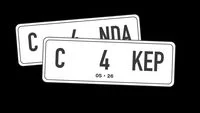
As the winter season progresses toward its peak in late December and January, the government retains the statutory authority to activate secondary emergency measures, including the odd-even license plate rationing scheme, if the AQI breaches severe thresholds. The overarching Winter Action Plan is scheduled to formally conclude on February 28, 2027, after which post-winter data audits will evaluate the efficacy of the mobile source restrictions.
Comprehensive Regulatory Measures and Multimodal Support Systems
Recognizing that vehicular restrictions alone can cause severe economic and logistical friction, the Delhi administration has paired the BS6 mandate with a comprehensive suite of supportive public policy measures. Transport experts note that successful low-emission zones require robust alternative transit networks to prevent severe gridlock at border checkpoints and mitigate socio-economic disruptions for the working class.
To reduce overall vehicle kilometers traveled, the local government has strongly urged both public and private sector enterprises operating within the capital territory to implement mandatory work-from-home policies of up to 50 percent for their non-essential office staff. Furthermore, corporations are directed to stagger employee arrival and departure times, flattening the morning and evening traffic peaks.

For citizens who must commute physically, municipal authorities have scaled up operations of public mass transit systems, prioritizing the expansion of electric bus fleets and high-capacity metro rail networks. Commuters are actively encouraged to adopt carpooling and ridesharing models to maximize vehicle occupancy rates.
Beyond vehicular traffic, the Winter Action Plan extends its regulatory reach to the construction sector—another primary contributor to Delhi’s suspended dust particles. All large-scale construction, demolition, and earth-moving activities are subjected to stringent temporary bans or mandatory dust-suppression protocols whenever air quality indexes cross into the "severe" or "emergency" categories. These synchronized efforts underscore a holistic governance model that treats air pollution as a multi-sectoral emergency rather than a mere traffic management challenge.
Economic Data and Environmental Context
The urgency behind Delhi’s uncompromising stance is rooted in decades of empirical environmental data. Air pollution in South Asia’s densest urban corridors routinely exceeds World Health Organization (WHO) safety guidelines by exponential margins. During the winter inversion period, PM2.5 concentrations in Delhi frequently cross 400 to 500 micrograms per cubic meter, levels equivalent to smoking dozens of cigarettes a day and posing catastrophic risks to public health, cardiovascular systems, and pediatric respiratory development.
According to transportation studies conducted by independent research groups such as the Centre for Science and Environment (CSE), vehicular exhaust accounts for roughly 40 percent of Delhi’s internal particulate pollution during non-agricultural burning periods, with a significant percentage of these emissions generated by older commercial trucks, diesel-powered utility vehicles, and aging passenger cars entering from satellite towns. The transition to BS6 standards—which were officially implemented nationwide in April 2020 to align Indian vehicle emission norms with European Euro 6 levels—has proven effective in slashing sulfur dioxide and nitrogen oxide outputs from new vehicles by up to 80 percent compared to older BS4 models. By effectively banning pre-BS6 models from outside the city, Delhi is closing a major regulatory loophole that previously allowed polluting regional fleets to undermine local air quality gains.
Implications and Lessons for Megacities Like Jakarta
The aggressive policy deployed by the Indian capital offers a profound blueprint and analytical mirror for other developing megacities wrestling with severe congestion and air pollution crises, most notably Jakarta, Indonesia.
Jakarta has long struggled with its own hazardous air quality, particularly during the dry season when stagnant meteorological conditions trap vehicle emissions, industrial pollutants, and coal-fired power plant fallout. With millions of motorized vehicles streaming daily into the capital from surrounding satellite cities such as Bogor, Depok, Tangerang, and Bekasi (the Jabodetabek agglomeration), Jakarta shares structural similarities with Delhi’s regional commuter dynamics.
Urban planning and environmental analysts point out that Jakarta’s ongoing efforts to curb urban pollution—such as localized odd-even rules, electronic road pricing proposals, and mandatory local emission testing (uji emisi)—often suffer from fragmented enforcement and a lack of regional integration. The Delhi model highlights several critical imperatives for Indonesian policymakers:
- Regional Regulatory Harmonization: Environmental standards cannot stop at municipal borders. Effective urban pollution control requires synchronized vehicle emission criteria across an entire metropolitan catchment area, preventing heavily polluting vehicles from simply migrating across administrative boundaries.
- Technological Enforcement Integration: Linking administrative compliance—such as mandatory vehicle inspections and digital emission certification—directly to essential services like fuel purchasing creates a high-compliance environment with minimal administrative evasion.
- Multimodal Infrastructure Readiness: Restricting private vehicle access must be directly proportional to the expansion, reliability, and safety of public mass transit networks, ensuring that working-class and middle-class commuters have viable, cost-effective alternatives.
- Corporate Accountability in Mobility Management: Engaging the private sector through mandatory teleworking quotas and staggered office hours during high-pollution seasons can dramatically deflate peak-hour traffic volumes without requiring total economic shutdowns.
As municipal governments across the Global South face mounting pressure to meet climate commitments and protect public health, Delhi’s winter action blueprint demonstrates that decisive, regulatory interventions targeting mobile emission sources are both technically feasible and politically necessary. Whether burgeoning megacities like Jakarta will adopt similarly rigorous inter-jurisdictional frameworks remains a critical question for urban planners as regional climate conditions continue to deteriorate.