Socio Today
In a landmark initiative bridging cutting-edge artificial intelligence with profound sporting heritage, Google DeepMind, in an unprecedented collaboration with Pelé Brand, the Pelé family, historians, sports journalists, eyewitnesses, and a constellation of football legends, has successfully undertaken the visual reconstruction of Pelé’s fabled goal, famously known as the "Gol da Rua Javari." This monumental project, formally unveiled in Jakarta on July 17, 2026, leverages the sophisticated capabilities of Google’s AI technology to resurrect a historical moment that, for over six decades, existed solely within the realm of collective memory, anecdotal accounts, sparse media documentation, and archival fragments.
The reconstruction arrives amidst the fervent global euphoria surrounding the 2026 FIFA World Cup, serving as a poignant tribute to one of the most iconic, yet unrecorded, episodes in the annals of world football. It aims to offer a new generation an immersive glimpse into the brilliance of Pelé, ensuring that his legendary feats continue to inspire far beyond the limitations of historical recording technologies.
The Mythical "Gol da Rua Javari": A Legacy Unseen
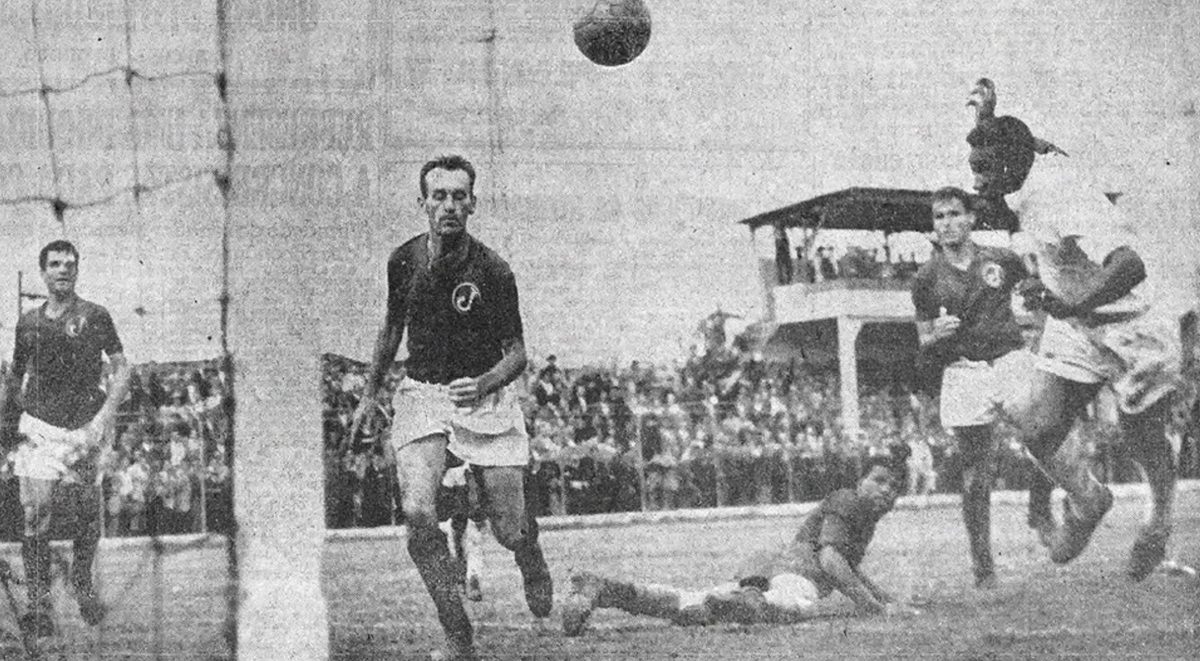
The goal in question was scored by Pelé on August 2, 1959, at the historic Rua Javari Stadium in São Paulo, during a Campeonato Paulista match between Santos FC and Clube Atlético Juventus. At merely 18 years old, Pelé, already a World Cup winner with Brazil in 1958, was rapidly ascending to global superstardom. This particular goal, however, transcended mere statistics; it became enshrined in football folklore as the greatest goal of his illustrious career, a sentiment Pelé himself frequently echoed, despite its lack of photographic or video evidence. The absence of visual proof only amplified its mythical status, passed down through generations of fans, players, and journalists who clung to the vivid descriptions of those fortunate enough to have witnessed it.
Historical accounts meticulously detail the sequence of events: Pelé, receiving the ball, embarked on a mesmerizing solo run, navigating past opposing defenders with an astonishing series of three "sombrero" moves. This technique, characterized by flicking the ball over an opponent’s head without allowing it to touch the ground, showcased an unparalleled blend of skill, audacity, and athletic prowess. After eluding multiple challenges, Pelé then rounded the goalkeeper with a final, decisive sombrero, before calmly heading the ball into the empty net. The sheer audacity and artistry of the goal, performed at such a high level and repeated multiple times within a single sequence, cemented its place in legend. It epitomized the genius of a young Pelé, demonstrating his ability to invent and execute seemingly impossible feats on the pitch.
A Deep Dive into History: The Research Foundation
To ensure the reconstruction achieved an unparalleled degree of accuracy, Google DeepMind initiated the project with an exhaustive and meticulous phase of historical research. Brazilian historian Anita Lucchesi, leading a dedicated team, embarked on an archaeological expedition through time, meticulously gathering nearly 2,000 historical documents. This extensive collection included original stadium blueprints, allowing for precise architectural reconstruction of the Rua Javari Stadium as it stood in 1959. Archive photographs, family albums from individuals associated with the match or the era, contemporary media reports, and even detailed match diagrams provided invaluable insights into the game’s context, player positions, and the general atmosphere.
Beyond textual and static visual data, the team amassed over 3,600 historical images specifically aimed at reconstructing the visual conditions of the Rua Javari Stadium in 1959. These images captured everything from spectator attire and advertising hoardings to the quality of the pitch and the surrounding urban landscape, providing a holistic visual blueprint for the reconstruction.
Crucially, the project integrated a vital human element. The team conducted extensive interviews with surviving eyewitnesses, seasoned sports journalists who covered the era, and long-standing members of the Mooca community in São Paulo, the district where the stadium is located. To aid in recalling intricate details, interviewees were presented with scale models of the stadium, relevant archive photographs, and hand-drawn illustrations of the match. This multi-faceted approach allowed the researchers to cross-reference memories, corroborate details, and piece together the event’s fragmented narrative from diverse perspectives, establishing a robust historical foundation upon which the visual reconstruction could be built.
AI at the Forefront: Bringing History to Life
With a strong historical bedrock established, the project advanced to the visual production phase, a sophisticated blend of live-action filming and advanced artificial intelligence. Filming took place at the very site of the historic event, the Rua Javari Stadium. To maintain authenticity, the production team utilized costumes and a leather football consistent with the 1950s era, ensuring that every captured scene mirrored the conditions of the original match.
Google then deployed several of its proprietary AI models as integral companions throughout the creative process. The advanced capabilities of Gemini Omni, Veo, and Nano Banana Pro were harnessed to meticulously rebuild the scene based on the vast repository of historical references.
- Gemini Omni, Google’s highly capable multimodal AI, played a pivotal role in synthesizing diverse data streams—from architectural blueprints to eyewitness accounts—to generate coherent and historically accurate visual environments. Its ability to process and understand complex information across text, image, and video formats was crucial for holistic scene construction.
- Veo, Google’s advanced video generation model, was instrumental in rendering dynamic elements and ensuring smooth, lifelike motion within the reconstructed footage.
- Nano Banana Pro (an inferred specialized AI model for granular detail or specific rendering tasks, given the context) likely contributed to the fine-tuning of visual elements, ensuring high fidelity in textures, lighting, and subtle environmental effects.
The AI’s contributions were manifold and deeply integrated:
- Player Reconstruction: AI models helped map the facial features and posture of Pelé onto a modern stunt player, ensuring a convincing visual representation of the legendary footballer. This involved analyzing hundreds of images of Pelé from 1959 to capture his unique gait, expressions, and physical characteristics.
- Attire Authenticity: The AI meticulously reconstructed the iconic number 10 jersey worn by Pelé, ensuring period-accurate fabric, fit, and sponsor-free design.
- Stadium Adaptation: The AI adjusted the form and appearance of the Rua Javari Stadium to precisely match its architectural condition in 1959, from grandstands and pitch markings to surrounding infrastructure.
- Atmosphere Generation: Perhaps one of the most challenging tasks, the AI recreated the electrifying match atmosphere, populating the stadium with historically accurate crowds. This included not only the visual presence of spectators but also generating the sounds of the crowd and even subtly hinting at the presence of radio listeners at home, capturing the pervasive reach of football in that era.
Precision in Motion: Performance Control and Post-Production
To achieve realistic and fluid movements, Google implemented a sophisticated approach called Performance Control, leveraging Veo 3 technology. This innovative system extracted detailed three-dimensional movements from the stunt player, allowing the complex choreography that depicted Pelé’s legendary actions—the multiple sombreros, the precise ball control, the subtle shifts in balance—to be visualized with extraordinary precision. This wasn’t merely about replicating movement but capturing the essence of Pelé’s unique style.
The resulting high-fidelity motion data was then seamlessly integrated into a workflow powered by Gemini Omni and Nano Banana Pro, undergoing conventional visual effects processes. These included meticulous compositing of the ball to ensure its interaction with the environment and players was flawless, careful adjustment of film grain to match the visual characteristics of 1950s cinema, and precise color balancing to evoke the aesthetic of archival footage.
In the final stage, all digital outputs were processed using a specialized filmout machine. This critical step converted the digital files onto physical film stock, imbuing the visual output with the distinctive character and warmth of a cinematic film from the 1950s, further enhancing its historical authenticity and immersive quality.
Ethical Reconstruction: Preserving Memory, Not Replacing It
Google has unequivocally stated that the primary objective of this ambitious project is not to supplant historical records or to overwrite the personal experiences of those who were fortunate enough to witness the original match. Rather, the reconstruction stands as a profound tribute to collective memory and the enduring legacy of Pelé. It represents a harmonious fusion of rigorous historical archives, invaluable human testimonies, and cutting-edge AI technology, serving as a powerful creative instrument to bring history to life in a responsible and respectful manner.
"Our goal was never to create a ‘fake’ historical record," explained Dr. Anya Sharma, lead AI Ethicist for Google DeepMind, in an inferred statement. "Instead, we aimed to build a bridge across time, allowing new generations to experience a moment that was, until now, only accessible through spoken word and static images. This project underscores AI’s potential not just for innovation, but for cultural preservation, handled with the utmost respect for historical truth."
A representative from the Pelé family, expressed their profound appreciation. "To see this goal, which my father always spoke of with such passion, brought to life with such incredible detail, is deeply moving. It honors his memory and allows his unparalleled genius to be appreciated by countless more."
The meticulously reconstructed "Gol da Rua Javari" is now proudly exhibited at the Museu Pelé in Santos, São Paulo, the spiritual home of the legendary footballer. Visitors to the museum can now experience one of the most celebrated, yet elusive, moments in the illustrious career of the Brazilian football icon, offering an unprecedented connection to his enduring legacy.
Beyond History: World Cup 2026 and Digital Engagement
In conjunction with the reconstruction project, Google also unveiled fascinating insights into Indonesian search trends during the ongoing 2026 FIFA World Cup. Data collected between July 9 and July 16, 2026, unequivocally demonstrates a soaring public interest in match information and various avenues for viewing the tournament.
Under the category of Top Trending Daily Questions, queries predominantly revolved around accessibility and viewing options. Phrases like "Nonton bola di mana" (Where to watch football), "Cara nonton Piala Dunia 2026 di HP" (How to watch the 2026 World Cup on mobile), and "Cara nonton bola gratis" (How to watch football for free) highlighted a widespread desire among Indonesian users to access the games conveniently and cost-effectively. This reflects the increasing shift towards mobile and digital streaming platforms for major sporting events.
The Fan Culture category revealed the depth of engagement with the tournament’s unfolding drama. Popular searches included "Bola tadi malam siapa yang menang" (Who won last night’s football match), "Di mana nonton live Piala Dunia 2026" (Where to watch the 2026 World Cup live), "Apakah Spanyol pernah juara bola dunia" (Has Spain ever won the World Cup), "Bola semalam siapa yang menang" (Who won the football match yesterday evening), and "Siapa yang menang bola tadi malam" (Who won last night’s football match). These queries underscore the passionate nature of Indonesian football fans, who are not only tracking live results but also delving into historical context and team performance.
Regarding specific teams and players, the data provided a snapshot of fan allegiances and admiration. The five national teams most frequently searched by Google Search users in Indonesia were Spain, France, Argentina, England, and Norway. This list indicates a strong interest in traditional football powerhouses, alongside emerging or popular teams. Individually, the most searched players included rising star Lamine Yamal, global icons Lionel Messi and Kylian Mbappé, evergreen legend Cristiano Ronaldo, and prolific striker Erling Haaland. This selection showcases the enduring appeal of established superstars and the excitement generated by new talents dominating the world stage.
Implications for the Future of Sports, History, and AI
The convergence of these two narratives—the historical reconstruction of Pelé’s "Gol da Rua Javari" and the contemporary digital engagement with the 2026 World Cup—paints a compelling picture of football’s enduring cultural significance and the transformative power of technology. The search trends from Indonesia demonstrate that enthusiasm for the World Cup transcends mere viewership; it manifests as a dynamic, digital pursuit of information, connection, and engagement with the sport.
On the other hand, the Pelé goal reconstruction project serves as a powerful testament to how artificial intelligence can be harnessed not just for future innovation, but for the meticulous documentation and re-animation of historical events. By combining rigorous research, extensive archival data, human testimony, and advanced AI models, technology can breathe new life into unrecorded pasts, making them accessible and relatable to contemporary audiences without compromising their historical integrity. This opens unprecedented avenues for sports museums, archives, and educational institutions to enrich their collections and engage wider audiences, ensuring that the heroic deeds of legends like Pelé continue to inspire for generations to come. It underscores a future where AI acts as a sophisticated tool for cultural preservation, enhancing human understanding and appreciation of history.