Socio Today
The Indonesian Ministry of Communication and Digital (Komdigi) has officially announced PT Telekomunikasi Seluler (Telkomsel), PT Indosat Tbk, and PT XLSmart Telecom Sejahtera Tbk as the successful bidders for the highly anticipated 700 MHz and 2.6 GHz radio frequency bands. This landmark decision, following a comprehensive selection process initiated in April 2026 and concluding without objections in July 2026, marks a pivotal moment in Indonesia’s journey towards a more connected and digitally empowered future. The allocation of these critical spectrum assets is expected to dramatically enhance national cellular network capacity, promising faster, more stable, and increasingly affordable mobile internet services for the archipelago’s vast population, while simultaneously generating significant economic value for state development.
Strategic Spectrum Allocation to Drive Connectivity
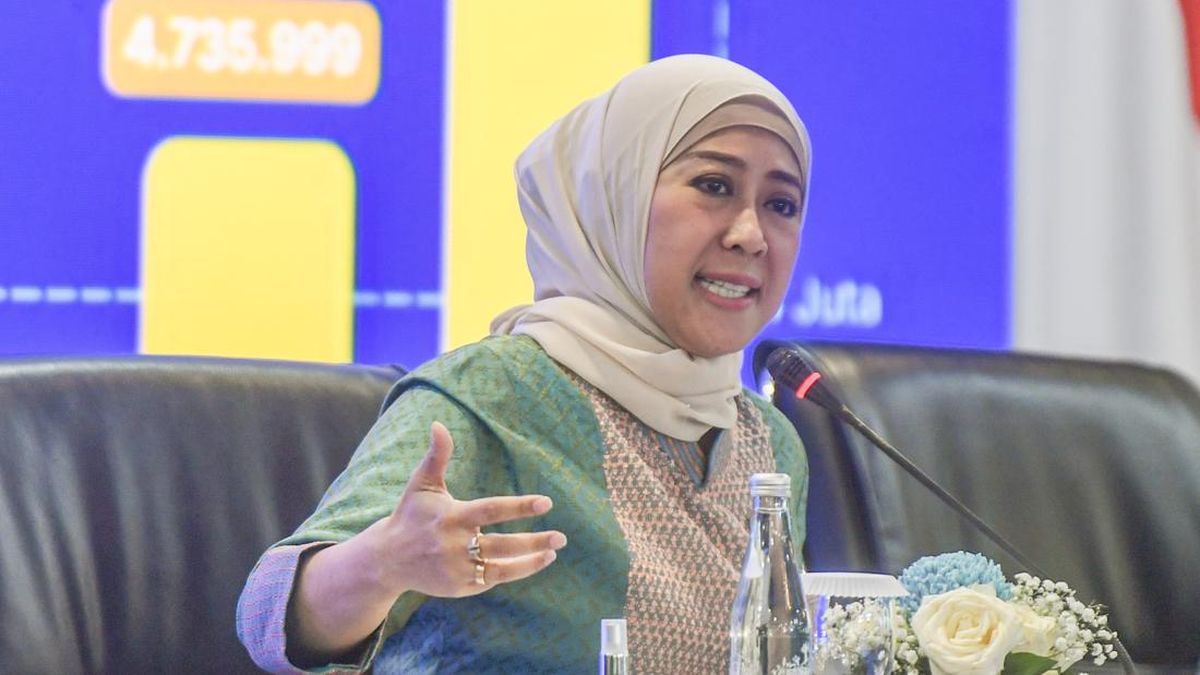
Minister of Communication and Digital, Meutya Hafid, emphasized the profound impact of this spectrum expansion. Speaking on Tuesday, July 21, she stated, "Komdigi ensures that this frequency auction delivers tangible and widespread benefits for the public. Ultimately, these benefits must be directly felt by communities at the grassroots level." The additional spectrum is poised to not only improve service quality but also foster greater digital inclusion, particularly in underserved and remote regions. This strategic move aligns with the government’s broader vision of leveraging digital infrastructure as a foundational pillar for socio-economic growth and national competitiveness.
The allocation comes at a critical juncture for Indonesia, a nation of over 270 million people spread across thousands of islands, where reliable and high-speed internet access remains a significant challenge in many areas. The demand for mobile data continues to surge, driven by increasing smartphone penetration, the proliferation of digital services, and the growing digital economy. By injecting new spectrum into the market, Komdigi aims to preemptively address potential network congestion, stimulate investment in advanced telecommunications infrastructure, and ensure that the country’s digital development keeps pace with global trends.
Unpacking the Significance of the Frequency Bands
The 700 MHz and 2.6 GHz bands each possess distinct characteristics that make their combined allocation particularly powerful for Indonesia’s unique geographical and demographic landscape.
The 700 MHz "Digital Dividend" Band: This frequency band, often referred to as the "digital dividend," became available following the national transition from analog to digital television broadcasting. Its lower frequency offers superior propagation characteristics, meaning signals can travel further and penetrate buildings more effectively than higher frequencies. This makes the 700 MHz band ideal for:
- Wider Coverage: Extending 4G and future 5G services to rural and remote areas, including Indonesia’s vast archipelagic regions, where deploying numerous cell towers is logistically and economically challenging.
- Improved In-building Penetration: Enhancing indoor mobile signal quality, which is crucial in densely populated urban environments and for vertical structures.
- Cost Efficiency: Reducing the number of base stations required to cover a given area, thereby lowering deployment and operational costs for operators, which can translate into more competitive service pricing for consumers.
The 2.6 GHz "Capacity" Band: In contrast, the 2.6 GHz band is a higher frequency spectrum that offers substantial capacity. It is primarily suited for:
- High Data Throughput: Supporting high-speed data services, crucial for urban areas with dense user populations and for applications requiring significant bandwidth, such as streaming, online gaming, and enterprise cloud services.
- 5G Deployment: This band is a cornerstone for 5G networks, enabling the ultra-fast speeds and low latency that are hallmarks of fifth-generation mobile technology. Its wide bandwidth facilitates massive MIMO (Multiple-Input Multiple-Output) antenna configurations, further boosting capacity and efficiency.
- Urban and Suburban Enhancement: Providing the necessary bandwidth to alleviate congestion in metropolitan areas and to deliver a superior user experience where data consumption is highest.
The combination of 700 MHz for expansive coverage and 2.6 GHz for high capacity is a strategic masterstroke, allowing operators to build robust, hybrid networks capable of serving both geographically dispersed populations and high-demand urban centers with advanced 4G and 5G capabilities. This balanced approach is critical for a nation like Indonesia, which grapples with both digital divide issues and the need for cutting-edge technological advancement.
A Rigorous Selection Process and Financial Windfall
The selection process, which commenced in April 2026, was designed to be transparent, competitive, and fair, ensuring that the spectrum was allocated to operators best positioned to deliver on the government’s digital agenda. The rigorous evaluation included technical, financial, and administrative criteria, culminating in a public announcement. The absence of objections during the subsequent protest period, which concluded in July 2026, underscores the integrity and robustness of the auction mechanism.
From a financial perspective, the spectrum allocation is projected to generate substantial non-tax state revenue (PNBP). Minister Hafid indicated an initial potential PNBP of approximately Rp6 trillion. Over a ten-year horizon, the total potential state revenue from these spectrum rights is estimated to reach an impressive Rp29.9 trillion. This revenue is not merely a fiscal gain but a strategic investment, earmarked by the government for further development initiatives, including bolstering digital infrastructure, supporting social programs, and stimulating economic growth. The financial contribution highlights the economic value inherent in spectrum, positioning it as a vital national asset.
Industry analysts have lauded Komdigi’s approach, noting that a well-managed spectrum auction not only maximizes state revenue but also creates a level playing field for operators, encouraging healthy competition and ultimately benefiting consumers through improved services and competitive pricing. The transparent process also instills confidence among investors, both domestic and international, signaling Indonesia’s commitment to a predictable and stable regulatory environment for its telecommunications sector.
Mandates for Inclusive and Advanced Digital Services
Beyond the financial contributions, the winning operators are bound by stringent obligations designed to ensure the benefits of the new spectrum reach all segments of Indonesian society. These mandates are central to Komdigi’s vision of equitable digital access and advanced technological adoption:
1. 4G Connectivity in Underserved Areas: A primary commitment requires the successful bidders to deploy 4G services in 538 villages and sub-districts that currently suffer from no signal or weak signal strength. These areas are strategically located across the Indonesian archipelago, from Sumatra in the west to Papua in the east, directly targeting the nation’s 3T (Terdepan, Terluar, Tertinggal – Frontier, Outermost, Underdeveloped) regions. This initiative is crucial for bridging the digital divide, providing essential connectivity that can unlock access to:
- Education: Facilitating online learning, access to digital libraries, and educational resources for students and teachers.
- Healthcare: Enabling telemedicine services, remote diagnostics, and access to health information in areas with limited medical facilities.
- Digital Governance: Improving public service delivery, civic participation, and communication between citizens and local government.
- Economic Opportunities: Empowering local businesses with e-commerce capabilities, facilitating access to market information, and fostering digital entrepreneurship.
2. Accelerated 5G Rollout: The operators are also mandated to achieve at least 51 percent 5G population coverage nationwide within five years of the spectrum allocation. This ambitious target underscores Indonesia’s commitment to becoming a leader in the adoption of next-generation mobile technology. The 5G rollout is not merely about faster speeds; it is about enabling a new era of digital innovation, including:
- Industrial IoT (IIoT): Supporting smart factories, automated logistics, and enhanced efficiency in various industries.
- Smart Cities: Facilitating intelligent transportation systems, public safety solutions, and optimized urban management.
- Augmented Reality (AR) and Virtual Reality (VR): Opening new possibilities for immersive entertainment, training, and remote collaboration.
- Edge Computing: Bringing data processing closer to the source, enabling real-time applications and reducing latency.
3. National Mobile Broadband Speed Target: To complement the coverage mandates, Komdigi has set an aggressive target for average mobile broadband speeds to gradually increase to 100 Mbps by 2029. This target is a clear indicator of the government’s aspiration for Indonesia to have a world-class digital infrastructure. The combination of the 700 MHz band’s robust propagation for foundational coverage and the 2.6 GHz band’s high capacity for 5G services is expected to be instrumental in achieving this national speed benchmark.
These obligations are not just regulatory burdens but strategic directives aimed at maximizing the societal and economic returns from spectrum utilization. They ensure that the benefits of technological advancement are shared widely, fostering a more equitable and prosperous digital society.
Industry Reactions and Future Outlook
While official statements from the winning operators are pending, industry observers anticipate strong commitments to investment and accelerated network deployment. Representatives from Telkomsel, Indosat, and XLSmart Telecom Sejahtera are expected to outline their detailed rollout plans, emphasizing how the newly acquired spectrum will enable them to enhance customer experience, expand their footprint, and innovate new services. The competition among these major players, now armed with critical spectrum, is expected to intensify, leading to further improvements in service quality and pricing for consumers.
Telecommunications industry analysts largely view the auction results positively. "This allocation provides the necessary resources for operators to truly scale their 4G and 5G ambitions," commented a Jakarta-based analyst specializing in the digital sector. "The clear mandates for rural coverage and 5G deployment demonstrate a well-thought-out national digital strategy. We can expect significant capital expenditure in the coming years, which will have a ripple effect on the broader economy, including job creation in infrastructure development and related tech sectors."
Looking ahead, Komdigi is already preparing for the utilization process of the 900 MHz frequency band. This continuous effort to optimize spectrum allocation underscores the ministry’s long-term commitment to ensuring sufficient and appropriately utilized radio frequencies to meet the nation’s evolving connectivity needs. The 900 MHz band, similar to 700 MHz, possesses excellent propagation characteristics and could further enhance rural coverage and in-building penetration, acting as another layer of foundational connectivity.
The Broader Vision: Spectrum as a Digital Foundation
Minister Meutya Hafid eloquently articulated Komdigi’s overarching philosophy: "Spectrum frequency is not merely a commodity to be auctioned; it is fundamental infrastructure and the foundation of national digital transformation." This statement encapsulates the government’s holistic view of digital development. Each optimally utilized frequency band is seen as a conduit for:
- Expanding Internet Access: Bridging geographical and socio-economic divides, ensuring that every citizen has the opportunity to participate in the digital economy.
- Strengthening Digital Economic Competitiveness: Providing the backbone for e-commerce, fintech, digital creative industries, and other sectors that drive economic growth.
- Improving Public Service Quality: Enabling more efficient and accessible government services, from civic registration to disaster management.
- Opening New Investment Opportunities: Attracting both domestic and foreign investment in digital infrastructure, services, and innovation.
- Ensuring Equitable Access: Guaranteeing that all communities, especially those in the 3T regions, have equal opportunities to harness the power of digital technology for their development and well-being.
In essence, the allocation of the 700 MHz and 2.6 GHz spectrum bands is more than a regulatory exercise; it is a strategic investment in Indonesia’s future. It lays the groundwork for a robust, inclusive, and advanced digital ecosystem that will empower its citizens, stimulate its economy, and solidify its position as a leading digital nation in the global arena. The coming years will witness the tangible realization of these benefits as the winning operators translate their new spectrum assets into enhanced connectivity and innovative services across the vast and diverse Indonesian landscape.