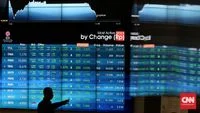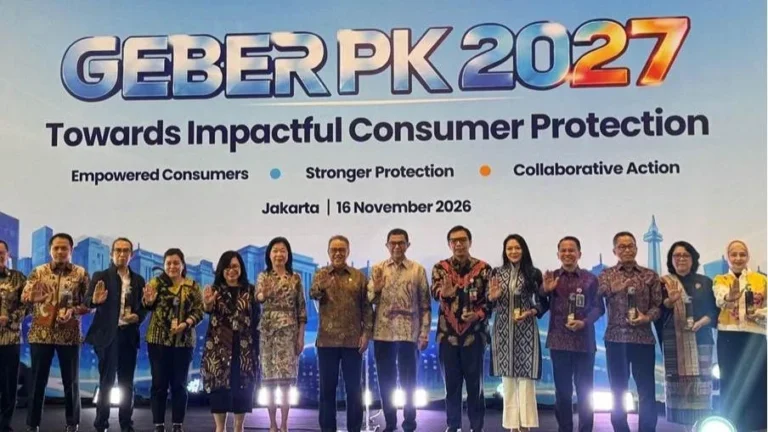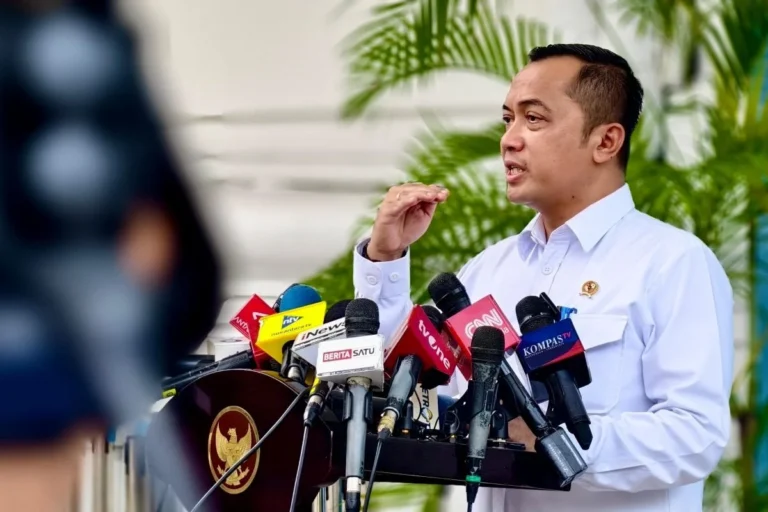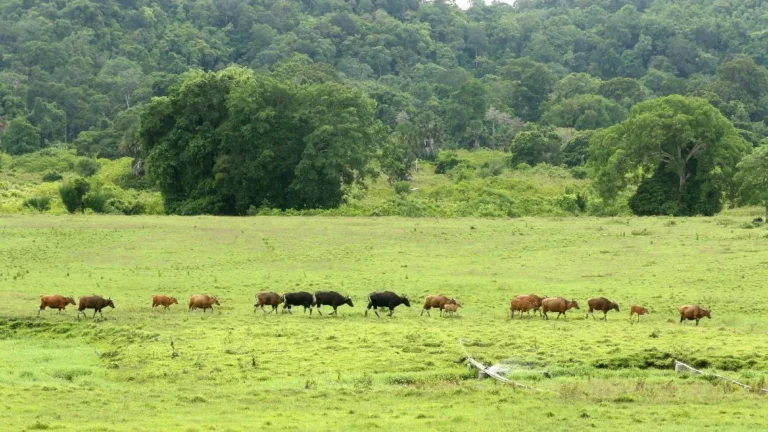
Indonesia has firmly established itself as a primary destination for global investors seeking high-value carbon credit opportunities, according to the latest assessments from the Financial Services Authority (OJK). During a recent address at the Indonesia Stock Exchange (IDX) in Jakarta, Friderica Widyasari Dewi, Chief Executive of the OJK’s Board of Commissioners for Consumer Education and Protection, highlighted that Indonesia’s vast natural resources and strategic policy frameworks have placed the nation at the center of international discussions regarding climate finance. Following her participation in London Climate Week, Friderica noted that the global financial community views Indonesia not merely as a participant, but as a critical hub for the transition to a low-carbon economy.
This influx of international interest is largely anchored by the government’s robust integration of the Carbon Registry System, known as SATU KARBON. By providing a centralized, transparent mechanism for registering and verifying carbon projects, Indonesia has managed to mitigate some of the historical volatility and skepticism associated with carbon markets in emerging economies. The projects currently capturing the most significant attention include large-scale reforestation initiatives, the rehabilitation of degraded peatlands, and diverse community-based social programs that demonstrate measurable carbon sequestration and social equity outcomes.
The Global Shift Toward ESG Integration
The burgeoning interest in Indonesian carbon projects is not an isolated phenomenon but rather a direct reflection of the seismic shift in global asset allocation toward Environmental, Social, and Governance (ESG) principles. Institutional and retail investors alike are reorienting their portfolios to align with the Paris Agreement targets and the broader mandate of sustainable development.
Data from the 2023 OECD survey underscores this paradigm shift, revealing that 67 percent of retail investors now prioritize sustainability as a core metric for investment selection. Perhaps more striking is the finding that 64 percent of these investors are willing to accept lower immediate financial returns if it guarantees exposure to high-impact ESG products. This "virtue premium" suggests that the capital market is entering a new era where environmental stewardship is considered a fiduciary necessity rather than a peripheral philanthropic goal.
For Indonesia, this represents a significant opportunity to bridge the climate financing gap. With a vast archipelago that serves as one of the world’s most critical carbon sinks—due to its extensive tropical rainforests and coastal mangroves—the nation is uniquely positioned to capitalize on the premium prices currently offered in voluntary carbon markets (VCM).
The Chronology of Regulatory Advancement
The path to Indonesia becoming a carbon market leader has been characterized by a series of structured regulatory milestones aimed at building market trust:
- 2021: The Indonesian government issued Presidential Regulation No. 98 of 2021 regarding the Implementation of Carbon Economic Value (Nilai Ekonomi Karbon/NEK), providing the legal bedrock for the national carbon market.
- 2022: The Ministry of Environment and Forestry launched the SATU KARBON system to track, verify, and report carbon emissions reductions across various sectors.
- 2023: The OJK introduced comprehensive guidelines for sustainability reporting for public companies, mandating transparency in environmental disclosures to prevent superficial claims.
- 2024: The IDX officially launched the Indonesia Carbon Exchange (IDXCarbon), providing a regulated platform for carbon trading, further legitimizing the asset class for institutional players.
These steps were essential to transition from a disorganized, project-based model to a sophisticated, national-level market that satisfies the rigorous due diligence requirements of international financial institutions and ESG-focused hedge funds.
The Threat of Greenwashing and Regulatory Vigilance
Despite the optimism, the OJK has issued a stern warning to listed companies regarding the integrity of their environmental claims. As capital flows toward green projects, the temptation for companies to engage in "greenwashing"—the practice of misleading the public about the environmental benefits of a product or service—has risen.
Friderica Widyasari Dewi emphasized that the gap between a company’s stated ESG commitment and its actual operational implementation remains a significant risk to market stability. "Greenwashing, alongside its variants like impact washing and social washing, threatens the credibility of the entire national carbon market," she stated. Impact washing involves companies exaggerating the social benefits of their programs, while social washing misrepresents a firm’s commitment to community welfare.
To combat these deceptive practices, the OJK is actively collaborating with the Indonesian Institute of Accountants (IAI). This partnership is focused on enhancing the rigor of sustainability reporting. The objective is to move beyond "check-the-box" compliance and toward a model where companies provide verified, empirical data that can withstand independent audits. The OJK has warned that companies failing to provide honest, accurate disclosures face potential sanctions, which could include administrative penalties or reputational damage that would alienate them from the growing pool of sustainability-conscious investors.
Analyzing the Economic Implications
The implications of this trend for the Indonesian economy are profound. By positioning itself as a high-integrity supplier of carbon credits, Indonesia can attract foreign direct investment (FDI) that supports the energy transition. This capital is vital for financing the decommissioning of coal-fired power plants and the expansion of renewable energy infrastructure, such as solar, geothermal, and wind projects.
Furthermore, the integration of local communities into carbon-based economic models provides a dual benefit: it creates alternative revenue streams for rural populations, thereby reducing reliance on extractive industries like illegal logging or unsustainable palm oil cultivation. This shift is essential for achieving the "Just Transition" that Indonesia has pledged to pursue under its Just Energy Transition Partnership (JETP) commitments.
However, analysts note that the sustainability of this investment wave depends on two factors: the accuracy of carbon quantification and the stability of the regulatory environment. International buyers are becoming increasingly sophisticated; they are moving away from cheap, low-quality offsets and toward "high-integrity" credits that offer verified biodiversity and social impacts. If Indonesia can maintain the transparency of the SATU KARBON registry and ensure that its corporate disclosures are beyond reproach, it could capture a disproportionate share of the global carbon finance market.
Moving Forward: Standardization and Credibility
The OJK’s push for enhanced reporting standards is a proactive strategy to avoid the "credibility trap" that has hampered other emerging markets. By aligning with international accounting standards, Indonesia is signaling to global investors that its carbon credits are backed by the rule of law.
Industry experts suggest that the next phase of development will require the professionalization of the verification process. This involves not only the OJK and the IAI but also third-party auditors and environmental scientists who can provide the technical expertise necessary to validate the carbon sequestration potential of forest and peatland restoration projects.
In conclusion, Indonesia’s rise as a premier destination for global green investment is a testament to the convergence of national policy and international market demand. While the potential for economic growth and environmental protection is immense, the OJK’s vigilant approach to greenwashing reflects an understanding that market longevity is built on trust. As Indonesia continues to refine its regulatory framework, the focus will likely remain on ensuring that the capital flowing into the nation results in genuine, verifiable, and permanent climate outcomes. For the global investor community, the message is clear: Indonesia is open for business, but the era of superficial commitments has come to an end. The future of the country’s carbon economy will be defined by its ability to prove, through data and transparency, that it is a responsible steward of the global climate.