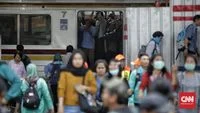
Effective December 1, 2024, commuters utilizing the Cikarang-Bekasi KRL line will experience a shift in service intervals as PT Kereta Commuter Indonesia (KAI Commuter) implements the 2026 Railway Travel Graphic (GAPEKA). The adjusted schedule will see the headway—the time interval between consecutive trains—increase from 15 minutes to 17 minutes. This operational change is part of a broader systemic overhaul designed to enhance passenger safety and streamline the integration of long-distance rail services within the Greater Jakarta area.
The decision to modify the headway on this critical commuter artery follows a strategic mandate requiring all Long-Distance Train (KAJJ) services to stop at Bekasi Station. While the additional two-minute wait may appear incremental, the operational complexities required to accommodate high-frequency long-distance transit alongside heavy commuter traffic necessitate significant adjustments to the existing signaling and track-occupancy schedules.
Safety Prioritization and Operational Reconfiguration
The core driver behind the implementation of the new GAPEKA 2026 is an emphasis on safety, particularly in response to previous operational incidents, including a notable railway accident near Bekasi Timur Station. By mandating that all long-distance trains stop at Bekasi Station, KAI Commuter and the Ministry of Transportation aim to create a more controlled environment for passenger boarding and alighting, as well as to optimize the flow of rail traffic across the dense Jabodetabek corridor.
Heri Siswanto, Director of Operations and Marketing at PT KAI Commuter, confirmed the development during a press briefing in Gambir, Jakarta, on Wednesday, November 18. "All long-distance trains will henceforth make a mandatory stop at Bekasi Station," Siswanto stated. He explained that this policy is the result of a comprehensive audit of infrastructure, rolling stock, and current operational patterns. The integration of long-distance services into the Bekasi hub is intended to reduce the risk of track congestion and improve the synchronization of KAJJ arrivals with the high-density Commuter Line schedules.
The inclusion of Bekasi as a primary stop for long-distance services serves as a logistical "bottleneck" management strategy. By formalizing the stop, railway operators can better manage the transition of trains from long-haul tracks to the suburban rail network, ensuring that the movement of heavy, high-speed trains does not conflict with the frequent acceleration and deceleration patterns of local KRL services.
Expansion of the Loop Line and Capacity Mitigation
While the Cikarang-Bekasi line will see a slight increase in headway, KAI Commuter is simultaneously expanding its operational footprint elsewhere. To maintain systemic balance, the company will introduce 18 additional daily trips across the "Loop Line." This expansion covers critical corridors, including Jatinegara-Pasar Senen-Kampung Bandan, Manggarai-Kampung Bandan, and the high-traffic Bekasi-Manggarai route.
The expansion of the Loop Line is a strategic response to the shifting demographics of commuters in Jakarta. By increasing frequency on these routes, KAI Commuter hopes to absorb the potential displacement of passengers who might otherwise be affected by the adjusted Cikarang-Bekasi schedule. This balancing act is intended to preserve the overall capacity of the Jabodetabek rail network, ensuring that the total volume of daily passengers remains consistent or grows despite the specific adjustments on the Cikarang line.
Addressing Passenger Capacity and Rolling Stock Strategy
Recognizing that an increase in headway could lead to higher platform density and increased passenger load per train, KAI Commuter has formulated a mitigation strategy focused on the capacity of individual train sets. VP Corporate Secretary of KAI Commuter, Karina Amanda, noted that the company is proactively managing the potential for overcrowding.
"We are prioritizing the use of train sets with higher capacities, specifically the SF10 (10-car configuration) and SF12 (12-car configuration) on the Cikarang Line," Amanda stated. "This approach is designed specifically to mitigate the impact of the increased headway by ensuring that each individual train can carry a higher volume of passengers during peak hours."
By maximizing the use of 12-car trains, KAI Commuter effectively offsets the two-minute delay in frequency. If a 15-minute headway with an 8-car train is replaced by a 17-minute headway with a 12-car train, the net throughput of passengers per hour remains relatively stable. However, the success of this strategy relies heavily on the punctuality of the 12-car units and the ability of stations to handle the larger influx of passengers disembarking simultaneously.
The Context of GAPEKA 2026
The GAPEKA 2026 is a multi-year blueprint for the Indonesian railway system, designed to modernize the management of national rail infrastructure. Unlike previous iterations, GAPEKA 2026 places a heavier emphasis on "intermodal connectivity" and "safety-first" operational standards. The transition toward this graphic is part of a broader government objective to double the number of rail passengers by 2030.
The implementation of GAPEKA is a complex process that involves the reconfiguration of thousands of train movements across Java. For the Jakarta metropolitan area, this involves balancing the competing needs of:
- Long-Distance Trains (KAJJ): High-priority services connecting Jakarta to major cities across Java.
- Commuter Line (KRL): The backbone of Jakarta’s public transport, serving hundreds of thousands of daily workers.
- Airport Rail Link: Specialized services connecting city centers to Soekarno-Hatta International Airport.
The integration of these three distinct types of services at major stations like Bekasi and Manggarai remains the greatest challenge for the Ministry of Transportation and PT KAI.
Analytical Implications: Balancing Convenience and Safety
The decision to extend the headway on the Cikarang-Bekasi line is likely to draw mixed reactions from regular commuters. For the daily worker, a two-minute increase in wait time can, over the course of a month, result in significant lost time. However, analysts point out that the trade-off is improved safety and long-term network stability.
The accident at Bekasi Timur serves as a somber reminder of the vulnerabilities in a system that operates at maximum capacity. When rail density reaches critical levels, the margin for human or technical error shrinks. By forcing a standardized stop for long-distance trains and adjusting local KRL headways, KAI Commuter is essentially creating a more rigid, predictable schedule that reduces the likelihood of "bunching"—where trains end up too close together—and allows for better recovery if a delay occurs elsewhere in the network.
Furthermore, the focus on SF10 and SF12 configurations is a positive development for long-term capacity. Historically, the Jabodetabek rail network struggled with under-capacity trains. The shift toward higher-capacity rolling stock is a necessary step in evolving the system from a suburban commuter model to a high-capacity urban mass transit system.
Future Outlook and Conclusion
As December 1 approaches, KAI Commuter is expected to roll out an intensive public information campaign to ensure that passengers are well-informed about the new schedule. This includes updates to the KRL Access application, new signage at stations, and the deployment of additional ground staff at key transfer points.
The success of the GAPEKA 2026 implementation on the Cikarang-Bekasi line will be measured by two key metrics: the average load factor of the 12-car trains during peak hours and the overall punctuality of the service. If the transition proves effective, it will likely serve as a blueprint for further adjustments on other high-traffic corridors, such as the Bogor-Jakarta line, where similar balancing acts between long-distance and commuter traffic are frequently required.
Ultimately, the shift underscores the reality that the Indonesian railway network is entering a phase of maturity. The era of "maximizing speed and frequency at all costs" is being replaced by a more nuanced approach that values system-wide reliability and passenger safety as the primary indicators of success. While the 17-minute headway may present a temporary inconvenience, the structural upgrades supporting this change are fundamental to the modernization of Jakarta’s rail backbone. Passengers are advised to check the updated schedules via official KAI Commuter channels before the December 1 deadline to minimize disruptions to their daily commutes.