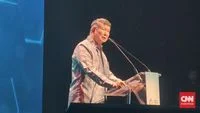
The government of Norway has officially committed an additional US$100 million, equivalent to approximately Rp1.8 trillion, to Indonesia as a performance-based reward for the Southeast Asian nation’s significant achievements in reducing greenhouse gas emissions within its forestry and land-use sectors. This financial injection covers the period between 2020 and 2023 and was announced during a high-level bilateral meeting held at the Indonesian Pavilion during the United Nations Climate Change Conference (COP31) in Antalya, Turkey. This milestone marks the fifth phase of a long-standing environmental partnership between the two nations, underscoring a deepening trust and a shared commitment to global climate action.
A Landmark Financial Agreement
The funding, categorized under the Results-Based Contribution (RBC) scheme, signifies a notable evolution in the economic valuation of forest conservation. For this fifth tranche, the payment rate has been set at US$10 per ton of carbon dioxide equivalent (CO2e), effectively doubling the rate applied in the previous four phases, which were valued at US$5 per ton.
This decision highlights the increasing global recognition of the economic and ecological value provided by Indonesia’s massive tropical rainforests. To date, Indonesia has received a cumulative total of US$216 million from Norway, reflecting verified emission reductions spanning from the 2016-2017 period through to the 2019-2020 fiscal cycle. The doubling of the payment rate is widely viewed by climate experts as a signal that the international community is prepared to pay a premium for high-integrity environmental outcomes.
Strategic Context and Official Reactions
Hashim S. Djojohadikusumo, the Special Envoy of the President for Climate and Energy, represented the Indonesian delegation in Turkey. He emphasized that the financial support is not merely a transaction but a validation of Indonesia’s policy trajectory. "This support reflects our mutual trust and commitment to transforming verified achievements into sustainable climate action," Hashim stated during the announcement. He further articulated that the protection of forests is inextricably linked to national security, encompassing water security, food sovereignty, and the welfare of indigenous and local communities.
From the Norwegian perspective, Minister of Climate and Environment Sigrun Aasland praised the Indonesian government’s proactive stance. "Indonesia has demonstrated that ambitious policies and targeted measures can deliver significant results for the climate, nature, and people," Aasland noted. The Norwegian contribution serves as a cornerstone of the bilateral relationship, which has matured from basic environmental cooperation into a sophisticated framework for carbon management.
The Evolution of Indonesia’s Forest Protection Policy
Indonesia’s strategy for climate mitigation is anchored in the Forestry and Other Land Use (FOLU) Net Sink 2030 program. This comprehensive policy roadmap is designed to ensure that by 2030, the forestry sector will act as a carbon sink rather than a carbon source. The program focuses on three main pillars: aggressive forest protection, sustainable forest management, and the large-scale restoration of carbon-rich peatlands and mangroves.
The government has also leaned heavily into social forestry programs as a tool for conservation. By granting forest management access to local communities—covering over 8.3 million hectares and benefiting approximately 1.4 million families—the state aims to align economic incentives with conservation goals. By involving the people who live within or near forest areas, the government has fostered a bottom-up approach to preventing illegal logging and forest encroachment.
Furthermore, President Prabowo Subianto has signaled a massive expansion in the operational capacity of forest protection agencies. The administration has directed a surge in the recruitment of forest rangers and specialized wildfire fighting personnel, aiming to increase the workforce from 5,000 to 70,000 individuals. This massive human resource investment is expected to bolster the monitoring and enforcement capabilities of the Ministry of Environment and the relevant regional agencies.
Advancing Global Climate Finance Mechanisms
Beyond the bilateral agreement with Norway, Indonesia is positioning itself as a leader in multilateral climate finance. A primary initiative in this regard is the Tropical Forest Forever Facility (TFFF), a proposed global mechanism aimed at providing consistent, long-term funding for countries that maintain their tropical forest cover. Indonesia, as a member of the TFFF board, has pledged a capital investment of US$1 billion to the fund, signaling its readiness to lead by example alongside partners like Brazil.
The Indonesian government maintains that global climate finance must respect the developmental priorities of forest-rich nations. By advocating for transparent governance and equitable financial distribution, Indonesia is attempting to reshape the international climate dialogue to ensure that developing nations are fairly compensated for the global "ecosystem services" provided by their forests.
Addressing Technical Integrity and MRV Systems
A critical aspect of the current agreement is the focus on the Measurement, Reporting, and Verification (MRV) of emissions. Moh Jumhur Hidayat, Minister of Environment/Head of the Environmental Management Agency (KLH/BPLH), noted that the achievement of Indonesia’s Nationally Determined Contribution (NDC) targets relies on inter-sectoral coordination and rigorous technical standards.
The government has emphasized that all results-based payments must be strictly aligned with the national Carbon Economic Value framework and the national registry system. This technical rigor is essential to prevent "double counting," where carbon credits are sold or claimed by multiple parties, thereby undermining the integrity of the global carbon market. The KLH/BPLH is currently working to synchronize sectoral mitigation results with national targets, ensuring that every ton of carbon reduced is accurately accounted for and reported in accordance with international standards.
Socio-Economic Implications and Local Empowerment
The involvement of local communities, often referred to as "Masyarakat Peduli Api" (Fire-Aware Communities), remains a cornerstone of the nation’s fire prevention strategy. Deputy Minister of Forestry Rohmat Marzuki emphasized that traditional knowledge, combined with modern technical training, allows for a more responsive and effective approach to forest fire management.
By integrating these communities into the formal economy of conservation, the government intends to decouple economic growth from deforestation. The broader economic impact of these programs includes the potential for non-timber forest product development, eco-tourism, and sustainable agriculture, which provide alternative livelihoods that do not rely on the exploitation of standing forests.
Future Outlook and Challenges
Despite the progress, the path toward the 2030 targets remains complex. The Indonesian government acknowledges that international funding should remain a complement to, not a replacement for, the obligations of developed nations to provide public climate finance. As the global carbon market continues to mature, Indonesia is pushing for high-integrity standards that favor long-term stability over short-term speculative gains.
The expansion of personnel, the commitment to the TFFF, and the successful attainment of the fifth phase of Norwegian funding collectively paint a picture of a nation that has transitioned from being a passive recipient of climate aid to an active architect of global environmental policy. The success of these programs in the coming years will depend on sustained political will, the continuous improvement of the MRV system, and the ability to balance industrial development with the urgent imperative of planetary health.
As the international community watches the progress of the FOLU Net Sink 2030 program, the partnership between Indonesia and Norway stands as a template for other nations seeking to harmonize economic development with the preservation of critical biodiversity and carbon sinks. The next phase of this cooperation will likely focus on scaling up these successes, ensuring that the environmental gains are not only maintained but expanded to include broader landscapes and more diverse ecosystems across the archipelago.