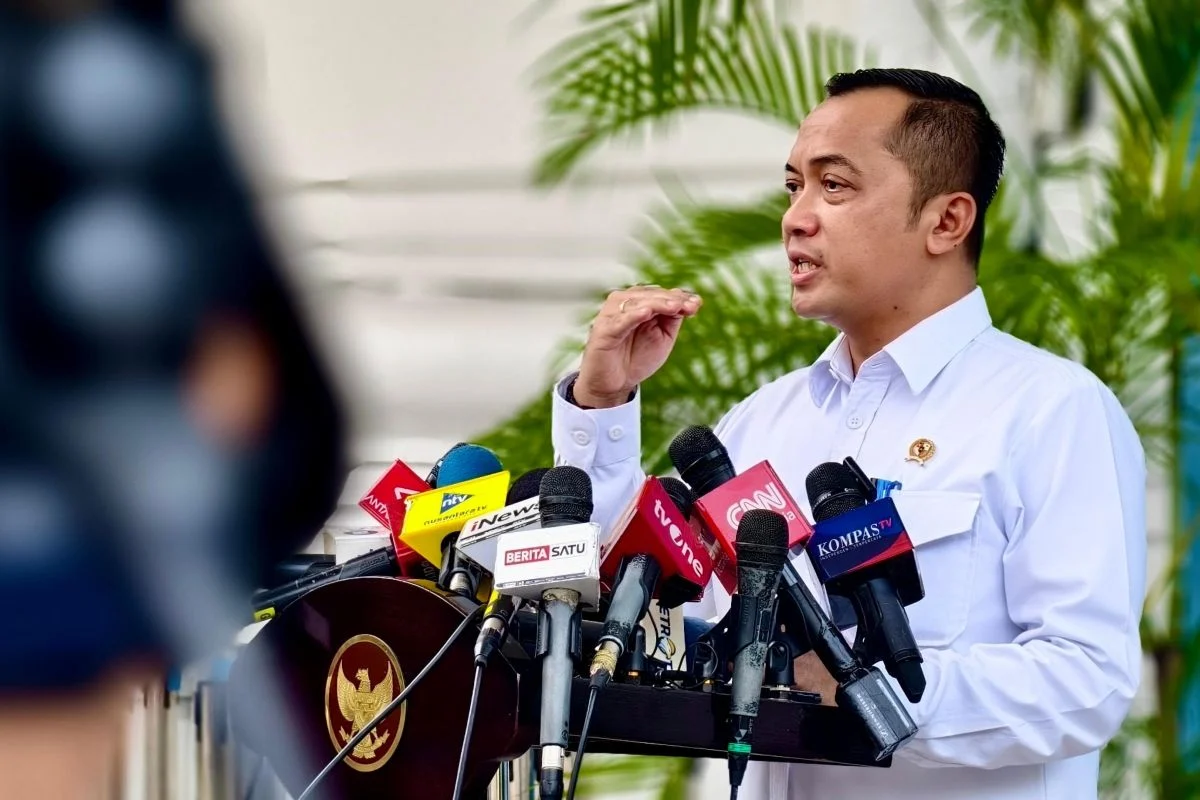
The political landscape of Indonesia faced an unprecedented crisis in November 2026 as the nation grappled with the revelation that the highest office in the land had been compromised. In a shocking turn of events, the Criminal Investigation Agency (Bareskrim) of the Indonesian National Police (Polri) announced the detention of the former Chief of National Police, General Listyo Sigit Prabowo, along with two other high-ranking officers, Inspector General Ahrie Sonta Nasution and Inspector General Eko Hadi Santoso. The trio has been named as primary suspects in a high-profile case involving illegal wiretapping, unauthorized data access, and the deliberate destruction of electronic evidence targeting President Prabowo Subianto.
The Mechanics of the Breach
The investigation, spearheaded by the current Head of Bareskrim, Commissioner General Asep Safrudin, reveals a sophisticated misuse of state infrastructure. According to official preliminary findings, the unauthorized surveillance operations were conducted between 2025 and 2026. The perpetrators allegedly leveraged the Lawful Interception Management System (LIMS)—a technology designed for legitimate law enforcement and counter-terrorism operations—to monitor telecommunications without the required judicial warrants or legal oversight.
The scope of the surveillance was extensive, moving beyond the President to include a wide network of national stakeholders. Investigators confirmed that phone numbers belonging to high-ranking government officials, prominent political figures, investigative journalists, non-governmental organization (NGO) activists, and influential business leaders were systematically fed into the LIMS. The operation, characterized by security analysts as an "abuse of power," operated in a shadow-channel outside the established protocols of the state intelligence apparatus. Furthermore, evidence suggests a concerted effort to scrub digital footprints and delete recorded transcripts in October 2026, just weeks before the investigation broke.
Timeline and Chronology of the Investigation
- 2025–2026: The period identified during which the illegal interception of communications occurred.
- October 2026: Internal attempts to destroy data and logs within the LIMS infrastructure are suspected to have taken place.
- Early November 2026: Internal audits and intelligence tip-offs regarding irregular LIMS activity trigger an emergency investigation by Bareskrim.
- Mid-November 2026: General Listyo Sigit Prabowo and two other generals are formally named as suspects.
- Late November 2026: Public disclosure of the case, causing widespread national debate regarding institutional accountability and national security protocols.
Institutional Implications and Official Responses
The involvement of the former police chief has sent shockwaves through the Indonesian security establishment. The Coordinating Minister for Political, Legal, and Security Affairs (Menko Polkam) has officially labeled this event as a critical juncture for the "institutional reform" of the National Police. There is an urgent call for the complete audit of technological infrastructure used by law enforcement agencies to ensure that such systems cannot be repurposed for personal or political gain.
President Prabowo Subianto has issued a directive for the National Police to conduct the investigation with full transparency, emphasizing that no individual, regardless of their rank or past position, is above the law. The Ministry of State Secretary (Mensesneg) has maintained a guarded stance regarding the specific content of the intercepted conversations, stating that the investigation is still ongoing and that the confidentiality of the state’s decision-making process remains a top priority.
Global Precedents of Presidential Espionage
While the Indonesian public is reeling from the implications of this breach, history indicates that the vulnerability of heads of state to espionage is a recurring phenomenon in global politics. The following cases serve as a sobering reminder of how intelligence gathering often ignores diplomatic boundaries.
The Susilo Bambang Yudhoyono (SBY) Incident (2009–2013)
In 2013, documents leaked by Edward Snowden exposed that Australia’s Defence Signals Directorate (DSD) had targeted the personal mobile phone of former President SBY in 2009. The surveillance lasted for 15 days, with reports indicating that the phones of First Lady Ani Yudhoyono and several cabinet members were also compromised. This revelation led to a severe diplomatic freeze, with Indonesia recalling its ambassador to Canberra and suspending military and intelligence cooperation for a period.
The Angela Merkel Surveillance (2002–2013)
One of the most famous cases involved former German Chancellor Angela Merkel, whose communications were monitored by the U.S. National Security Agency (NSA). The breach was so significant that it caused a rupture in U.S.-German relations. Merkel, who was targeted as early as 2002, famously demanded an explanation from then-President Barack Obama, noting that "spying among friends" is entirely unacceptable in modern international relations.
The Case of Dilma Rousseff (2013)
Brazil’s former President Dilma Rousseff faced a massive breach of sovereignty when it was revealed that the NSA had intercepted her private communications and those of her closest advisors. The espionage also extended to the state-owned oil giant, Petrobras. In a move that signaled her displeasure, Rousseff canceled a high-profile state visit to Washington, marking one of the most defiant diplomatic responses in recent history.
Enrique Peña Nieto (2013)
Prior to his inauguration as President of Mexico, Enrique Peña Nieto was identified as a target for intelligence gathering. Leaked documents showed that his communications, including internal political strategy discussions, were being mapped. The Mexican government demanded a thorough investigation, highlighting the fragility of trust even among North American strategic partners.
François Hollande (2015)
WikiLeaks released data suggesting that the NSA had spied on three French presidents: Jacques Chirac, Nicolas Sarkozy, and François Hollande. The interception of high-level policy discussions regarding economic and foreign affairs led to an emergency meeting in Paris, reinforcing the reality that diplomatic alliances do not always protect against digital intelligence harvesting.
The Macro-Impact: Security, Sovereignty, and Trust
The incident in Jakarta is not merely a technical failure; it is a fundamental challenge to the state’s integrity. The interception of a sitting president’s communication captures sensitive data—political strategies, economic policies, defense planning, and international negotiation tactics. If such intelligence reaches malicious actors, the state loses its bargaining power and its internal stability becomes vulnerable to manipulation.
Analysts argue that the difference between authorized national security surveillance and the actions taken by the suspects lies in the lack of "checks and balances." Legitimate surveillance is strictly governed by laws, overseen by judiciary review, and subjected to audit. The alleged use of the LIMS for non-legal purposes suggests an "abuse of power" where the very tools meant to protect the state were turned against it.
Path Forward for Indonesian Security
As the legal proceedings against the former police leadership continue, the Indonesian government is under pressure to overhaul its cybersecurity posture. Experts suggest that a new legislative framework may be required to govern the use of interceptive technologies, including mandatory independent oversight boards and multi-layered encryption protocols for all executive communications.
The case of President Prabowo Subianto is a watershed moment. It reminds the nation that in an era of hyper-connectivity, the most dangerous threats to national security are often those that come from within. Restoring the public’s trust in the National Police will require more than just the prosecution of these individuals; it will require a transparent, structural transformation that prevents the weaponization of intelligence tools against the state itself.
In the coming months, the judicial process in Jakarta will be closely watched by international observers. The outcome of this trial will not only determine the fate of the accused but will also set a precedent for how Indonesia handles the delicate balance between state security and the absolute privacy required for a leader to govern a nation effectively. For now, the administration remains focused on securing its communication infrastructure and ensuring that the investigation serves as a catalyst for a more robust, accountable, and transparent security architecture.