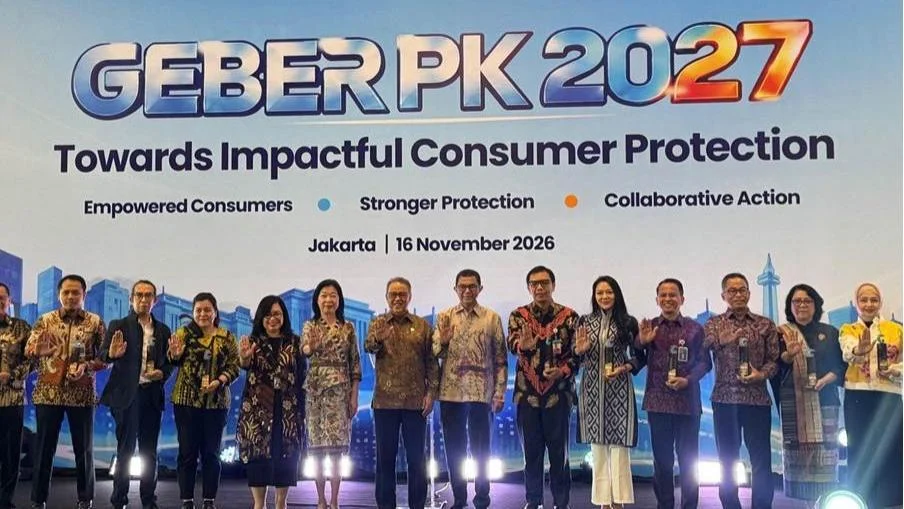
In a decisive move to fortify the integrity of Indonesia’s rapidly evolving digital financial landscape, Bank Indonesia (BI) and the Financial Services Authority (OJK) have formally signed a joint operational guideline for the Alternative Dispute Resolution Institution for the Financial Sector (LAPS-SK). This landmark agreement was unveiled during the Kick-Off of the 2027 Joint Movement for Consumer Protection (GEBER PK 2027) held in Jakarta on November 16, 2026. This collaboration marks a significant shift toward a more integrated, proactive, and consumer-centric regulatory framework designed to safeguard public trust in the face of unprecedented digital transaction growth.
The Imperative of Digital Trust in a Cashless Era
The necessity for this bolstered cooperation stems from the explosive adoption of digital payment systems in Indonesia. As of late 2026, the Quick Response Code Indonesian Standard (QRIS) has become a pillar of the national economy, boasting over 70 million users and 49 million registered merchants. The cumulative transaction volume has surged past the 20 billion mark, reflecting a profound behavioral shift among Indonesian consumers.
However, this transition to a digital-first economy carries inherent risks. Filianingsih Hendarta, Deputy Governor of Bank Indonesia, emphasized that trust serves as the "invisible infrastructure" underpinning the entire digital economy. "Molding public trust is a process that takes years of consistent performance and security, yet its destruction can occur in a matter of seconds. Restoring that trust, once broken, is an arduous and time-consuming endeavor," Hendarta noted during the event. Her statement underscores the systemic risk posed by cybercrime and fraudulent activities, which threaten to undermine the hard-won gains of financial inclusion.
Evolution of Consumer Empowerment: Data and Trends
The 2026 National Survey on Payment System Consumer Protection (IKK-SP) provides a granular look at the current state of consumer awareness. While the Consumer Empowerment Index reached 77.03 percent—a notable 12.36-point increase from 2023—regulators acknowledge that this progress remains within the "critical" category. This classification suggests that while awareness is growing, the average consumer remains vulnerable to sophisticated social engineering and complex financial fraud.
The gap between transaction volume and consumer literacy creates a dangerous vacuum. To address this, the GEBER PK 2027 initiative is designed to transition the national strategy from reactive complaint management to proactive, preventative consumer education. By focusing on the slogan "Kalau Ragu, Stop Dulu" (If in doubt, stop first), regulators are attempting to instill a "pause-and-verify" culture among users of digital wallets, mobile banking, and e-commerce platforms.
Strengthening Legal Recourse: The Role of LAPS-SK
A core component of the new operational guidelines is the expansion of the LAPS-SK, which serves as a critical bridge for resolving civil disputes outside of the traditional court system. Sally Marintan Hutapea, Head of the Payment System Surveillance and Consumer Protection Department (DSPK) at Bank Indonesia, highlighted that the integration of payment systems into the LAPS-SK framework is a transformative step.
Previously, the resolution of disputes in the digital payment space was often fragmented, with consumers frequently struggling to navigate internal complaint mechanisms. The new framework strengthens the regulatory provisions under Bank Indonesia’s PBI (Bank Indonesia Regulation) and PADG (Board of Governors Regulation) to ensure that if a dispute cannot be resolved through the Internal Dispute Resolution (IDR) process provided by the financial service provider, the consumer has a clear, accessible, and binding path toward mediation via LAPS-SK. This mechanism is expected to reduce the burden on the judicial system while providing consumers with a faster, more equitable resolution process.
The Three Pillars of GEBER PK 2027
The GEBER PK 2027 framework operates under the theme "Towards Impactful Consumer Protection," structured around three strategic pillars:
- Empowered Consumers: This pillar focuses on educational outreach. It moves beyond generic financial literacy to targeted training on identifying specific risks, such as phishing, smishing, and identity theft. By teaching consumers to recognize the red flags of digital fraud, authorities aim to reduce the incident rate before it necessitates a formal complaint.
- Stronger Protection: This mandates that Payment System Service Providers (PJSP) and Financial Service Business Actors (PUJK) embed security by design. Consumer protection is no longer viewed as an "after-sales" service but as an essential element of product development. Companies are now required to maintain robust internal handling procedures that are audited by the regulators.
- Collaborative Action: Recognizing that no single entity can combat financial crime in isolation, the program fosters a cross-sectoral ecosystem. This includes active participation from industry associations such as the Indonesian Payment System Association (ASPI), the Indonesian Banks Association (Perbanas), and the Indonesian Fintech Association (AFTECH), alongside academic institutions and regional offices to ensure nationwide coverage.
Confronting the Reality of Financial Fraud
The urgency of these measures is underscored by data from the Indonesia Anti-Scam Center (IASC). As of October 2026, the IASC had processed over 702,000 reports of financial transaction fraud. While the total volume of successful fund blocks amounted to IDR 825 billion, only IDR 207 billion has been successfully returned to victims.
This statistical reality highlights the extreme difficulty of reclaiming funds once they have entered the complex labyrinth of digital money laundering. Dicky Kartikoyono, Chief Executive of Market Conduct, Education, and Consumer Protection at OJK, emphasized that the industry’s current focus on post-loss recovery is insufficient. "When a complaint is filed, the damage is already done. True, effective protection must work proactively to ensure the problem never occurs in the first place," Kartikoyono stated.
Broader Implications and Future Outlook
The synergy between Bank Indonesia and OJK represents a broader trend in financial regulation: the convergence of stability and consumer protection. As Indonesia aspires to become one of the world’s leading digital economies, the ability to protect its citizens from financial exploitation is paramount.
The implementation of these guidelines will likely have a long-term impact on the operational costs of financial service providers. Firms will be required to invest more heavily in fraud detection technologies, customer support infrastructure, and mandatory dispute resolution training for staff. However, analysts suggest that these costs will be offset by the preservation of long-term customer loyalty and a decrease in systemic operational risks.
Looking ahead, the success of GEBER PK 2027 will be measured not just by the volume of disputes settled by LAPS-SK, but by a decrease in the per-capita incidence of successful fraud attempts. The regulators are positioning this initiative as a long-term strategy, signaling to the industry that the era of "light-touch" oversight in consumer protection is over. With the involvement of media, academia, and regional government bodies, the initiative aims to create a pervasive safety net that protects the most vulnerable segments of the population—those who are newest to the digital financial ecosystem.
In conclusion, the alignment of BI and OJK through the LAPS-SK and the broader GEBER PK 2027 movement marks a maturing of the Indonesian financial sector. By institutionalizing dispute resolution and prioritizing proactive education over reactive litigation, the authorities are setting a new standard for emerging markets. The focus on building a "trusted" ecosystem is a deliberate effort to ensure that the growth of digital transactions remains sustainable, inclusive, and fundamentally fair for every Indonesian participant. As the nation marches toward 2027, the success of these measures will determine whether the digital transition remains a source of prosperity or becomes a minefield of financial insecurity. The commitment shown by both regulators suggests a clear, resolute path toward the former.