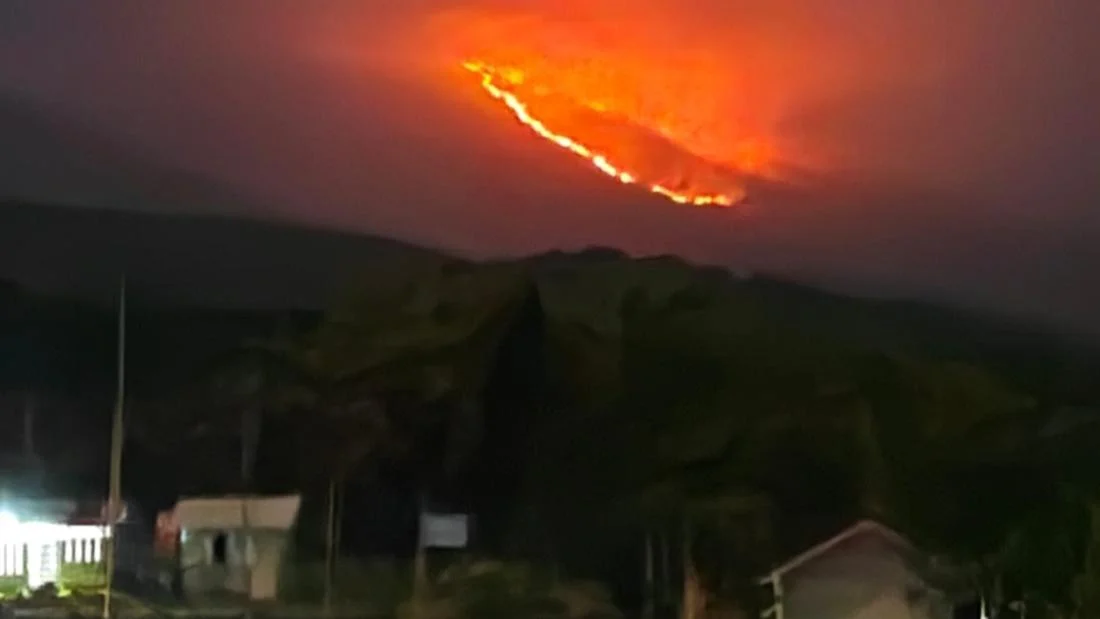
The majestic slopes of Mount Rinjani, a crown jewel of Indonesian ecotourism and a sacred site for the local community, are currently facing a significant environmental crisis. As of September 26, 2026, the Balai Taman Nasional Gunung Rinjani (TNGR) has confirmed that forest and land fires (Karhutla) have ravaged approximately 723.7 hectares of the national park’s pristine landscape. The intensification of these fires, which are spreading toward the critical Pelawangan Senaru area and the Puncak Sangkareang, has necessitated the immediate and indefinite closure of the Senaru hiking trail.
This emergency measure represents a major disruption to the regional tourism sector, particularly for the trekking industry in North Lombok, which relies heavily on the steady influx of international and domestic visitors. As the fires continue to challenge containment efforts, the authorities have implemented strict safety protocols to protect both the public and the dedicated personnel battling the blaze in one of the most challenging terrains in the archipelago.
Chronology of the Crisis and Operational Response
The situation in the Rinjani National Park began to escalate significantly in late September 2026. According to official reports, the fires initially appeared in the Bukit Setampol region. Despite early intervention, the combination of extreme weather conditions and the rugged, inaccessible nature of the landscape allowed the fire to expand rapidly. By the evening of September 25, 2026, TNGR authorities issued a formal press release announcing the closure of the Senaru route, effective from September 26, 2026, until further notice.
The decision was driven by an objective assessment of the fire’s trajectory. With flames moving dangerously close to the Pelawangan Senaru—a primary transit point for hikers—the risk to human life became too high to justify continued operations. Furthermore, the Torean trail has also been closed to ensure the safety of visitors currently near the Segara Anak Lake, who are now being directed to evacuate via safer, designated exit routes, specifically the Sembalun trail in East Lombok.
Astekita Ardiaristo, Head of the Administration Division of TNGR, stated that while partial containment has been achieved in the eastern side of Bukit Setampol, the fire remains highly volatile. "We have conducted thorough ‘mop-up’ operations on the eastern slopes to ensure no residual heat or hidden embers remain," Ardiaristo explained. "However, the fire has since shifted its path toward Puncak Sangkareang. Our patrol teams are now focused on that sector to anticipate further movement."
Environmental Factors Driving the Fire Spread
The rapid expansion of the fire across 723.7 hectares is attributed to a volatile convergence of environmental factors. Rinjani’s high-altitude savanna ecosystem is currently suffering from a prolonged dry spell, turning grasses, shrubs, and organic forest floor materials into highly combustible fuel.
Meteorological data indicates that the region is experiencing exceptionally strong winds, which act as a catalyst for fire spread, allowing embers to jump across natural firebreaks. This creates a "spotting" effect, where new fires are ignited ahead of the main flame front, making containment efforts extremely difficult for ground crews.
The topography of Mount Rinjani further complicates the situation. The terrain is characterized by steep, jagged volcanic ridges and deep ravines, which are notoriously difficult to traverse on foot. The logistical challenge of transporting heavy firefighting equipment, water pumps, and sustained food supplies for the field teams creates a significant delay in deployment. "Safety is our primary concern," Ardiaristo noted. "We cannot risk the lives of our personnel by forcing them into areas that are geographically unstable or currently engulfed in high-intensity flames."
Impact on Tourism and Logistical Adjustments
The closure of the Senaru and Torean routes creates a significant logistical bottleneck for the tourism sector. Mount Rinjani is a premier destination, and the sudden cessation of traffic on its most popular western and northern entry points has left hundreds of prospective hikers in limbo.
The TNGR has issued strict guidelines for those affected by the closures:
- Mandatory Rescheduling: All hikers who have already purchased e-tickets for the Senaru route are required to reschedule their trip.
- Diversion Policy: Authorities have advised that all incoming traffic be redirected to the Sembalun route in East Lombok, which currently remains the primary operational hub for climbers.
- Evacuation Protocols: Hikers currently on the mountain are being instructed to descend via the Sembalun trail, avoiding the closed Senaru and Torean paths entirely.
Local tourism operators in Senaru, who provide essential services such as mountain guiding, porters, and equipment rental, are expected to suffer a temporary but sharp decline in revenue. The economic implications for the surrounding villages, which rely on the "Rinjani Effect," are significant. However, the authorities maintain that the preservation of the national park’s ecosystem and the safety of the public take precedence over economic activity during this emergency phase.
Analysis of the Environmental and Long-Term Implications
The 723.7-hectare loss represents a substantial ecological impact on the Rinjani ecosystem. As a UNESCO Global Geopark, Mount Rinjani is home to a diverse array of flora and fauna, many of which are endemic to the island of Lombok. Forest fires of this magnitude disrupt the water catchment capabilities of the mountain, which is vital for the agricultural stability of the lowland regions of North Lombok.
From a long-term perspective, this incident highlights the increasing vulnerability of Indonesia’s high-altitude environments to climate-induced forest fires. While human activity is often the catalyst for such fires, the intensity of the current blaze suggests that climate patterns—specifically the lengthening of the dry season—are exacerbating the damage.
Ecologists note that the recovery of the Rinjani savanna will require years of careful management. The loss of vegetation cover can lead to increased soil erosion, particularly during the onset of the next rainy season, potentially leading to landslides in areas where the fire has stripped the mountain of its protective layer of organic matter.
Looking Forward: Monitoring and Recovery
As of the latest reports, the joint task force—comprising TNGR officials, local disaster mitigation agencies (BPBD), and community volunteers—remains on high alert. The strategy for the coming days involves continuous aerial observation where possible, combined with ground patrols to create physical firebreaks.
The reopening of the Senaru and Torean trails is not expected in the immediate future. TNGR has clarified that any decision to restore access will be strictly evidence-based, contingent upon a comprehensive evaluation of the fire’s status and the stability of the terrain. The park management has requested the public to exercise patience and to strictly avoid any activities that could potentially ignite new fires, such as campfires or the disposal of cigarette butts in dry areas.
"We are monitoring the situation hour by hour," stated an official from the local firefighting command. "Our priority is to contain the spread toward the higher altitudes and to protect the core zones of the park. We urge the community to cooperate with our patrols and to follow the official updates provided through the TNGR channels."
The ordeal on Mount Rinjani serves as a stark reminder of the fragile balance between human recreation and environmental conservation. As the nation watches the efforts of those on the front lines, the focus remains on extinguishing the blaze and initiating a restoration process that will ensure the long-term health of one of Indonesia’s most iconic natural landmarks. For now, the mountain remains a restricted zone, a testament to the unpredictable power of nature and the resilience required to safeguard its future.