Socio Today
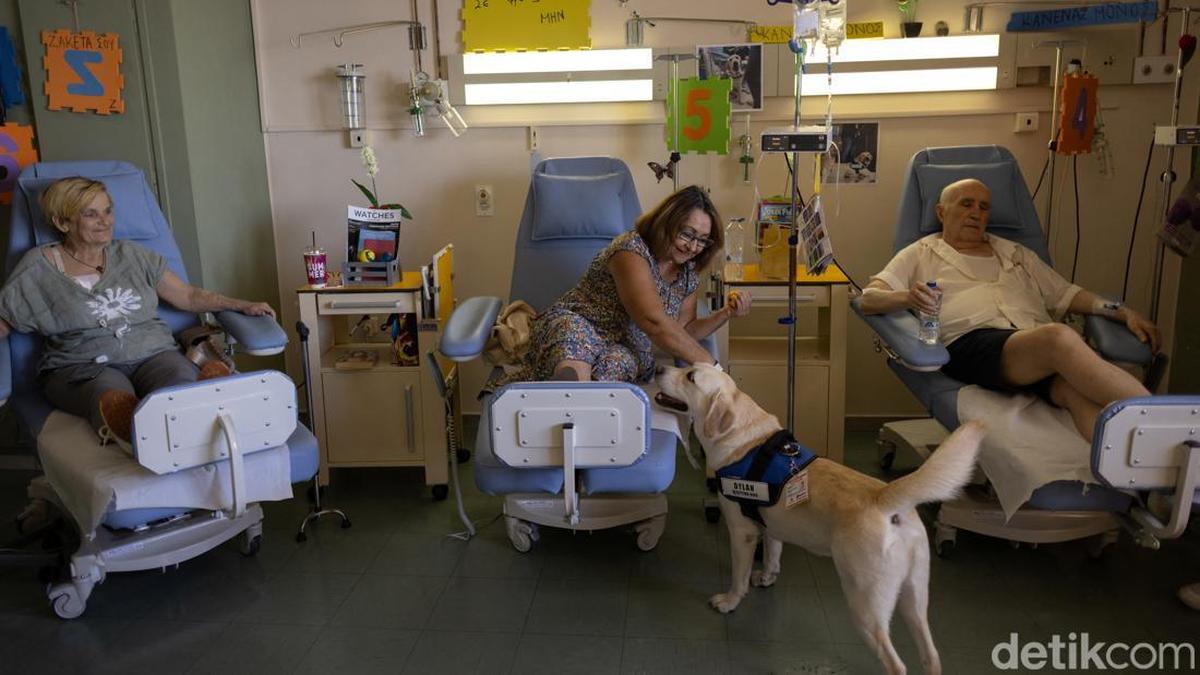
Metaxa Cancer Hospital in Piraeus, Greece, has officially integrated a permanent animal-assisted therapy program into its public healthcare framework, marking a historic milestone for the nation’s medical system. At the heart of this groundbreaking initiative is Dylan, a specially trained therapy dog whose daily presence in the hospital wards offers crucial emotional support, comfort, and companionship to cancer patients undergoing rigorous and often grueling medical treatments.
While animal-assisted therapy (AAT) has increasingly found a home in healthcare facilities across North America and parts of Western Europe over the last few decades, its integration into Southern European public health systems—particularly on a permanent basis—remains rare. The introduction of Dylan at Metaxa Cancer Hospital sets a progressive precedent, bridging the gap between conventional clinical oncology and holistic psychological well-being.
Breaking New Ground in Greek Healthcare
The deployment of a full-time therapy dog within a Greek public hospital represents a cultural and institutional shift. Historically, public healthcare institutions in Greece have maintained strict hygiene protocols and rigid administrative boundaries that historically precluded the regular presence of animals inside clinical environments. However, growing recognition of the psychological toll associated with chronic and terminal illnesses has catalyzed a reevaluation of patient care standards.
Cancer diagnoses and their subsequent treatments—ranging from chemotherapy and radiation to invasive surgeries—are frequently accompanied by severe psychological distress, including anxiety, depression, and clinical fatigue. Studies consistently show that high stress levels can negatively impact a patient’s immune response and overall treatment adherence. By introducing Dylan into the hospital ecosystem, Metaxa Cancer Hospital aims to mitigate these psychological barriers, offering patients a tangible source of unconditional warmth and distraction from their clinical surroundings.
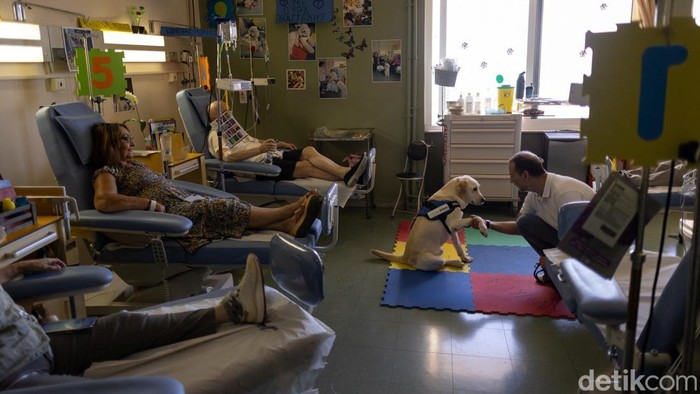
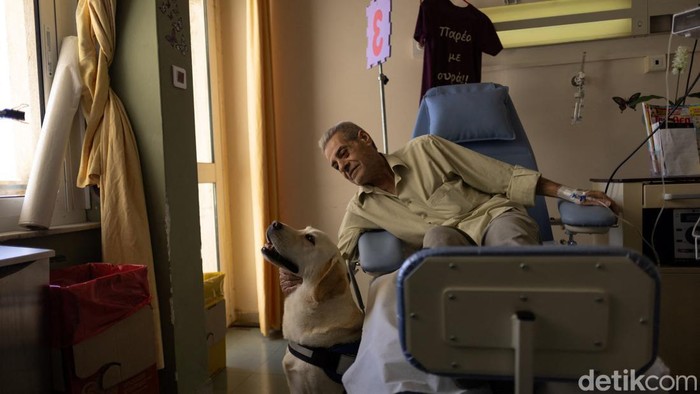
Patients such as 66-year-old Diamanto Mitrakou and 75-year-old Dionysis Provis have become central figures in documenting this pioneering shift. Photographic and firsthand accounts from the hospital capture moments of profound human-animal connection: patients softly petting Dylan during their treatment sessions, their expressions softening as the dog quietly stays by their side. For individuals spending weeks or months confined to clinical wards, Dylan’s gentle demeanor provides a vital anchor to the outside world, helping to humanize an otherwise sterile and intimidating medical space.

The Science and Impact of Animal-Assisted Therapy
The implementation of Dylan’s role at Metaxa is backed by decades of international research highlighting the physiological and psychological benefits of animal-assisted interventions in clinical settings. Interaction with therapy animals has been scientifically proven to stimulate the release of oxytocin—often referred to as the "bonding hormone"—while simultaneously lowering cortisol levels, the primary hormone associated with stress.
Furthermore, tactile interactions, such as petting or stroking an animal, can significantly reduce blood pressure and heart rates in anxious patients. In oncology departments, where patients often grapple with profound feelings of isolation, physical vulnerability, and existential dread, a therapy animal serves as a non-judgmental companion. Unlike medical staff, who must maintain professional detachment and focus strictly on clinical procedures, Dylan offers pure, uncritical affection. This dynamic can profoundly alter a patient’s perception of the hospital environment, transforming a place of dread into a space where moments of comfort and joy are still possible.
The selection and training process for hospital therapy dogs is rigorous. Animals intended for public healthcare environments must undergo extensive socialization and specialized obedience training to ensure they remain calm, predictable, and resilient in high-stress situations. They must be comfortable around medical equipment, sudden noises, and individuals with compromised immune systems. Dylan’s presence at Metaxa Cancer Hospital is a testament to his exceptional temperament and the meticulous preparation overseen by his handlers and the hospital’s medical administration.
Institutional Background and the Evolution of the Program
The integration of Dylan into Metaxa Cancer Hospital did not happen overnight. It is the culmination of months of logistical planning, coordination between animal welfare organizations and medical boards, and the establishment of stringent hygiene and safety protocols. Public health officials had to ensure that the program complied with all medical sanitation standards, minimizing any potential infection risks while maximizing therapeutic yields.
The rollout of the initiative began gaining visible momentum in the lead-up to September 2026, culminating in daily ward visits that have quickly become an anticipated part of the hospital’s routine. Medical professionals at the facility have reported positive initial observations, noting that patients who interact with Dylan exhibit noticeably improved moods and a greater openness to discussing their treatment plans with doctors and nurses.
While Dylan is currently the first and only permanent canine presence of his kind within Greece’s public healthcare network, health advocates and hospital administrators are closely monitoring the outcomes of the Metaxa program. The long-term objective is to evaluate whether animal-assisted care can be successfully scaled and replicated across other major hospitals throughout the country, potentially revolutionizing how supportive care is administered nationwide.
Broader Implications for Modern Oncology
The success of Dylan’s residency at Metaxa Cancer Hospital speaks to a broader, global evolution in modern medicine—one that increasingly embraces integrative and holistic modalities alongside traditional pharmacological treatments. Modern oncology has steadily shifted toward patient-centric care models, recognizing that treating the disease is only half the battle; addressing the mental, emotional, and spiritual needs of the patient is equally vital for optimizing recovery outcomes and quality of life.
By embedding an animal into the daily operational fabric of a public oncology ward, Greece is signaling a willingness to modernize its healthcare infrastructure in ways that prioritize holistic human experiences. As healthcare systems worldwide continue to grapple with resource constraints, burnout among medical staff, and the immense psychological burdens carried by chronically ill patients, innovative programs like the one featuring Dylan offer a compelling blueprint for the future.
Ultimately, Dylan’s daily rounds at Metaxa Cancer Hospital are about much more than just a dog visiting sick patients. They represent a fundamental acknowledgment of empathy, comfort, and emotional resilience as indispensable components of healing. As Dylan continues his pioneering work in Piraeus, he stands not only as a comforting presence for those fighting cancer, but as a symbol of progressive change in global public healthcare.