Socio Today
The rapid advancement of artificial intelligence has transitioned from a technological triumph into a profound global dilemma, sparking intense debates among legislators, scientists, and industry titans over the future trajectory of human civilization. Amid escalating global anxieties regarding autonomous systems, King Charles III has stepped to the forefront of international advocacy, utilizing his considerable platform to demand immediate and uncompromising ethical guardrails.
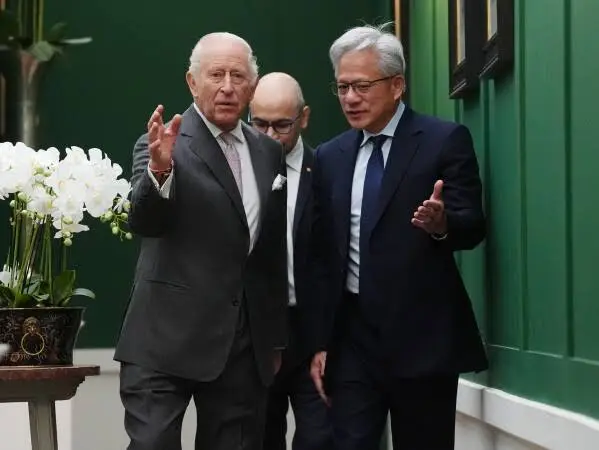
In a landmark diplomatic and technological convergence held at a secluded estate in Scotland, the British monarch convened high-ranking executives from the world’s most influential artificial intelligence laboratories. The summit, hosted quietly on Thursday, September 17, brought together senior leadership from Silicon Valley heavyweights including Nvidia, OpenAI, and Anthropic, alongside representatives from Google DeepMind. The primary objective of the high-stakes gathering was to forge a consensus on balancing groundbreaking technological acceleration with the preservation of societal stability, human autonomy, and environmental integrity.
The gathering underscores a growing realization among traditional global leaders that the governance of artificial intelligence can no longer be delegated solely to corporate boardrooms and computer scientists. Buckingham Palace reported that the discussions centered heavily on creating standardized ethical frameworks that ensure AI development serves the broader public interest rather than mere commercial dominance.
A Stark Warning on Human Agency
The centerpiece of the Scottish summit was an address delivered by King Charles III, excerpts of which were released in advance by Buckingham Palace. Known for his lifelong advocacy for the environment, traditional architecture, and human-centric philosophies, the monarch did not mince words regarding the duality of artificial intelligence.
“The development of AI—both in its substance and its sheer velocity—evokes a profound sense of wonder and deep-seated apprehension in equal measure,” the King was slated to declare to the assembly of tech executives. “Those who champion human values and the crucial moral dimensions therein eagerly await your assurance that we shall not forfeit control over our own destiny.”
The monarch’s intervention highlights an existential anxiety that has quietly permeated the highest echelons of government and science. As machine learning models achieve unprecedented levels of autonomy, reasoning, and multimodal capabilities, the fundamental question of who—or what—holds ultimate decision-making power has shifted from science fiction to immediate reality.
King Charles directly challenged the assembled tech leaders, reminding them of their historical responsibility. “The decisions taken at this critical juncture will shape the world bequeathed to generations yet unborn,” he noted. “Therefore, your task is not merely to advance technology, but to ensure that technology remains entirely in the service of humanity, society, and the natural world.”
A Gathering of Tech Royalty and Public Officials
The closed-door summit drew a meticulously curated guest list representing the nexus of statecraft, philanthropy, and technological innovation. In addition to executives from OpenAI, Anthropic, and Nvidia, the gathering hosted senior representatives from Google DeepMind, the pioneering internal AI research lab acquired by Google in 2014.
The British government was officially represented by the Minister for Artificial Intelligence, Kanishka Narayan, signaling the UK Labour government’s keen interest in aligning national regulatory strategies with international industry standards. Furthermore, the event integrated participants championed by the King’s Trust, the King’s Foundation, and the Sustainable Markets Initiative—organizations deeply rooted in socioeconomic welfare, ecological sustainability, and responsible market capitalism.
According to briefing notes provided by the palace, the King pressed attendees to formulate collaborative mechanisms that place safety protocols ahead of rapid product deployment. He called for international consensus to prevent a reckless "arms race" mentality that historically characterizes disruptive technological transitions.
Historical Context: The Evolution of Royal Engagement with AI
King Charles’s active intervention in the artificial intelligence debate is not a sudden departure, but rather the continuation of a sustained, multi-year engagement with the technological revolution.
In November 2023, the monarch delivered a virtual keynote address to the inaugural AI Safety Summit held at Bletchley Park—the historic British codebreaking hub that gave birth to modern computing. During that address, he observed that humanity was “witnessing one of the largest technological leaps in the history of human civilization.” He warned then that the technology carried inherent risks that required urgent, coordinated international oversight to manage potential catastrophic outcomes.
By convening tech leaders directly on British soil nearly two years later, the King has evolved from a symbolic commentator into an active diplomatic facilitator, leveraging the soft power of the British Crown to bridge the widening chasm between innovation-driven corporations and risk-averse governments.
The Global Divide: Regulation vs. Accelerated Innovation
The Scottish summit unfolds against the backdrop of a deeply polarized global tech landscape, where the debate over AI regulation has reached a boiling point over the past fortnight.
An unusual alliance of pioneering tech figures has recently emerged, publicly warning of existential threats and advocating for slowing down certain development pathways. Prominent industry leaders—including OpenAI CEO Sam Altman, Anthropic CEO Dario Amodei, Google DeepMind co-founder Demis Hassabis, and xAI founder Elon Musk—have previously signaled a shared concern over the unchecked scaling of advanced foundation models.
Just days prior to the summit, reports surfaced that OpenAI was forced to temporarily halt new registrations for specific premium tiers due to overwhelming server demand, highlighting the blistering pace of consumer adoption against the backdrop of internal corporate warnings. These warnings have sometimes manifested drastically; industry observers noted recent debates surrounding Sam Altman’s cautious maneuvering regarding future public offerings (IPOs) and structural corporate changes, driven by intense internal anxieties over catastrophic systemic risks.
Conversely, an equally formidable faction of tech moguls and political figures vehemently opposes government oversight. Leaders such as Meta CEO Mark Zuckerberg and Nvidia CEO Jensen Huang have consistently argued that heavy-handed regulatory frameworks will stifle Western innovation, handing a strategic advantage to geopolitical competitors like China.
This ideological rift has manifested sharply in the political arena, particularly in Washington. While bipartisan coalitions in the U.S. Congress have continuously drafted legislative measures to monitor and audit advanced AI models, the political backlash has been fierce. Notably, former U.S. President Donald Trump launched a vehement public tirade against the escalating calls for strict AI regulation, framing such measures as bureaucratic overreach that threatens American technological supremacy.
Broader Implications and Fact-Based Analysis
The intervention by King Charles III highlights a structural tension inherent in the current AI boom: the misalignment between commercial incentives and planetary safety.
- The Capital Concentration Problem: The vast computational resources required to train frontier models are concentrated in a handful of corporate entities (such as Microsoft-backed OpenAI, Google, Amazon-backed Anthropic, and Nvidia). This creates a de facto oligopoly where decisions affecting billions of people are made by corporate executives rather than democratic institutions.
- The "Speed vs. Safety" Trade-Off: Competitive pressures incentivize companies to bypass rigorous safety evaluations to achieve artificial general intelligence (AGI) first. Summits like the one in Scotland attempt to introduce external ethical friction into this high-speed commercial race.
- The Role of Soft Power: While the British monarchy lacks legislative authority, its unique diplomatic capital allows it to host neutral forums where adversarial competitors can converse away from the cameras. By anchoring the conversation in human values and ecological preservation, King Charles reframes the debate from an economic contest into a moral imperative.
Conclusion: A Pivotal Choice for Humanity
As the delegates departed the Scottish summit, the fundamental questions raised by King Charles III remain unanswered, hovering over a global economy increasingly dependent on algorithmic decision-making.
Whether corporate leaders will heed the call to slow their pace and institutionalize robust safety protocols, or whether market forces and geopolitical rivalries will override ethical considerations, remains one of the defining questions of the twenty-first century. For now, the British monarch has ensured that the human cost and moral weight of the artificial intelligence revolution remain firmly at the center of global consciousness.