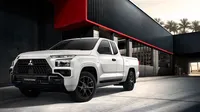
Jakarta, Indonesia — The commercial vehicle landscape in Southeast Asia is undergoing a structural transformation, driven by the increasing demand for adaptable, cost-effective, and highly customizable light transport solutions. At the forefront of this evolution is the Toyota Hilux Rangga, a versatile light commercial vehicle engineered to bridge the gap between traditional heavy-duty workhorses and modern, multi-sector operational requirements. Designed to serve as a comprehensive business ecosystem rather than a mere cargo transporter, the Hilux Rangga has quickly captured the attention of logistics operators, micro, small, and medium-sized enterprises (MSMEs), agricultural producers, public service providers, and heavy industry players.
With a competitive pricing strategy spanning from IDR 194.3 million to IDR 309.6 million, and currently imported in completely built-up (CBU) form from Thailand, the vehicle represents a strategic play by PT Toyota-Astra Motor (TAM) to capture a vital market segment. By blending robust mechanical underpinnings with an astonishing array of body configurations, the Hilux Rangga is redefining how businesses approach commercial fleet management, supply chain resilience, and public service delivery in emerging economies.
A New Paradigm in Business Mobility and Customization
The modern commercial sector requires vehicles that can seamlessly transition from urban distribution networks to rugged rural outposts without compromising efficiency or operator safety. Speaking on the strategic positioning of the vehicle, Vice President of PT Toyota-Astra Motor, Jap Ernando Demily, emphasized its fundamental design philosophy.
"Hilux Rangga is not merely a commercial vehicle, but a business solution that can be customized for a wide variety of needs, ranging from MSME logistics, agriculture, public services, to mining," Ernando stated. He further noted that the vehicle has been engineered specifically to support extensive conversion capabilities, catering fluidly to both large-scale corporate fleet buyers and independent non-fleet operators.
This adaptability is anchored by the vehicle’s physical architecture. The Hilux Rangga features an impressive payload capacity of up to 1.2 tons, making it exceptionally competitive within its weight class. Cargo management is optimized through a flat deck design featuring a three-way opening mechanism, which drastically reduces loading and unloading times in tight urban environments or busy agricultural depots. Furthermore, unlike traditional cab-over light trucks, the Hilux Rangga incorporates a semi-bonnet design. This structural choice significantly enhances cabin ergonomics, improves frontal crash energy absorption, and elevates overall driving comfort during long-haul operational shifts.
Diverse Conversion Portfolio and Real-World Applications
The true value proposition of the Toyota Hilux Rangga lies in its chasis-cab versatility, which permits coachbuilders and fleet operators to transform the vehicle into specialized operational units. Toyota-Astra Motor has actively encouraged and demonstrated these possibilities through various strategic application trials across Indonesia, aligning the vehicle with both private commercial demands and national infrastructural initiatives.
One of the most notable public-sector applications involves the adaptation of the Hilux Rangga to support the government’s Free Nutritious Meal (Makanan Bergizi Gratis – MBG) program. By converting the chassis into a mobile distribution and kitchen support unit, the vehicle facilitates the efficient transport of vital nutritional resources to schools and community centers in decentralized regions.
In the private sector, the Hilux Rangga Cold Box (Moda) has emerged as an indispensable asset for cold-chain logistics. Designed specifically for the distribution of perishable goods, pharmaceuticals, and frozen foods, this configuration maintains strict temperature control across volatile tropical climates. Concurrently, the Hilux Rangga Flatdeck has been successfully deployed as a maintenance support vehicle, functioning as a mobile workshop equipped with tools and diagnostic gear for remote industrial and logistics sites.
Public services and financial inclusion have also benefited from the vehicle’s adaptability. The ACC Mobile Service conversion transforms the pikap into a mobile financial branch, bringing banking and credit access directly to underserved rural populations who lack permanent brick-and-mortar financial institutions. Additionally, specialized municipal configurations, such as the Hilux Rangga Firefighter unit, provide rapid-response firefighting capabilities in dense urban settlements where large fire engines struggle to navigate narrow alleyways.
Demonstrating its adaptability to urban mass transit, the Hilux Rangga has undergone rigorous public road trials since November 2024 as a converted Mikrotrans vehicle for Jakarta’s extensive Transjakarta public transportation network. This integration underscores the vehicle’s capacity to serve as a reliable passenger carrier, further expanding its footprint beyond traditional cargo logistics.
Comprehensive Powertrain and Mechanical Specifications
Beneath its highly adaptable exterior, the Toyota Hilux Rangga shares its foundational chassis architecture with the globally renowned Toyota Hilux, ensuring legendary durability and parts availability. However, to address specific market positioning, TAM has structured the Indonesian lineup to exclude a 4×4 drivetrain option. Company representatives have clarified that there are currently no immediate plans to introduce a 4×4 variant of the Rangga, as the heavy-duty four-wheel-drive commercial segment is already comprehensively served by the standard Toyota Hilux range. Despite sharing a structural backbone, the Rangga and the traditional Hilux occupy distinctly different commercial segments.
The Indonesian market is offered two primary, Euro 4-compliant engine configurations designed to balance operational efficiency with robust torque delivery:
-
Diesel Powertrain:
- Engine Code: 2GD-FTV
- Displacement: 2,393 cc, 4-cylinder, in-line
- Induction: Variable Nozzle Turbocharger (VNT) with Common-rail direct injection
- Power Output: 149 PS at 3,400 rpm
- Torque Output: 343 Nm at 1,400–2,800 rpm (paired with a 5-speed manual transmission)
- Torque Output: 400 Nm at 1,600–2,000 rpm (paired with a 6-speed automatic transmission)
-
Gasoline Powertrain:
- Engine Code: 1TR-FE
- Displacement: 1,998 cc, 4-cylinder, in-line
- Valve Mechanism: Dual VVT-i (Variable Valve Timing-intelligent)
- Power Output: 139 PS at 5,600 rpm
- Torque Output: 183 Nm at 4,000 rpm (paired with a 5-speed manual transmission)
This dual-fuel strategy ensures that fleet operators can select the precise powertrain that matches their operational profile. The high-torque diesel variant, particularly when paired with the 6-speed automatic transmission yielding 400 Nm of torque, is optimized for heavy loads, steep inclines, and continuous high-mileage industrial deployment. Conversely, the gasoline variant offers a smooth, cost-effective alternative for urban delivery fleets operating primarily in stop-and-go traffic environments with lighter payloads.
Economic Implications and Market Impact
The introduction and rapid adoption of the Toyota Hilux Rangga carry profound economic implications for the light commercial vehicle (LCV) sector in Indonesia and the broader ASEAN region. Priced aggressively between IDR 194.3 million and IDR 309.6 million, the vehicle lowers the barrier to entry for small business owners seeking reliable, brand-new commercial assets equipped with modern safety features and warranty support.
For decades, the Indonesian LCV market relied heavily on traditional cab-over micro-trucks that often compromised driver ergonomics, safety standards, and ride comfort. By introducing a semi-bonnet architecture with modern crash safety considerations, Toyota is effectively raising safety expectations across the commercial driving workforce. Furthermore, the robust ecosystem of local and regional bodybuilders and conversion specialists stimulated by the Hilux Rangga generates secondary economic activity, fostering innovation in engineering, refrigeration, and specialized fabrication.
The strategic decision by Toyota to source the vehicle from Thailand leverages established regional free trade frameworks, ensuring high manufacturing quality control while maintaining competitive pricing structures. As supply chains continue to recover and decentralize post-pandemic, the demand for modular logistics solutions like the Hilux Rangga is expected to accelerate.
Broader Industry Outlook
As municipal authorities and private enterprises alike grapple with the demands of modern supply chain velocity, carbon emission standards, and operational cost containment, vehicles that offer multi-role functionality will increasingly dominate commercial fleets. The Toyota Hilux Rangga demonstrates how a single automotive platform can simultaneously address agricultural distribution, urban mass transit, cold-chain integrity, emergency services, and MSME growth.
The sustained success of the Hilux Rangga will likely prompt competing manufacturers to reevaluate their light commercial offerings, potentially shifting the industry norm away from single-purpose trucks toward modular, highly adaptable mobility solutions. For Toyota-Astra Motor, the vehicle represents a masterclass in market segmentation—safeguarding the premium utility of the core Hilux line while capturing the high-volume, highly diverse light commercial and micro-business sector with surgical precision.