The modern pace of travel is typically governed by rigid schedules, digital countdowns, and the constant pressure of productivity. However, a recent journalistic assignment in Klaten, Central Java, offered a rare opportunity to examine the intersection of structured transit and the organic rhythms of daily life. What began as a routine administrative stopover evolved into a broader contemplation of how time is experienced, measured, and valued in urban spaces.
This report examines the chronology of a 10-hour transitional window experienced in Klaten, contextualizing the relationship between municipal infrastructure, religious observance, and the psychological dimensions of waiting in provincial Indonesian cities.
Main Facts and Context
The journey took place in early October, originating at the Office of Village Community Empowerment (Dispermasdes) located on Jalan Teratai in Klaten, Central Java. Following the conclusion of professional responsibilities at the municipal agency, the traveler faced a significant logistical gap: a pre-booked railway ticket to Bandung, West Java, scheduled for departure at 22:42 local time (22:20 WIB).
With approximately ten hours to bridge between the completion of official duties and the departure of the evening train, the interim period required navigation through the civic spaces of Klaten. Rather than seeking a commercial workspace or an enclosed transit lounge, the traveler engaged with the city’s public infrastructure—ranging from commercial minimarkets and municipal squares to spiritual and transit hubs.
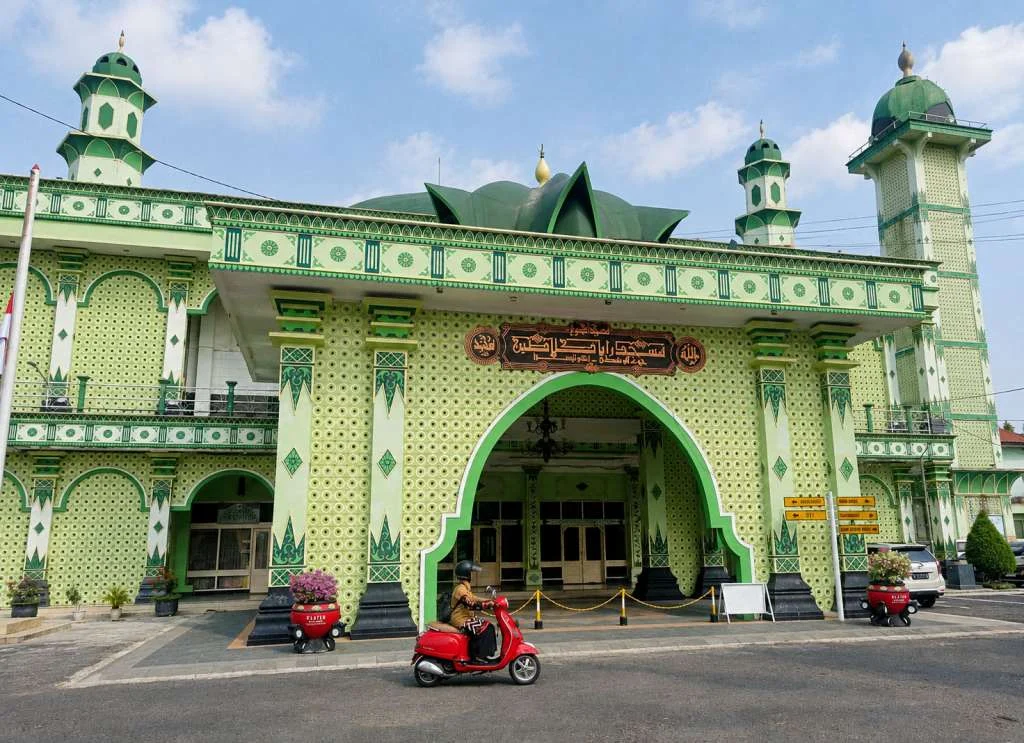
Klaten Regency, positioned strategically between the major economic and cultural centers of Yogyakarta and Surakarta (Solo), frequently serves as a transient corridor for commuters and travelers. The urban layout along key arteries like Jalan Pemuda reflects a blend of colonial-era urban planning, characterized by shaded pedestrian corridors, alongside contemporary public spaces such as the revitalized Klaten Alun-Alun (town square) and the prominent Grand Mosque (Masjid Raya Klaten).

Chronology of the 10-Hour Layover
The temporal progression of the day was meticulously structured by a combination of mandatory transit constraints and spiritual milestones.
- 11:30 WIB – 12:00 WIB: Departure from the Dispermasdes building on Jalan Teratai. A leisurely walk along Jalan Pemuda toward the commercial center, utilizing the shaded pedestrian pathway to counter the midday equatorial heat.
- 12:00 WIB – 12:30 WIB: A brief stop at a local minimarket on the western side of Jalan Pemuda to acquire provisions, followed by a rest period on the exterior seating area.
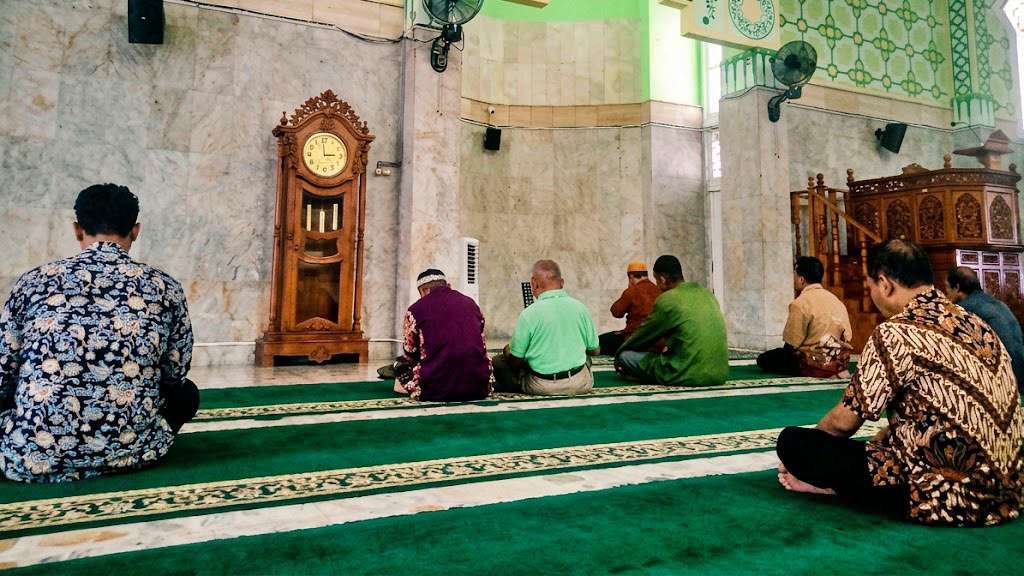
- 12:30 WIB – 15:30 WIB: Arrival at the Masjid Raya Klaten, adjacent to the Alun-Alun. Following the congregational Zuhur prayer, the period was utilized for quiet reflection, reading traditional literature, and seeking respite from the daytime temperatures.
- 15:30 WIB – 18:00 WIB: Post-Asar transition to the Klaten Alun-Alun. Observation of civic life, including local youth utilizing the public square for recreational activities, interspersed with periods of sedentary reading on public park benches.
- 18:00 WIB – 20:00 WIB: Return to Masjid Raya Klaten for Magrib and Isya prayers, utilizing the sacred space as an anchor for the evening transition.
- 20:00 WIB – 22:20 WIB: Departure from the mosque area, a local culinary stop for dinner along the transit route, and final arrival at Klaten Railway Station to await the westbound train to Bandung.
Urban Infrastructure and Public Spaces
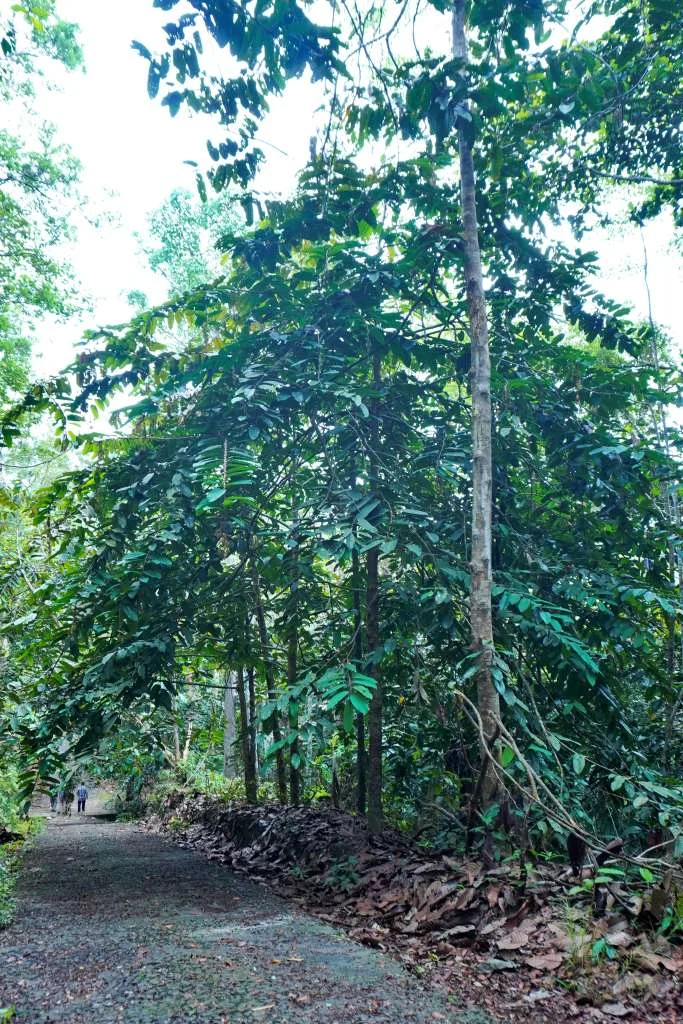
The spatial transition experienced during the layover underscores the multifunctional nature of Klaten’s urban design. Municipal planners have increasingly emphasized the integration of pedestrian-friendly zones along arterial roads like Jalan Pemuda, where dense canopies mitigate thermal discomfort for foot traffic.
Furthermore, civic landmarks such as the Alun-Alun and the Masjid Raya Klaten function as communal anchors. Sociological observations of Indonesian town squares often highlight their dual role as recreational venues and social equalizers. During the afternoon hours, public spaces accommodate diverse demographics—from cyclists and student groups to lone travelers seeking sanctuary from the demands of the digital economy.

The accessibility of religious infrastructure, specifically the multi-story Masjid Raya Klaten equipped with cooling systems and open-door policies for resting travelers, demonstrates the informal social safety net embedded within community-centric architecture. Unlike commercial transport hubs that monetize seating and waiting areas, municipal religious sites often provide unconditioned sanctuary spaces that accommodate the transient population without commercial prerequisite.
Analytical Implications: Productivity Versus Temporal Rhythm
The extended layover in Klaten prompts a broader sociological inquiry into the modern conceptualization of time. Contemporary urban environments increasingly prioritize hyper-productivity, where every hour must yield measurable output, professional advancement, or economic transaction.
However, travel literature and cultural anthropology suggest that transitional periods—such as extended Layovers—serve a critical psychological function. By stripping away immediate professional obligations, the individual is forced to reconcile with an alternative temporal framework: one governed not by digital alarms or scheduling software, but by biological needs, spiritual observances, and environmental cues.

In this specific instance, the five daily Islamic prayers (Zuhur, Asar, Magrib, and Isya) acted as natural punctuations, dividing the day into manageable narrative segments. This phenomenon reflects a broader pattern observed in various cultural and religious traditions worldwide, where ritual observance provides a stable rhythm that supersedes the abstract, relentless ticking of mechanical clocks.
Transportation experts note that secondary railway stations, such as Klaten Station, play a vital role in regional connectivity by bridging rural and metropolitan economies. The ability of a traveler to seamlessly transition from a formal government office to a public square, a house of worship, and finally a high-speed rail corridor illustrates the integrated infrastructure of Java’s densely populated transportation networks.
Conclusion
The 10-hour transit experience in Klaten serves as a microcosm of slow travel in an accelerated world. By eschewing the temptation to artificially manufacture productivity during a forced delay, the traveler engaged in a rare alignment with local rhythms. Ultimately, the journey illustrates that time is not merely a finite resource to be spent or optimized, but a lived medium shaped by the spaces we inhabit, the rituals we observe, and the unexpected pauses that define human movement.