Socio Today
Jakarta — The automotive landscape is frequently populated by sibling models that share nomenclature yet serve completely distinct segments of the consumer base. Few examples are as pronounced within the modern Sport Utility Vehicle (SUV) sector as the juxtaposition between the Mitsubishi Pajero and the Mitsubishi Pajero Sport. Although both iconic nameplates proudly wear the three-diamond badge and trace their heritage back to Mitsubishi Motors’ legendary off-road dominance, they are fundamentally different vehicles. Engineered with divergent design philosophies, distinct platform architectures, and separate market positioning, the Pajero and Pajero Sport cater to entirely different lifestyle expectations and consumer requirements.
This structural divergence has drawn renewed attention following major global product updates and strategic clarifications from automotive industry leaders and brand ambassadors. Understanding the nuances between these two heavyweights requires an examination of their respective lineages, technical specifications, market positioning, and the strategic importance they hold for key emerging markets such as Indonesia.
Decoding the Distinction: Class, Size, and Purpose
The fundamental differences between the flagship Pajero and the medium SUV Pajero Sport lie in their classification and physical footprint. Rifat Sungkar, Brand Ambassador for Mitsubishi Motors Indonesia, shed light on this distinction through his public channels, emphasizing that the vehicles occupy entirely separate tiers within the global automotive hierarchy.
"Pajero is an exclusive SUV with a larger body, whereas the Mitsubishi Pajero Sport falls into the medium SUV class," Sungkar stated, outlining the core philosophy that separates the two models.
This division is not merely a marketing categorization; it is physically manifested in every dimension, from chassis configuration to powertrain capability. The Pajero has historically been developed as Mitsubishi’s premier global flagship, built to conquer brutal cross-country terrains while offering uncompromised luxury and commanding road presence. In contrast, the Pajero Sport is designed as a rugged yet versatile family-oriented medium SUV, sharing its structural ladder-frame architecture with pickup truck foundations to balance daily driving comfort with dependable utility.
The Rebirth of a Legend: The All-New Pajero
The global spotlight turned firmly toward the flagship nameplate following its official debut in Thailand. Marking a significant milestone in Mitsubishi Motors’ product lifecycle, the vehicle was completely overhauled to reclaim its dominance in the premier utility segment.
The latest iteration of the flagship SUV has been transformed into a dedicated cross-country vehicle, carefully engineered to function as the undisputed flagship model of the brand’s stable. Dimensionally, the All-New Pajero boasts an imposing physical presence. It measures 4,920 millimeters in length, 1,925 millimeters in width, and stands 1,910 millimeters tall when equipped with 20-inch wheels, supported by a substantial wheelbase of 2,870 millimeters. These figures underscore its status as a large-scale, authoritative presence on both highways and uncharted trails.
Beneath its redesigned sheet metal lies a potent mechanical suite tailored for endurance and performance. The vehicle is propelled by a robust 2.4-liter diesel engine, engineered to generate a formidable maximum torque output of 480 Nm—though specific markets may receive a calibrated tune yielding 470 Nm. To harness this power effectively across treacherous terrains, the vehicle incorporates Mitsubishi’s advanced Super Select 4WD-II system, seamlessly integrated with the Super All Wheel Control (S-AWC) vehicle dynamics architecture. However, Mitsubishi notes that specific feature availability and technical specifications may vary depending on regional homologation requirements and market tiers.
The Pillars of Pajero Sport in Indonesia
While the flagship Pajero captures headlines on the international stage, the Pajero Sport commands a fiercely loyal following in Southeast Asia, particularly in Indonesia. The Pajero Sport currently populating Indonesian showrooms represents the third generation of the mid-size SUV, which originally debuted globally in 2016. Demonstrating Mitsubishi’s strong commitment to local manufacturing and industrial integration, the vehicle is assembled domestically within the country.
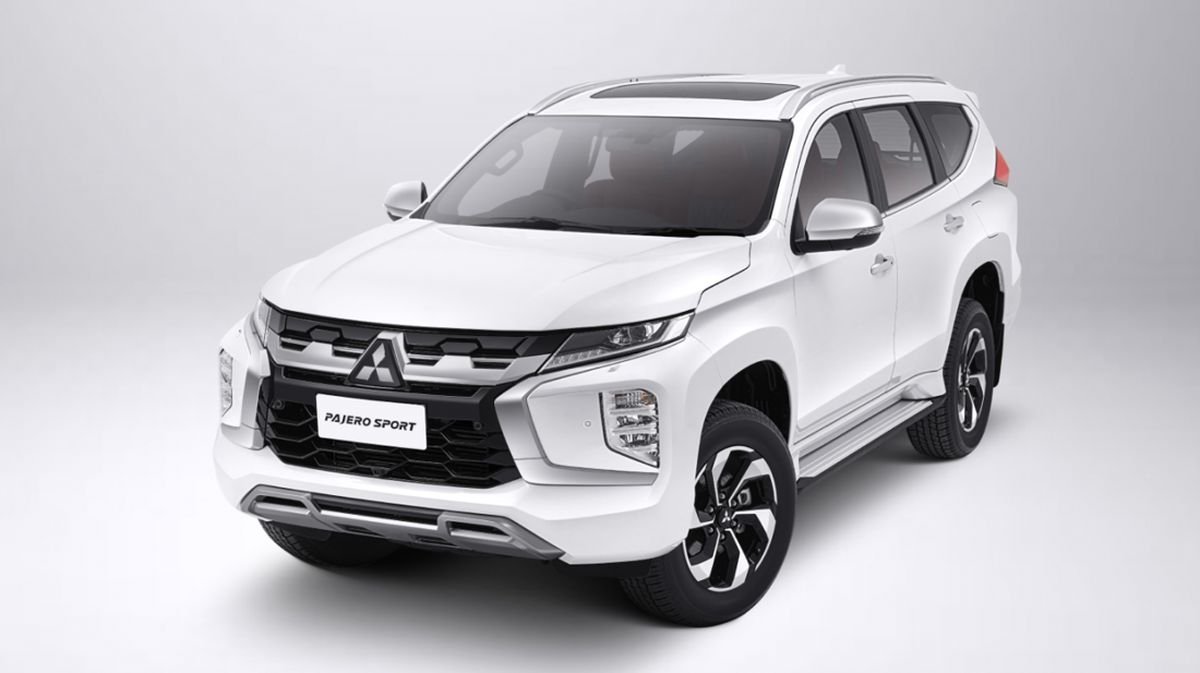
To maintain its competitive edge against a wave of modern rivals in the bustling medium SUV segment, Mitsubishi has consistently refreshed the model. Significant milestone facelifts were introduced in 2021 and subsequently updated again in 2024, ensuring that the vehicle remains technologically contemporary and aesthetically sharp.
In terms of scale, the Pajero Sport is engineered with urban agility and versatile passenger capacity in mind. It spans 4,840 millimeters in length, 1,815 millimeters in width, and 1,835 millimeters in height, anchored by a 2,800-millimeter wheelbase. While slightly more compact than its flagship counterpart, it commands impressive interior volume and road clearance. Powering the Indonesian-market Pajero Sport is a responsive 2.4-liter diesel engine capable of delivering a healthy maximum torque of 430 Nm. True to its heritage, higher trims of the vehicle are equipped with the proven Super Select 4WD-II system, retaining genuine off-road capability that satisfies enthusiast demands.
Corporate Strategy and Market Positioning
The concurrent existence of these two vehicles in international discourse has occasionally sparked consumer curiosity regarding product overlap. However, executive leadership at Mitsubishi Motors emphasizes that the models serve complementary, non-competing roles within the broader portfolio.
Irwan Kuncoro, Director of Sales & Marketing Division at PT Mitsubishi Motors Krama Yudha Sales Indonesia (MMKSI), addressed the strategic positioning of the two nameplates. He highlighted that while both vehicles share the engineering DNA and rugged tradition that define the brand, they are tailored with distinct characters and market targets to address the diverse requirements of modern motorists.
"In Indonesia, Pajero Sport has gained strong trust from customers and will continue to be one of the mainstay models of Mitsubishi Motors," Irwan explained, reinforcing the company’s long-term commitment to the mid-size platform.
This sentiment is echoed by brand representatives who closely monitor consumer sentiment. Rifat Sungkar observed that the Pajero Sport established itself as an immediate favorite among Indonesian SUV enthusiasts from the moment it arrived on showroom floors. He reassured the local automotive community that the introduction of the next-generation flagship model on the global stage does not signal an immediate shift or displacement for local buyers.
"For the Indonesian market, Pajero Sport will remain available for us," Sungkar affirmed, emphasizing that both vehicles inhabit distinctly different commercial spheres and pricing brackets.
Broader Implications for the SUV Landscape
The clear demarcation between the Pajero and the Pajero Sport reflects a broader maturation within the global automotive industry. As consumer preferences polarize into distinct lifestyles—ranging from luxury adventure touring to practical, multi-purpose family transport—manufacturers can no longer rely on a single product to cover an entire segment.
By repositioning the flagship Pajero as a technologically advanced, highly capable cross-country flagship, Mitsubishi Motors has elevated the ceiling of its engineering prowess. At the same time, maintaining the locally assembled Pajero Sport ensures that the brand retains its competitive volume anchor in high-growth developing markets where value, durability, and localized production are paramount.
Ultimately, this dual-pronged strategy protects the equity of the legendary nameplate while securing steady commercial momentum. For consumers in Indonesia and beyond, the choice is no longer about choosing between old and new iterations, but rather selecting the precise tier of capability, luxury, and utility that aligns with their personal journey.