Socio Today
After a decade-long hiatus from the director’s chair following his critically acclaimed 2016 horror masterpiece, The Wailing, South Korean filmmaker Na Hong-jin has returned to the global cinema stage with his ambitious science-fiction venture, Hope. Released in Indonesian theaters on September 9, 2026, the film marks a significant departure from the supernatural folklore that defined his earlier work, instead venturing into the cold, calculated landscape of extraterrestrial contact. While the film has captivated audiences with its visceral tension and suspense, many viewers have expressed confusion regarding the specific origins and motivations of the extraterrestrial entities depicted on screen. To address these narrative ambiguities, Forged Films and Plus M Entertainment have released official documentation and character dossiers that clarify the lore behind the visitors from the planet Gertu.
The Origins of the Gertu Refugees
Contrary to typical cinematic tropes involving alien invasions aimed at global conquest, the entities in Hope are revealed to be political refugees. According to the official production materials, the alien group that descended upon the vicinity of Hobo Port originated from a distant world known as Gertu. The narrative is centered on a royal delegation fleeing a catastrophic internal conflict or a looming existential threat within their home star system.
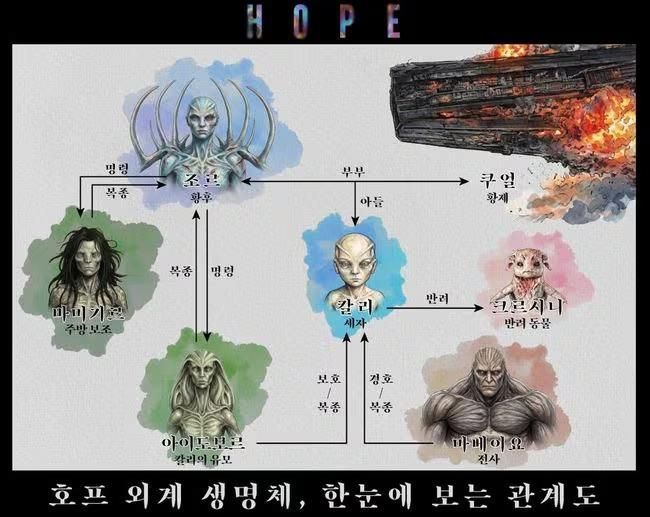
The group is led by Empress J’aur, portrayed by Alicia Vikander, who is accompanied by her son, Crown Prince Kali. The tragic inciting incident for the local tension in the film occurs when Kali is killed by a local resident named Yang-bae, played by Eum Moon-suk. This death serves as the primary catalyst for the escalating conflict between the displaced aliens and the local human population.
The delegation is not a cohesive military unit, but rather a collection of individuals with specific societal roles. Among those accompanying the Empress and the late Crown Prince are the protective warrior Ma’veyyo, played by Michael Fassbender; the dedicated nanny Ai’dovor, portrayed by Taylor Russell; and a kitchen assistant, Va’migere, played by Cameron Britton. The presence of Va’migere, who is depicted as the entity responsible for the initial destruction of the local village, suggests that the chaos caused by the group was not necessarily a calculated act of war, but perhaps a desperate reaction to their vulnerable and traumatized state. Furthermore, the inclusion of Kali’s pet, Krusini, underscores the domestic, albeit alien, nature of the delegation.
Command Structure and the Role of the Emperor
While J’aur and her entourage were the ones to make landfall, the highest authority within the Gertu hierarchy remains in the upper atmosphere. Emperor Ku’er, the supreme ruler of the Gertu people, maintains control from a massive warship positioned in orbit. The presence of this vessel has led to significant analytical debate among film critics and audiences regarding the true intent of the visitors.
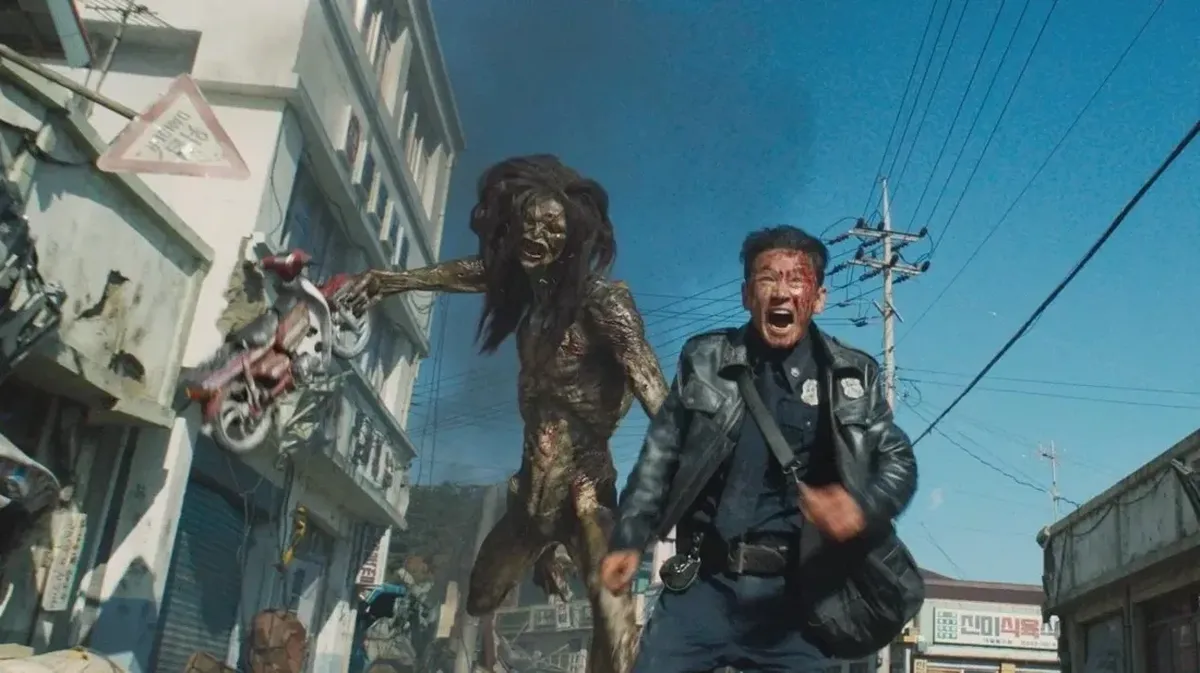
The structural design of the ship and the specific movements of the fleet indicate that the arrival on Earth was intended as a transit or temporary refuge rather than a colonial expansion. The destruction of Emperor Ku’er’s warship during the film’s narrative arc marks a turning point, leaving the surviving refugees stranded on Earth. This isolation creates a desperate environment where the human characters—led by a local police officer played by Hwang Jung-min and a hunter played by Zo In-sung—find themselves locked in a struggle against entities that are technologically superior yet socially fragmented and terrified.
Production Context and Na Hong-jin’s Artistic Shift
Na Hong-jin’s transition to science fiction is a noteworthy milestone in South Korean cinema. Known for his methodical approach to world-building and his ability to weave psychological dread into physical horror, Na has applied these same sensibilities to Hope. The film’s development cycle was famously long, with the director spending years refining the script and collaborating with visual effects teams to ensure that the Gertu aliens felt distinct from established Hollywood archetypes.
The decision to omit explicit exposition regarding the aliens’ origins within the film’s runtime was a deliberate stylistic choice. By forcing the audience to experience the events through the perspective of the bewildered townspeople, Na maintains an atmosphere of primal fear. The reliance on supplementary materials—such as the character charts and the official lore documents—reflects a modern trend in transmedia storytelling, where the film serves as the emotional core while the narrative framework is expanded through external platforms.
Chronology of the Narrative and Thematic Implications
The timeline of the film is tightly compressed, focusing on the immediate aftermath of the Gertu arrival. The discovery of the extraterrestrial presence begins with the unsettling death of livestock in the rural port town, where animals appear to have been preyed upon by something massive and unknown. This "creature feature" opening slowly shifts into a complex character drama as the motivations of the humans and the aliens clash.
- Arrival: The Gertu delegation, fleeing conflict on their home planet, arrives near Hobo Port.
- The Catalyst: A fatal confrontation occurs between the local resident Yang-bae and Crown Prince Kali, which serves as the point of no return for human-alien relations.
- Escalation: The death of the prince prompts a protective, often violent, response from the remaining members of the Gertu party, including Va’migere.
- The Conflict: Local authorities, represented by the police and the hunter, attempt to contain the situation, resulting in a survivalist struggle that defines the latter half of the film.
- The Climax: The destruction of the Emperor’s ship, which isolates the refugees and leaves the town in a state of total devastation.
The thematic core of Hope rests on the concept of "the other." By framing the aliens as refugees fleeing a war-torn world, Na Hong-jin subverts the traditional "us vs. them" dynamic. The residents of the town, many of whom are elderly, represent a population struggling to adapt to a changing world, while the aliens represent the ultimate manifestation of displacement.
Critical Reception and Future Outlook
Early reviews from the September 2026 release have praised the film for its technical prowess and the raw, desperate performances of the cast. Hwang Jung-min and Zo In-sung have been singled out for their portrayal of characters forced to reconcile their limited worldviews with an incomprehensible reality.
The ending of the film, which leaves the fate of the survivors uncertain, has fueled widespread speculation about a potential sequel. Should Forged Films proceed with a follow-up, the narrative focus is expected to shift toward the possibility of an alliance between humanity and the surviving Gertu. The destruction of the command structure and the death of the Crown Prince provide a blank slate for future geopolitical—or perhaps intergalactic—dynamics to unfold.
Broader Impact on the Science Fiction Genre
The success of Hope demonstrates the growing international appetite for non-Western science fiction. By grounding the narrative in the specific geography and cultural anxieties of a small Korean port town, Na Hong-jin has created a story that feels both intimately local and cosmically significant. The film challenges the viewer to consider the morality of survival. When the "invaders" are also the victims of a larger, unseen conflict, the traditional roles of hero and villain become blurred.
Industry analysts suggest that the "transmedia" approach—where deep lore is provided via digital documents rather than clunky exposition—may set a new standard for high-concept science fiction films. It respects the audience’s intelligence while allowing the film itself to remain atmospheric and focused on the immediate narrative stakes. As Hope continues its theatrical run, its impact on the genre is likely to be measured not just by its box office performance, but by how it redefines the boundaries of the "alien encounter" trope in modern cinema.
In conclusion, Hope stands as a testament to Na Hong-jin’s directorial evolution. By blending the horror sensibilities of his past with a sophisticated, albeit fragmented, science fiction narrative, he has delivered a film that lingers long after the credits roll. The Gertu are not merely monsters; they are refugees in a strange land, and their story—a tragic saga of war, flight, and loss—serves as the dark, beating heart of this 2026 cinematic landmark.