The quiet mountain village of Gogik, nestled on the verdant slopes of Mount Andong in Girirejo Village, Ngablak District, Magelang Regency, transformed into a vibrant cultural stage on August 2, 2026. On this crisp morning, residents and cultural preservationists gathered to celebrate the Saparan Gogik festival, a traditional Javanese event held during Sapar—the second month of the Javanese calendar. Far from a mere tourist spectacle, this year’s iteration of Saparan Gogik served as a profound community-led awakening, breathing new life into ancestral customs that had remained dormant and hidden from the public eye for decades.
A Community-Driven Cultural Revival
Organized by the local youth organization Kompag Sigra Jumangkah, in close collaboration with village elders, community leaders, and local government apparatus, the festival operates under the powerful theme "Nandur Tradisi, Ngunduh Pakarti." Translated literally as "Planting Tradition, Harvesting Character," the theme encapsulates the community’s core philosophy: that traditions nurtured with care will yield virtuous societal traits—such as religious devotion, mutual cooperation (gotong royong), environmental stewardship, and deep-seated social cohesion.
Krisna Phiyastika, co-founder of Arutala Boemi Lestari—a mindfulness and culture-based ecotourism initiative—and a native of Gogik, emphasized the critical importance of this revival. According to Phiyastika, the festival functions as a deliberate reclamation of authentic village identity. It aims to reconnect the younger generation of Gogik with their rich cultural roots, ensuring they recognize and take pride in their heritage.
Furthermore, cultural analysts note that modern community-led festivals like Saparan Gogik act as a subtle form of resistance against the commodification and homogenization of culture. By allowing local communities to dictate their own rituals, narratives, and artistic expressions, the festival bypasses colonial-era top-down cultural suppression, asserting that local contexts are uniquely qualified to manage their own heritage.
Chronology of the Sacred Rites: From Tirakatan to Nyebar Sajen
The buildup to the peak celebration on Sunday morning, August 2, 2026, involved a meticulously observed sequence of traditional rituals. The observance commenced days prior with tirakatan—a communal night vigil dedicated to spiritual reflection and gratitude—followed by a comprehensive cleanup of the village’s sarean (ancestral burial grounds). In a rare display of communal consensus prioritizing cultural sanctity, authorities even temporarily closed the popular Mount Andong hiking trail via Gogik to general climbers during the peak celebration days.
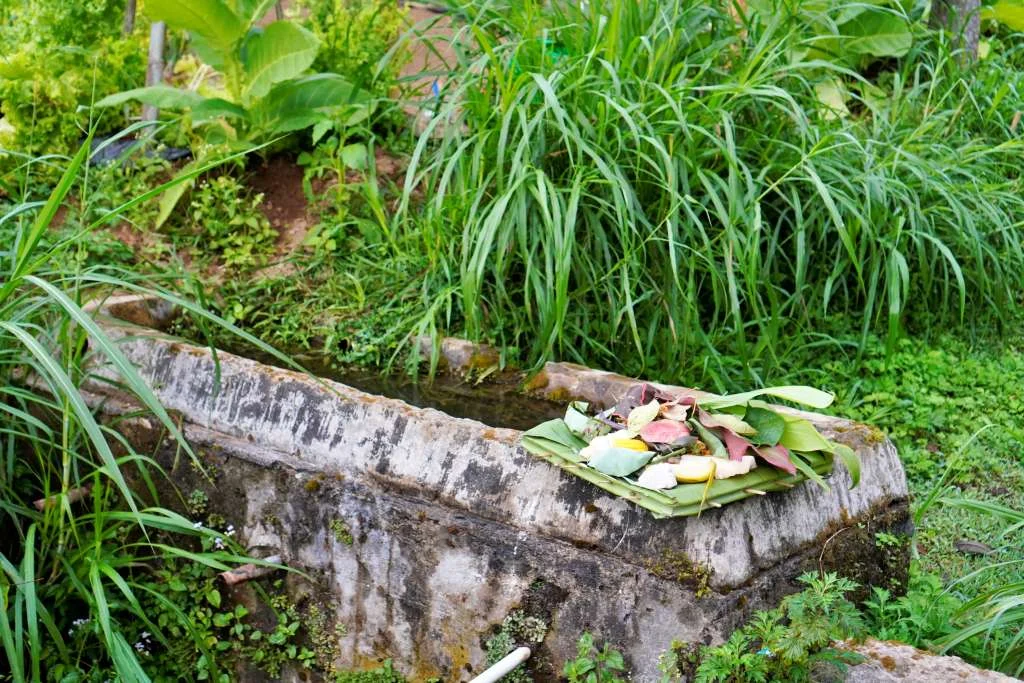
The sacred chronology on Sunday began well before dawn. Following the Fajr (Subuh) prayer, Haji Sutopo, a revered local religious and community leader known regionally as a Pak Kaum, led a prayer over seven large bamboo trays (tampah) containing ritual offerings (sajen or langgat). These offerings featured ingkung (whole traditional free-range chicken), traditional snacks, organic foliage, agricultural yields, and symbolic artifacts.
Following the prayers, the community executed the nyebar sajen (dissemination of offerings) ritual, carrying the trays to the seven vital springs (tuk) scattered across the village. Addressing potential modern misconceptions, Haji Sutopo clarified that the ritual is devoid of idolatry or polytheism. Instead, it serves as a profound expression of gratitude to Gusti Pangeran (Almighty God) for the perpetual gift of water, which sustains life in the highlands.

The organic composition of the offerings ensures that they safely integrate into the local ecosystem, providing sustenance for organisms surrounding the water sources. This practice underscores an intrinsic link between Javanese spirituality and environmental conservation, highlighting the community’s unwavering commitment to safeguarding their watershed ecosystems.
The Grand Cultural Parade and Artistic Heritage
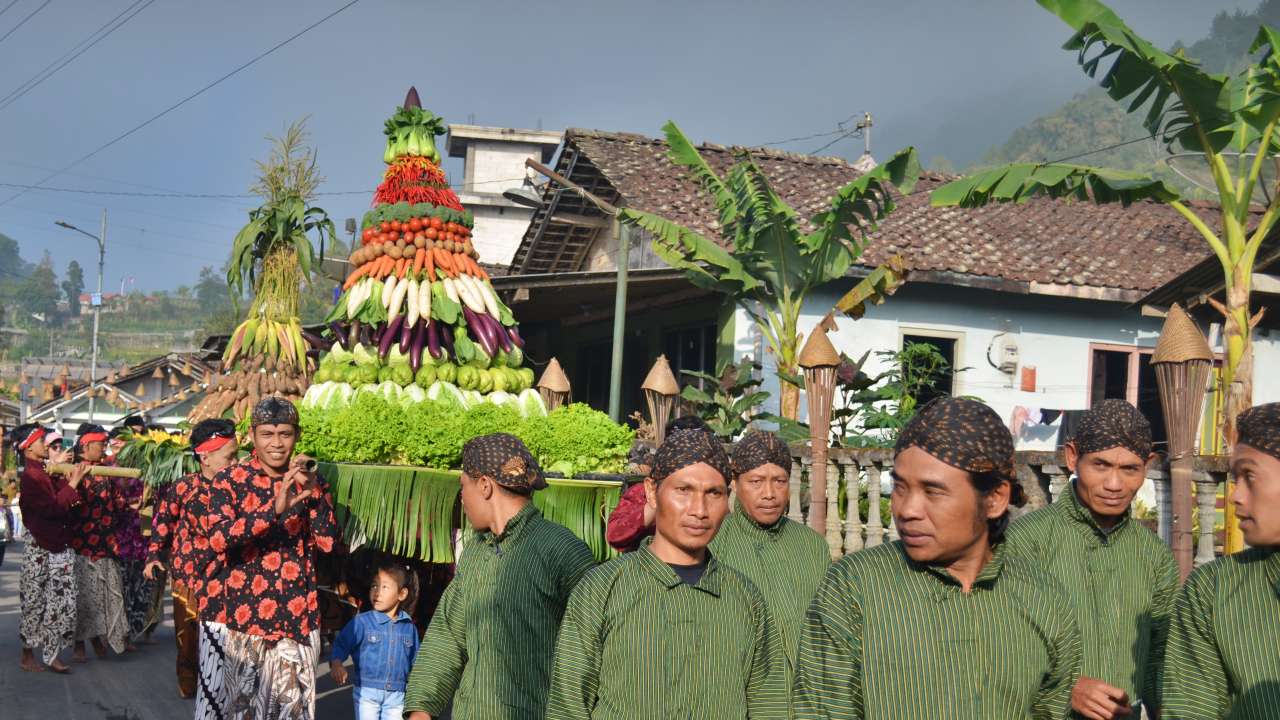
By Sunday morning, the focal point shifted to the residence of Gogik Village Head, Rangga Pramana, who led the grand cultural parade (kirab budaya). Floats and participants marched toward the village hall grounds, showcasing vital symbols of agrarian and pastoral life:
- Pewetu: Giant conical structures (gunungan) packed with vegetables and secondary crops (palawija), symbolizing agricultural abundance.
- Pangon: Representations of animal husbandry and rural responsibility.
- Sunggen: Symbols reflecting the resilience and arduous labor of rural life.
- Pawon: Traditional kitchens symbolizing family sustenance and food security.
- Dolanan Tradisional: Traditional children’s games functioning as educational mediums for character development.
Upon reaching the village hall, the procession culminated in umbul donga, a collective mass prayer for village safety and prosperity, immediately followed by kembul bujana, a communal dining tradition reinforcing egalitarian bonds.
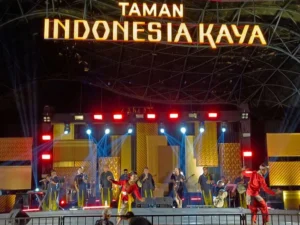
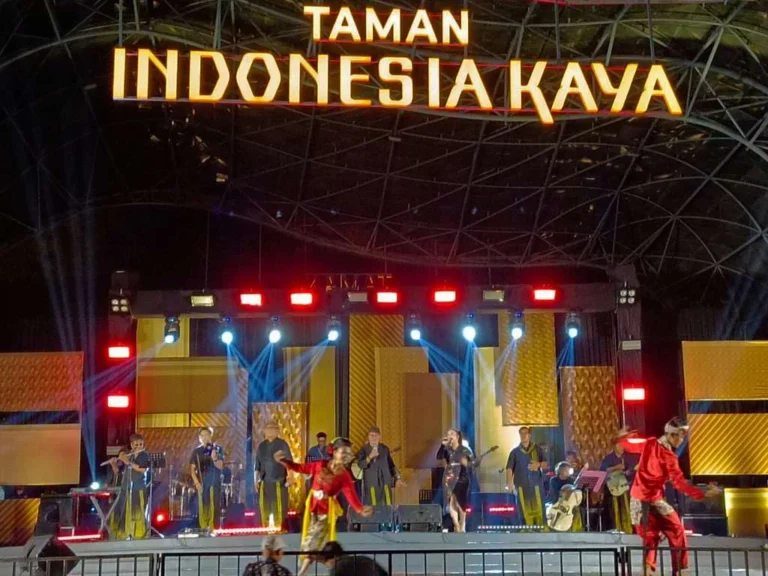
The afternoon and evening showcased traditional performing arts that had languished in obscurity for decades. Youths performed the dynamic and energetic Soreng dance, while children captivated audiences with the Warok dance performance. The festivities concluded with a traditional all-night Ringgit Purwo (wayang kulit shadow puppet) performance, running from dusk until dawn.

Socio-Economic Implications and the Broader Context of Cultural Preservation
While Mount Andong is widely recognized as a premier ecotourism and mountain-climbing destination in Central Java, organizers and cultural observers argue that the true value of events like Saparan Gogik extends far beyond economic metrics or tourism promotion.
Drawing parallels to indigenous preservation efforts across Indonesia—such as those articulated by Torianus Kalami, an indigenous leader of the Moi tribe in Sorong Raya, Southwest Papua—local leaders maintain that economic benefits derived from tourism are merely secondary bonuses. The ultimate objective of cultural festivals is the successful transmission of indigenous knowledge to future generations.
This intergenerational transfer was vividly demonstrated on the eve of the main festival, July 31, 2026, when local youths—such as a young resident named Yusuf—independently guided visiting journalists and media teams through the village’s historical water springs and households. Visitors experienced firsthand the village’s hospitality, which mirrors the communal warmth typically reserved for Eid al-Fitr (Lebaran). Households opened their doors, offering traditional refreshments such as teh trasan—a unique local beverage made from freshly plucked tea leaves steeped directly without drying or fermentation—fostering an egalitarian, guyub rukun (harmonious and united) social atmosphere.
Implications for the Future of Javanese Traditions
The successful execution of Saparan Gogik 2026 offers a compelling blueprint for grassroots cultural preservation in the digital era. Experts emphasize that local heritage operates much like a spider’s web: if a single thread is broken, the structural integrity of the entire cultural narrative is threatened.

Consequently, maintaining these traditions requires a collaborative ecosystem. Scholars, government bodies, media practitioners, documentarians, and tourists must recognize their shared responsibility in supporting community-led preservation initiatives. As modern pressures threaten to homogenize local identities, events like Saparan Gogik prove that when communities are empowered to celebrate their roots, cultural heritage becomes a living, breathing foundation for sustainable social harmony and ecological stewardship.