Socio Today
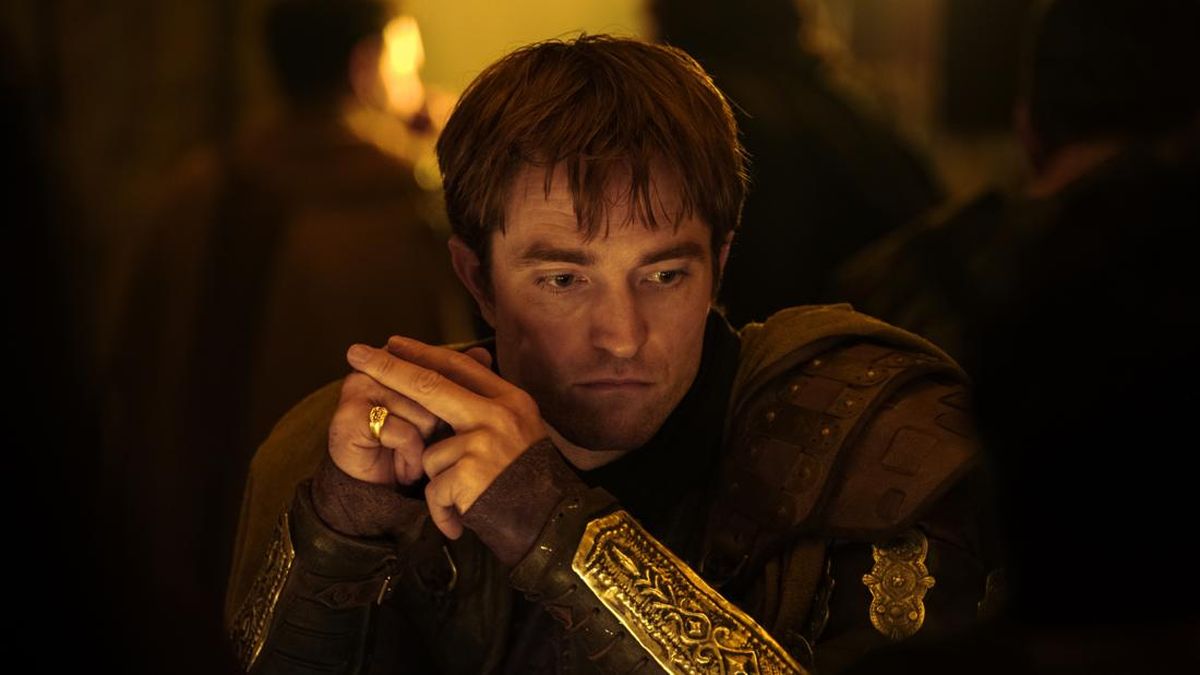
Robert Pattinson has openly expressed his profound enjoyment in portraying the antagonist Antinous in Christopher Nolan’s latest cinematic endeavor, "The Odyssey." In this highly anticipated film, Pattinson steps into the shoes of Antinous, a character driven by ambition to win Penelope’s affections and seize the throne of Odysseus. This role, Pattinson suggests, allows him to fully embrace his personal philosophy of managing audience expectations by under-promising and over-delivering through a transformative on-screen performance.
"I love it. I love lowering people’s expectations. That’s always been my favorite thing, that’s always been the best place for me," Pattinson stated in a recent interview with People magazine, published on July 10th. His approach to character portrayal, he explained, is rooted in a deliberate strategy: "Don’t over-promise at the beginning, but deliver much better results – that’s my motto." This philosophy appears to be a guiding principle for his acting choices, particularly when tackling complex or morally ambiguous characters.
While Antinous’s actions in the narrative are depicted as ruthless and steeped in political intrigue, Pattinson offered a surprisingly nuanced and even humorous personal interpretation of the character. Rather than viewing Antinous as a purely menacing villain, Pattinson described the character’s dynamics as a unique form of romance. "It’s actually funny. I thought Antinous wasn’t that bad," Pattinson shared with TODAY. "I’m a little worried now. Maybe if I watched it with an audience, I’d be like, horrified." He continued, reflecting on his private viewing experience: "But because I watched it (alone), I was like, ‘He’s just a normal guy.’" This personal perspective highlights the subjective nature of villainy and how an actor’s internal understanding can shape their performance, potentially leading audiences to question their initial judgments.
Beyond the psychological layers of his character, Pattinson also focused on the visual and material aspects of Antinous, particularly his sense of privilege and opulence. He collaborated extensively with the film’s costume department to ensure that every garment, down to the undergarments, exuded an aura of wealth and high social standing. This attention to detail, Pattinson explained, was crucial in bringing out a specific facet of Antinous’s persona.
"Not long after reading the script, I was like, ‘I want to have cheetah print underwear.’ I thought Antinous was the type of guy who would be like that. He has a kind of sensuality to him, ‘I just like satisfaction,’" Pattinson confessed with a laugh. "And because of that, I thought he must want to have the most luxurious underwear he could get. It sounds very silly, but it’s my job to think like that." This anecdote underscores Pattinson’s commitment to fully inhabiting his characters, exploring even the most intimate details to build a believable and multifaceted portrayal.
This is not the first time audiences have seen Pattinson delve into villainous roles, nor will it be the last in the near future. He is also slated to reprise his role as a villain in "Dune: Part Three," further solidifying his reputation for taking on challenging and captivating antagonistic characters. In "Dune: Part Three," Pattinson will portray Scytale, a shapeshifting individual central to a plot aimed at deposing Paul Atreides, played by Timothée Chalamet, from his position as emperor of the known universe. This dual engagement with villainous roles suggests a deliberate career trajectory, exploring the darker and more complex aspects of human nature on screen.
The Odyssey: A Cinematic Reimagining
Christopher Nolan’s "The Odyssey" is a bold reimagining of Homer’s epic poem, transporting the timeless narrative of homecoming and trials to a new conceptual landscape. While the original poem chronicles Odysseus’s arduous ten-year journey back to Ithaca after the Trojan War, Nolan’s adaptation, as suggested by Pattinson’s casting as Antinous, appears to focus on the political machinations and interpersonal conflicts that transpire in Odysseus’s absence. The character of Antinous, traditionally a suitor vying for Penelope’s hand, is elevated to a central antagonist, suggesting a narrative that may explore themes of power, betrayal, and the erosion of order in the face of prolonged absence.
The film’s production, helmed by Nolan, known for his intricate narratives and groundbreaking visual effects, promises a visually stunning and thematically rich experience. Nolan’s filmography, including works like "Inception," "The Dark Knight" trilogy, and "Oppenheimer," consistently pushes the boundaries of cinematic storytelling, often exploring complex philosophical and psychological themes. His involvement in "The Odyssey" signals a potentially revolutionary interpretation of the classic myth, one that may delve into the darker undercurrents of human ambition and desire.
Robert Pattinson’s Evolving Career Arc
Robert Pattinson’s journey from his breakout role as Edward Cullen in the "Twilight" saga to his current status as a critically acclaimed actor known for his versatile and often unconventional choices is a testament to his artistic evolution. After "Twilight," Pattinson deliberately sought out challenging roles in independent films such as "Cosmopolis," "The Rover," and "Good Time," demonstrating a keen desire to explore complex characters and artistic projects. His portrayal of the tormented detective in "The Batman" further cemented his ability to embody iconic and multifaceted figures, showcasing a depth and intensity that captivated audiences and critics alike.
His embrace of villainous roles, as seen in "The Odyssey" and "Dune: Part Three," marks a significant chapter in his career. By choosing to play antagonists, Pattinson is not merely exploring different character archetypes but also engaging with the very essence of conflict and moral ambiguity that drives compelling narratives. This willingness to step into the darker aspects of storytelling allows him to further showcase his range and challenge audience perceptions of his acting capabilities.
Thematic Resonance and Audience Expectations
Pattinson’s stated enjoyment in "lowering people’s expectations" is a strategic advantage in portraying characters like Antinous. In the context of "The Odyssey," Antinous represents a direct threat to the established order and the hope of Odysseus’s return. By initially presenting Antinous in a less overtly menacing light, as Pattinson suggests he perceived him, the film can build a sense of suspense and unease, allowing for a more impactful reveal of his true intentions and capabilities. This psychological manipulation of audience perception is a hallmark of Nolan’s directorial style, which often thrives on subverting expectations and challenging viewers’ assumptions.
The success of this approach hinges on the actor’s ability to convey subtle nuances and internal complexities, even within a character driven by selfish motives. Pattinson’s keen understanding of character psychology and his commitment to detailed portrayal are crucial in making Antinous a compelling and memorable figure, rather than a one-dimensional villain. His focus on the "sensuality" and "satisfaction" of Antinous, as evidenced by his thoughts on the character’s underwear, points to an exploration of the character’s vanity and entitlement, which are likely to be key drivers of his actions.
Broader Implications for "The Odyssey" and Nolan’s Vision
The casting of Pattinson as Antinous and the apparent focus on his character’s ambitions signal a departure from a purely heroic narrative. This suggests that Nolan’s "The Odyssey" might explore the fragility of power and the corrupting influence of ambition, even within a society that ostensibly awaits its rightful ruler. The film could offer a contemporary examination of leadership, loyalty, and the consequences of unchecked desire, drawing parallels between the ancient world and modern societal dynamics.
Furthermore, Pattinson’s dual villainous roles in "The Odyssey" and "Dune: Part Three" highlight a growing trend in blockbuster filmmaking where actors are increasingly taking on multifaceted roles that challenge traditional genre conventions. This allows for a richer and more complex cinematic landscape, where heroes and villains are not always clearly defined, and where the exploration of human nature, in all its shades of gray, takes precedence. The success of these ventures will likely influence future casting decisions and narrative approaches in large-scale productions, encouraging a more nuanced and sophisticated engagement with storytelling.
The critical reception and audience response to Pattinson’s portrayal of Antinous will undoubtedly be a significant point of discussion. His ability to navigate the fine line between charisma and menace, and to imbue a character like Antinous with a believable, albeit flawed, humanity, will be key to the film’s overall impact. As "The Odyssey" approaches its release, the anticipation surrounding Nolan’s vision and Pattinson’s performance continues to build, promising a cinematic event that is both a faithful reimagining of a classic tale and a bold exploration of timeless human themes.