Spinal health education has long battled a persistent array of misconceptions, chief among them the widespread belief regarding the therapeutic capabilities of orthopedic braces in treating spinal curvature disorders. Among structural conditions of the spine, scoliosis remains one of the most frequently misunderstood, with patients and their families often clutching to the hopeful notion that wearing a rigid body brace can actively reverse lateral deviations and restore a straight spinal alignment. However, medical consensus firmly challenges this assumption. Recent clinical clarifications emphasize that bracing acts purely as a mechanical stabilizer rather than a corrective cure, prompting a vital reevaluation of how patients manage this chronic condition and navigate their therapeutic timelines.
The pervasive myth that rigid spinal braces can straighten a scoliotic spine has historically led many individuals to pursue unguided self-management strategies, occasionally abandoning comprehensive clinical oversight in favor of passive device reliance. This false expectation can delay necessary interventions and subject patients to psychological distress when expected structural corrections fail to materialize. To address these misinterpretations, orthopedic specialists have stepped forward to delineate the precise boundaries of brace functionality, shifting the narrative from a perceived cure to a targeted preventative intervention.
Addressing the clinical realities of spinal management, Dr. Dohar Apul Lumban Tobing, SpOT K-Spine, an orthopedic and traumatology specialist focusing on spine care at Siloam Hospital Mampang, Jakarta, clarified the physiological limitations of these medical devices during a media briefing. According to Dr. Dohar, scoliosis is a complex medical condition that demands a rigorous, multi-faceted therapeutic approach rather than simple mechanical coercion. He noted that while braces serve as temporary supportive tools during symptomatic flare-ups or progressive phases, they do not possess the capacity to reverse structural curves. The fundamental goal of modern orthopedic intervention is not to achieve an instantaneous structural reversal through a garment, but rather to halt the progression of spinal curvature during critical developmental windows.
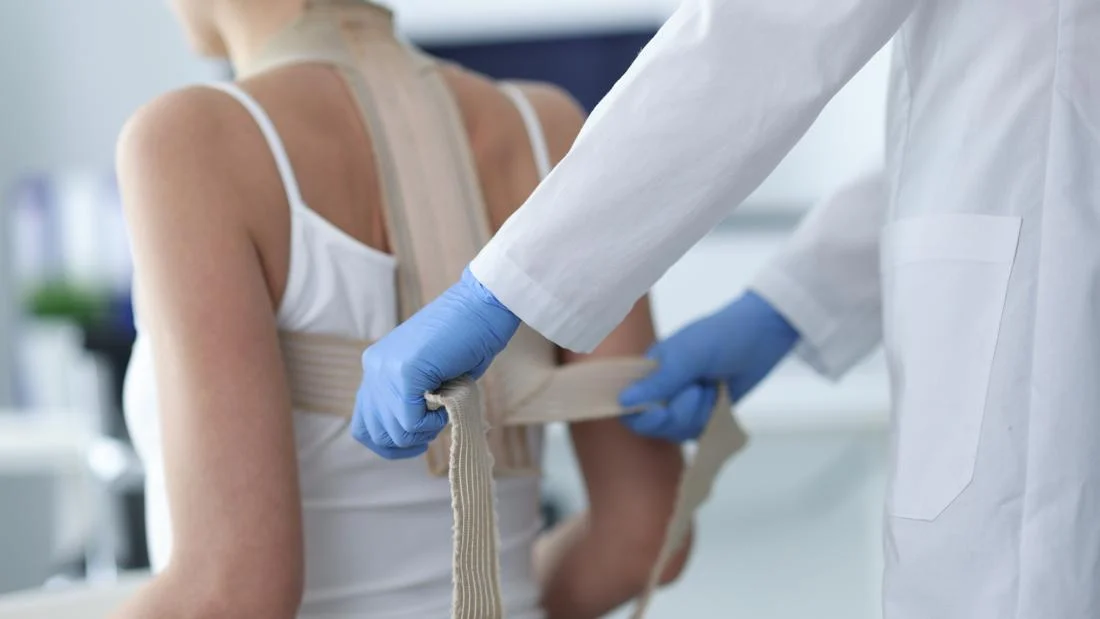
The primary mechanical objective of prescribing a brace in scoliosis management is protective stabilization. When an adolescent or young patient exhibits an aggressive curve progression, orthopedists may introduce a customized brace specifically engineered to arrest the worsening of the deformity. By restraining further lateral deviation during growth spurts, the medical team aims to keep the Cobb angle—the standard measurement used to quantify the magnitude of spinal curvatures—below the surgical threshold. Consequently, the brace functions as a preventative barrier against invasive spinal fusion surgery, rather than a corrective instrument designed to straighten the spine.
Furthermore, clinical protocols dictate strict temporal boundaries for brace utilization. Bracing is fundamentally tethered to human skeletal development, meaning it is deployed during phases of rapid growth and systematically phased out as skeletal maturity approaches. Dr. Dohar emphasized that these supportive devices are never intended as permanent fixtures or lifelong garments. Once a patient reaches late adolescence—typically around the ages of 18 or 19—and skeletal growth plate closure nears completion, the brace must be discontinued under medical supervision. Prolonged, unnecessary use past this critical developmental milestone risks inducing significant muscle atrophy and weakening core support structures, ultimately exacerbating physical vulnerability rather than promoting recovery.
Understanding the broader implications of these medical realities requires a contextual examination of scoliosis as a public health issue. Scoliosis most commonly manifests during the growth spurt just before puberty, typically between the ages of 10 and 15. While mild curvatures frequently require only active observation through regular clinical evaluations and physical therapy, moderate cases often trigger discussions regarding bracing. Global orthopedic standards underscore that braces do not cure idiopathic scoliosis, nor do they permanently straighten curves that have already formed; instead, their efficacy is strictly evaluated by their ability to reduce the proportion of patients who eventually require surgical stabilization.
The psychological and lifestyle implications of scoliosis management also warrant careful consideration. Adolescents prescribed daily bracing regimens often face compliance challenges driven by social stigma, physical discomfort, and the mistaken belief that the device will yield a rapid, visible cure. When patients endure months or years of wearing a rigid plastic shell under their clothing under the false impression that it is actively straightening their spine, the eventual realization of its true, stabilizing-only purpose can lead to frustration and treatment fatigue. Clear, transparent communication from healthcare providers regarding the exact purpose of bracing is therefore essential to fostering sustained patient compliance and realistic expectations.
As clinical education continues to evolve, the medical community emphasizes the integration of specialized physical therapy, continuous monitoring, and psychological support alongside any orthopedic device utilization. By dismantling the myth of the corrective brace, specialists aim to empower patients with accurate knowledge, encouraging proactive engagement with evidence-based treatment plans. Ultimately, recognizing that a brace is a shield against progression rather than a magic wand for straightness ensures that individuals living with scoliosis can navigate their developmental years with informed confidence, realistic milestones, and optimized long-term spinal health.