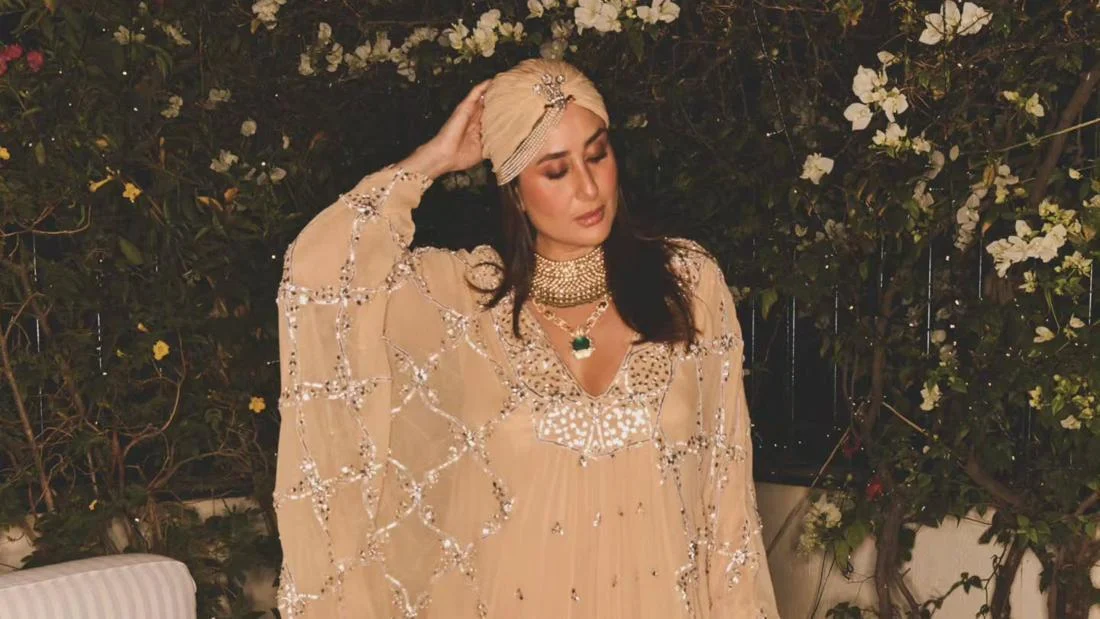
The vibrant festival of Diwali, known globally as the Festival of Lights, consistently serves as a major focal point for South Asian fashion, culture, and high-society gatherings. Celebrities across the subcontinent use the occasion to showcase exquisite traditional ensembles crafted by the nation’s leading designers. Among the myriad of high-profile appearances that dominated media headlines this season, Bollywood superstar Kareena Kapoor Khan emerged as a primary subject of widespread public fascination. Attending the festivities alongside her husband, actor Saif Ali Khan, and their two children, Kapoor delivered a masterclass in regal elegance. However, beyond the initial visual appeal of her designer kaftan and the striking couple aesthetic, deep historical significance and rare generational treasures captured the attention of fashion historians, cultural commentators, and jewelry enthusiasts alike.
Main Facts and the Festival Appearance
The celebration, which brought together prominent figures from the Indian film industry, highlighted traditional craftsmanship intertwined with deep personal heritage. Kareena Kapoor, celebrated for her enduring influence on Indian cinema and style, stepped out in a meticulously tailored ensemble that immediately drew praise from fashion critics. Styled by her sister and renowned celebrity stylist Rhea Kapoor, the actress wore a sophisticated kaftan and turban ensemble created by acclaimed designer Punit Balana.
While the contemporary styling initially generated viral discussion across various digital platforms, subsequent revelations regarding Kapoor’s accessories elevated the ensemble from a standard celebrity fashion moment to a historic display of royal heritage. Central to Kapoor’s look was a magnificent 30-carat emerald pendant delicately carved with the Ayat al-Kursi, the revered 255th verse of Surah Al-Baqarah from the Holy Quran. This rare piece of jewelry, distinguished by its intricate calligraphy and exceptional gemstone quality, bridges high-end artisanal craftsmanship with profound spiritual and historical legacy.
Complementing his wife’s commanding presence, Saif Ali Khan opted for a classic yet understated aesthetic. The actor wore a tailored, jet-black traditional kurta paired with matching footwear. Maintaining a polished appearance characterized by a clean-shaven face accented by a refined mustache, Khan channeled timeless sophistication. Meanwhile, the couple’s young sons, Taimur and Jeh, added a touch of youthful charm to the family portrait, donning coordinated silk kurtas in distinct complementary hues, completing a harmonious family presentation that resonated with royal grandeur.
Chronology and Provenance of the Royal Heirlooms
To fully understand the cultural weight of Kareena Kapoor’s Diwali appearance, one must examine the provenance of the artifacts worn by both Kapoor and Khan. The disclosure of the jewelry’s origin came to light through detailed social media commentary provided by Rhea Kapoor, shedding light on the journey of these generational pieces.
The centerpiece of the look—the 30-carat carved emerald pendant bearing the Ayat al-Kursi—carries a storied lineage. Historical records and family archives indicate that the pendant originally belonged to the Begums of Bhopal, a line of female rulers who governed the princely state of Bhopal with progressive administrative policies and immense cultural patronage. Following Kapoor’s high-profile marriage to Saif Ali Khan, the pendant was formally integrated into her personal collection, serving as a symbolic passing of the torch from one generation of royal custodians to another.
The historical narrative extended further through Saif Ali Khan’s own accessories. Tucked into his turban was a kalgi—a traditional ornamental plume or brooch traditionally worn by Indian nobility on ceremonial occasions. This specific kalgi is estimated to be over two centuries old and holds deep sentimental value for the couple, having previously been worn by Saif Ali Khan during his wedding to Kareena Kapoor.
Rhea Kapoor elaborated on the significance of these items in her public statements, noting the direct bloodline connecting the pieces to the ruling house of Bhopal. "Pusaka keluarga kerajaan Bhopal, milik Kareena. Barang-barang ini berasal dari keluarga Saif: neneknya, Sajida Sultan, adalah putri dari Nawab Bhopal yang terakhir berkuasa," the stylist explained, emphasizing that the items trace back to Sajida Sultan, the grandmother of Saif Ali Khan and daughter of Hamidullah Khan, the last reigning Nawab of Bhopal.
Supporting Data: The Intersection of Celebrity and Heritage Fashion
The widespread attention garnered by Kapoor’s attire reflects broader shifts in contemporary celebrity fashion, where historical preservation and sustainable luxury increasingly intersect with modern red-carpet styling. In recent years, Indian celebrities have frequently looked to archival fashion and ancestral jewelry to distinguish themselves during high-profile festive seasons.
Data compiled from digital engagement metrics surrounding major South Asian cultural festivals indicate a rising consumer preference for heritage pieces over newly manufactured luxury goods. Outfits incorporating certified historical artifacts, vintage textiles, and museum-quality gemstones routinely generate significantly higher digital reach and sustained media analysis. By choosing to wear pieces tied to the princely state of Bhopal—an entity recognized for its distinct Indo-Islamic architectural and cultural synthesis—Kapoor successfully leveraged her platform to bring pre-independence Indian royal history into the modern cultural consciousness.
Furthermore, the integration of Islamic calligraphy into high-jewelry pieces, such as the 30-carat emerald pendant, highlights a rich tradition of talismanic and devotional jewelry that flourished across the Mughal Empire and its successor states. Gemstones inscribed with religious verses, royal seals, or astrological symbols were frequently commissioned by rulers and nobility not only as symbols of status, but as spiritual safeguards.
Cultural Implications and Public Reaction
The public response to Kareena Kapoor’s ensemble was overwhelmingly positive, spanning across fashion publications, lifestyle blogs, and social media platforms. Cultural analysts pointed out that the juxtaposition of a contemporary silhouette—the kaftan—with centuries-old royal heirlooms demonstrates a sophisticated approach to modern South Asian identity. By honoring the princely legacy of the Bhopal royal family, Kapoor and Khan reinforced the narrative of cultural continuity, preserving tangible pieces of history within the public eye.
In regions with rich monarchical histories like India, the descendants of former princely states occupy a unique socio-cultural space. While formal titles were abolished with the 26th Amendment to the Constitution of India in 1971, the cultural capital, architectural legacies, and private collections associated with these families continue to command immense fascination. When public figures of Kapoor and Khan’s stature display such artifacts, it sparks renewed public interest in regional history, museology, and the preservation of antique craftsmanship.
Moreover, the choice to wear an emerald pendant inscribed with the Ayat al-Kursi during Diwali—a festival primarily observed by Hindus—was widely interpreted by cultural commentators as a powerful testament to pluralism and syncretism. India’s cultural landscape has long celebrated cross-cultural and interfaith integration, particularly within elite artistic and royal circles where aesthetic traditions frequently bridged religious boundaries. The seamless incorporation of Islamic devotional art into a festive family gathering underscored a message of inclusivity and shared heritage.
Broader Impact on the Fashion and Jewelry Industry
The viral nature of the event is expected to influence upcoming design trends within the South Asian luxury market. Industry experts anticipate a surge in demand for bespoke jewelry featuring traditional calligraphic engravings, as well as an increased appreciation for antique polk diamonds, uncut emeralds, and certified royal provenance pieces.
Jewelry designers and artisans working within the high-end luxury sector have noted a growing consumer desire for storytelling in fashion. Buyers are increasingly moving away from mass-produced commercial luxury, seeking instead items that carry a distinct narrative, historical roots, or generational significance. The exposure given to the Bhopal royal collection through this single public appearance serves as a masterclass in luxury branding and heritage marketing, proving that historical authenticity remains one of the most powerful tools in celebrity styling.
As the festive season concludes, the legacy of Kareena Kapoor’s Diwali appearance will likely endure in fashion archives and cultural retrospectives. By bridging the gap between historical preservation and modern celebrity culture, the actress not only set a high benchmark for festive styling but also ensured that a vital piece of India’s royal and spiritual heritage reached a global audience of millions.