Socio Today
The cultural landscape of South Papua is set to come alive as the Kali Maro Foundation proudly presents the fourth iteration of the Festival Kali Maro. Scheduled to take place from October 1 to October 5, 2026, this significant cultural gathering will unfold at the Iman dan Budaya Gerbang Hati Kudus Yesus Park, located in Yonggo Dusun Sirapu, Urumb Village, Semangga District, Merauke Regency. As communities across Indonesia increasingly recognize the value of indigenous heritage, this year’s festival steps into the national spotlight, holding a prestigious position within the Ministry of Tourism’s Kharisma Event Nusantara (KEN) 2026 program. Through a deliberate fusion of ancestral traditions, historical acknowledgment, environmental consciousness, and community collaboration, the five-day event aims to honor the profound heritage of the Malind (Marind) Anim tribe while bolstering local tourism and regional economic growth.
The Genesis and Philosophical Foundation of Festival Kali Maro
To understand the weight of the Festival Kali Maro, one must look back at its origins, which are deeply rooted in the historical and spiritual fabric of Merauke. The initiative was originally conceived through the collaborative efforts of the Parish Priest of Wendu, Reverend Father Andreas Fanumbi, alongside the Parish Pastoral Council and the congregation of Wendu. Recognizing the necessity of creating a sustainable platform to safeguard indigenous traditions, the organizers established the Kali Maro Foundation to spearhead the event annually.
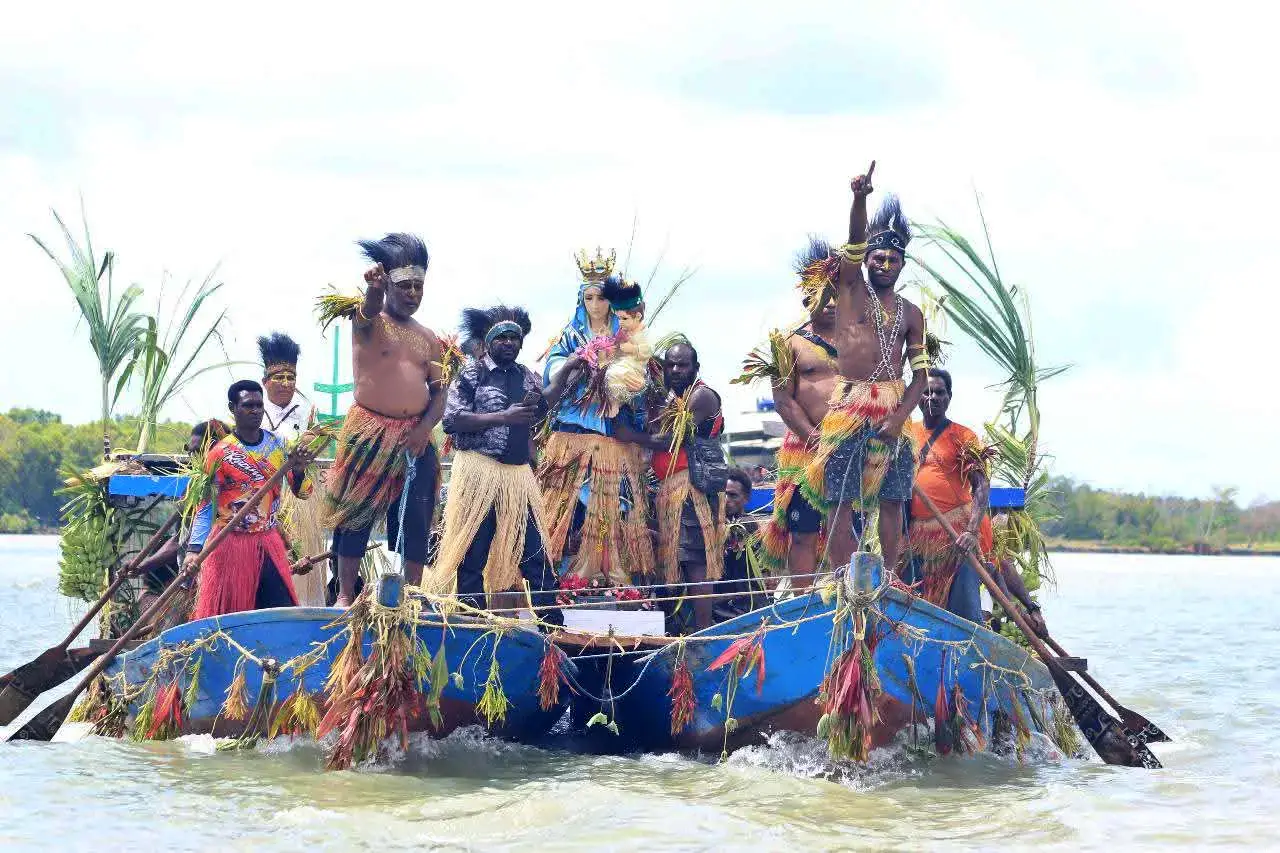
This institutional evolution transformed what started as a localized community commemoration into a robust festival that honors both the indigenous Marind culture and the historical legacy of the Catholic Church’s early missions. Historically, missionaries navigated the winding currents of the Maro River to reach the remote interior regions of South Papua, intertwining their spiritual journey with the daily lives of the indigenous populations.
The thematic core of the 2026 festival, “Anim-Ha: The Living River Civilization of Marind,” serves as a poignant reminder of the vital relationship between the people and their environment. The Maro River, which physically cuts through Merauke, is not merely a geographical landmark; it is viewed by the Malind Anim as the central artery of their civilization. It provides sustenance, shapes their mythology, and dictates their seasonal rhythms. By dedicating the festival to this waterway, the organizers invite both local residents and international visitors to reflect upon a lifestyle deeply attuned to ecological harmony, mutual respect, and the sustainable stewardship of natural resources extending from the inland forests to the coastal boundaries of the Arafura Sea.
National Recognition via Kharisma Event Nusantara 2026
The inclusion of Festival Kali Maro IV in the Kharisma Event Nusantara (KEN) 2026 calendar marks a monumental milestone for the cultural development of South Papua. KEN is a strategic initiative by the Indonesian Ministry of Tourism and Creative Economy designed to curate and elevate high-quality festivals across the archipelago, boosting domestic and international tourism while empowering local creative economies.
In 2026, the festival successfully secured its place among 125 selected events nationwide, representing the province of South Papua alongside a diverse array of cultural celebrations across the broader Papua region. Within the six provinces of Tanah Papua, a total of eight prominent festivals earned a spot in the KEN 2026 directory. These include the Biak Munara Wampasi, Festival Danau Sentani, and Festival Kopi Papua representing the province of Papua; the iconic Festival Budaya Lembah Baliem in Papua Pegunungan; the Timika Inside Festival of Art in Papua Tengah; the Festival Roon Wondama in Papua Barat; and the Festival Pesona Raja Ampat in Papua Barat Daya.
This collective recognition underscores the growing prominence of Papuan arts and traditions on the national stage. For South Papua specifically, Festival Kali Maro acts as an anchor event, drawing attention to the unique cultural tapestries of the southern coast and positioning Merauke as a premier destination for cultural tourism.
A Collaborative Synergy of Tradition, Religion, and Government
A defining characteristic of Festival Kali Maro is its embodiment of the "Three Hearths" (Tiga Tungku) philosophy—a foundational social framework in Merauke that symbolizes the harmonious coexistence and cooperation between Customary Institutions (Adat), Religious Organizations (Agama), and the Local Government (Pemerintah). This tripartite alliance serves as the bedrock of social stability, unity, and governance in the region.
The planning and execution of the 2026 festival heavily reflect this collaborative spirit. Jossefin Iriani Kewamijai, Director of the Kali Maro Foundation, emphasized that preparations for the fourth installment of the festival have been heavily grounded in grassroots participation. The local residents of Urumb Village, acting as the primary hosts, have worked hand in hand with neighboring indigenous communities from Matara, Waninggap Nanggo, Sirapu, and Anasai. Furthermore, local artists and artisans have been actively engaged in constructing traditional exhibition booths and preparing artistic showcases.
"We want the culture of the native Marind people to remain visible and preserved so that outside communities can witness firsthand that the traditions of indigenous Papuans are well-maintained, alongside the cultures of other ethnic groups residing here," stated Jossefin Kewamijai during preparations in late August 2026. This inclusive approach ensures that the festival acts as an equalizer, celebrating cultural diversity while placing indigenous sovereignty and storytelling at the forefront.
Event Highlights and Cultural Activations
Spanning five action-packed days from October 1 to October 5, 2026, the festival schedule is designed to immerse attendees in a comprehensive sensory and intellectual experience. The programming goes far beyond standard entertainment, offering educational narratives, participatory rituals, and economic platforms.
One of the central historical presentations is the storytelling and dramatic reenactment of the origins of the name "Merauke," tracing the linguistic and historical evolution of the region back to colonial encounters and indigenous settlements. Visitors will also bear witness to the vibrant Dahun Anggai, a traditional customary celebration marked by intricate dances, rhythmic chanting, and symbolic attire that narrate the ancestral heritage of the Marind people.
In addition to traditional ceremonies, the festival features collaborative artistic performances that bridge generational and ethnic divides. Indigenous musicians and dancers share the stage with contemporary artists from across the archipelago, fostering a dynamic exchange of creative expressions. Parallel to the performances, a bustling creative economy village showcases the best of local craftsmanship. Attendees can explore exhibitions featuring traditional culinary delights, hand-woven textiles, indigenous musical instruments, and masterfully crafted wood carvings produced by local artisans.
Four Pillars of Impact: Economic, Cultural, Artistic, and Ecological
The overarching mission of Festival Kali Maro extends well beyond the temporal boundaries of its five-day run. The organizers have structured the festival around four strategic pillars designed to generate sustainable long-term benefits for the region:

-
Economic Empowerment and Local Welfare: By integrating micro, small, and medium enterprises (MSMEs) into the festival layout, local vendors, farmers, and artisans are provided with a lucrative platform to commercialize their goods. This direct market access stimulates the local economy and elevates household incomes within rural communities.
-
Cultural Preservation: The festival provides a living classroom where younger generations of the Malind Anim can observe, learn, and internalize ancestral practices that risk fading away in an increasingly digital and globalized world.
-
Development of Local Arts: By encouraging contemporary interpretations of traditional music, dance, and visual arts, the event creates a sustainable ecosystem for artists to innovate while remaining grounded in their roots.
-
Ecological Awareness: Given the festival’s thematic focus on the Maro River and the Arafura coastal ecosystem, substantial programming is dedicated to environmental education. Workshops and discussions highlight the importance of protecting watershed areas, preventing coastal degradation, and maintaining a sustainable balance between human habitation and nature.
Implications for the Future of South Papua
As South Papua continues to navigate its path as a newly established province, cultural events like Festival Kali Maro play an indispensable role in shaping regional identity and social cohesion. The philosophy of "Izakod Bekai Izakod Kai"—meaning "one heart, one goal"—is frequently invoked by community leaders during the festival preparations. This guiding principle encapsulates the collective aspiration of Merauke’s diverse population to work collaboratively toward a prosperous, inclusive, and culturally rich future.
Looking ahead, the leadership of the Kali Maro Foundation harbors high aspirations for the event. By maintaining its alignment with national tourism programs like Kharisma Event Nusantara and deepening partnerships between traditional leaders, religious bodies, and government agencies, the festival is well-positioned to evolve into a premier international ecocultural event.
Ultimately, Festival Kali Maro 2026 serves as a powerful testament to the resilience of indigenous traditions in contemporary Indonesia. It proves that modernization and cultural heritage are not mutually exclusive, but can instead reinforce one another to create a vibrant, unified society that honors its past while stepping confidently into the future.