The intersection of sports and entertainment has long fascinated global audiences, frequently resulting in high-profile collaborations, brand endorsements, and cultural crossovers. However, an intriguing subset of international celebrities shares a deeper, more physical connection to the world of athletics than mere fandom. Long before stepping onto red carpets, recording chart-topping albums, or headlining blockbuster Hollywood franchises, several prominent actors and musicians harbored serious ambitions of becoming professional soccer players.
A thorough examination of these crossover trajectories reveals that the journey from the turf to the screen is more common than generally perceived. While the entertainment industry is often viewed as an exclusive domain requiring lifelong artistic training, a surprising number of global icons transitioned from elite football academies, competitive European leagues, and national team squads into the realms of cinema and music. This phenomenon underscores the unpredictable nature of career paths, where physical resilience, discipline, and performance pressure forged on the pitch occasionally serve as foundational assets for the demanding pressures of international stardom.
Examining the professional backgrounds of these figures provides a fascinating look into the parallel worlds of elite sports and commercial entertainment. From gritty British defenders-turned-action stars to legendary French goalscorers making their mark in cinema, the transition from sports to show business highlights a unique blend of athleticism and artistic expression.
Vinnie Jones: From Hardman Defender to Cinematic Tough Guy
Long before solidifying his reputation as one of Hollywood’s most recognizable tough-guy actors, Vinnie Jones was a fearsome presence on English football pitches during the 1980s and 1990s. Born in Watford, England, in 1965, Jones carved out a notable professional career as a rugged, uncompromising midfielder known for his fierce competitiveness and uncompromising defensive style.
Jones represented several prominent English clubs throughout his professional tenure, including Wimbledon, Leeds United, Sheffield United, Chelsea, and Queens Park Rangers. His crowning achievement on the pitch came in 1988, when he captained and anchored the "Crazy Gang" of Wimbledon to a historic, underdog 1-0 victory over the dominant Liverpool in the FA Cup final at Wembley Stadium. In addition to his club exploits, Jones earned international recognition, representing and captaining the Wales national team by virtue of his Welsh heritage.
Upon hanging up his boots in 1999, Jones seamlessly pivoted into a cinematic career that capitalized heavily on his authentic tough-guy persona. British director Guy Ritchie cast Jones in his iconic directorial debut, Lock, Stock and Two Smoking Barrels (1998), launching an unexpected film career. Jones subsequently appeared in high-profile projects such as Snatch (2000), Swordfish (2001), Mean Machine (2001)—a sports comedy reflecting his football background—and X-Men: The Last Stand (2006) as the mutant Juggernaut. Industry analysts frequently note that Jones’s seamless transition was aided by the fact that his theatrical on-screen villainy mirrored the fiercely aggressive reputation he maintained across professional football stadiums.
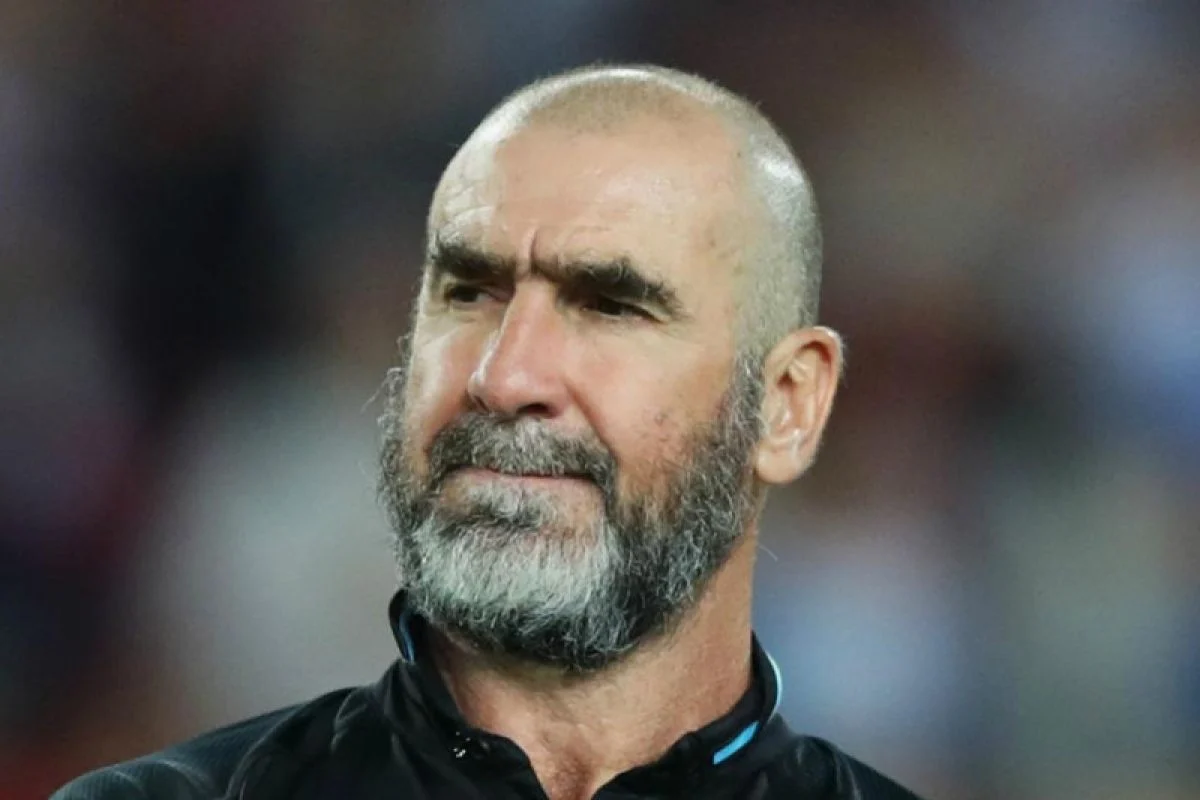
Eric Cantona: The French Maestro Turned Cinematic Auteur
In the annals of European football, Eric Cantona occupies a legendary status, particularly among supporters of Manchester United. Born in Marseille, France, in 1966, Cantona is widely credited by sports historians as the catalyst for Manchester United’s dominant era under manager Sir Alex Ferguson during the 1990s.
After moving to English football and joining Manchester United in November 1992, Cantona revolutionized the team’s attack. Sporting his trademark upturned collar, the enigmatic French forward guided the Red Devils to four Premier League titles in five seasons, cementing his legacy as a club icon before his shock retirement in May 1997 at the age of 30. His technical brilliance, charisma, and volatile temperament made him one of the most compelling figures in sports history.
Unlike many athletes who retreat from public life post-retirement, Cantona immediately embraced the creative arts, establishing a successful career as an actor, producer, and cultural commentator. According to institutional records from Manchester United, Cantona has contributed to more than 25 cinematic and television productions since leaving the pitch.
His filmography includes a supporting role as the French ambassador in the Academy Award-winning historical drama Elizabeth (1998), starring Cate Blanchett. Furthermore, Cantona starred as a fictionalized version of himself in Ken Loach’s critically acclaimed comedy-drama Looking for Eric (2009), a film that explores the profound psychological impact of a legendary athlete on an ordinary struggling postman. Cantona’s evolution illustrates a rare cultural shift from athletic dominance to recognized cinematic presence.
Frank Leboeuf: World Cup Winner to Hollywood Actor
The resume of French defender Frank Leboeuf boasts achievements that few entertainers can rival, having reached the pinnacle of international association football before embarking on an acting career. Born in Marseille in 1968, Leboeuf established himself as a technically proficient, intelligent central defender who played for clubs such as Strasbourg, Marseille, and English Premier League side Chelsea.
During his five-year spell at Stamford Bridge between 1996 and 2001, Leboeuf won the FA Cup and League Cup, earning a reputation as a reliable penalty-taker and defensive organizer. On the international stage, Leboeuf achieved ultimate glory as a member of the France national team that triumphed at the 1998 FIFA World Cup on home soil, followed by a victory at the UEFA Euro 2000 tournament.
Following his retirement from professional soccer, Leboeuf made the unorthodox decision to relocate to Los Angeles, California, to seriously pursue professional acting. Demonstrating dedication to his new craft, he enrolled at the prestigious Lee Strasberg Theatre & Film Institute, undergoing rigorous training to shed his athletic identity.
Leboeuf’s dedication yielded legitimate screen credits, most notably securing a supporting role as a physician in James Marsh’s acclaimed biographical drama The Theory of Everything (2014), which chronicled the life of theoretical physicist Stephen Hawking. Alongside his acting pursuits, Leboeuf has maintained a prominent presence in sports media as a respected football analyst and television commentator, bridging his two professional worlds.
Nicky Byrne: From FA Youth Cup Winner to Boyband Stardom
Long before achieving global multi-platinum success as a member of the iconic Irish pop group Westlife, Nicky Byrne was a talented aspiring athlete on the books of a major English football club. Born in Dublin in 1978, Byrne displayed exceptional goalkeeping ability during his youth, playing for local Dublin clubs Home Farm and St. Kevin’s Boys.
Byrne’s athletic promise caught the attention of scouts, leading to a high-profile move across the Irish Sea in 1995 when he signed professional youth terms with Leeds United. During his two-year tenure at Elland Road, Byrne developed within the club’s esteemed academy system and notably served as the starting goalkeeper for the Leeds United squad that captured the prestigious FA Youth Cup in 1997.
However, when his contract concluded, Byrne chose not to pursue lower-division football paths in England, opting instead to return to Ireland. This pivotal turning point redirected his creative energies toward music. In 1998, Byrne auditioned for music manager Louis Walsh, successfully securing a spot in Westlife alongside Shane Filan, Mark Feehily, Kian Egan, and Brian McFadden.
The transition proved remarkably successful. Westlife emerged as one of the most successful boybands in pop history, selling over 55 million records worldwide and generating a historic string of chart-topping singles, including My Love, Uptown Girl, and Flying Without Wings. Despite his musical success, Byrne has frequently returned to the pitch for charity events, including Soccer Aid, keeping his early athletic heritage alive.
Julio Iglesias: From Real Madrid’s Goal to Global Melodies
Perhaps the most dramatic career pivot belongs to legendary Spanish balladeer Julio Iglesias, whose entry into the music industry was forced by unforeseen tragedy. Born in Madrid in 1943, Iglesias possessed profound athletic ability in his youth, displaying exceptional reflexes as a goalkeeper.
In 1959, Iglesias’s sporting ambitions materialized when he was signed to the youth academy squad of Real Madrid, one of the most prestigious football institutions in the world. As a promising young keeper, Iglesias balanced his athletic training with the study of law at the University of Madrid, appearing destined for a stable, high-profile career in sports or jurisprudence.
However, the trajectory of his life altered permanently on the night of September 22, 1962, when Iglesias was involved in a severe automobile accident in Madrid. The crash left him with multiple spinal fractures and temporary paralysis from the waist down, effectively destroying any possibility of continuing his professional football career.
During a grueling recovery period that lasted nearly two years, a medical nurse gifted Iglesias a guitar to help restore dexterity in his hands. Confined to a hospital bed, Iglesias began teaching himself to play and composing poetry, which eventually transitioned into songwriting. The therapeutic outlet unlocked an innate musical talent. Upon his recovery, Iglesias entered a national song festival with an original composition, winning the competition and subsequently signing a recording contract.
This unexpected turn of events birthed one of the most successful Latin recording careers in history. Iglesias has sold over 300 million records worldwide in multiple languages, cementing his legacy as a global icon whose musical greatness arose directly from the ashes of a shattered athletic dream.
Analytical Implications of the Sports-to-Entertainment Pipeline
The documented journeys of Jones, Cantona, Leboeuf, Byrne, and Iglesias offer valuable sociological insights into the transferability of high-level performance skills. Sports psychologists note that the psychological resilience, discipline, tactical awareness, and capacity to perform under intense public scrutiny required in professional athletics share a direct correlation with the demands of the entertainment industry.
While transitioning from professional sports to acting or music remains statistically rare due to the distinct skill sets required, these cases demonstrate that failure or retirement in one competitive field does not preclude extraordinary success in another. As the boundary between sports culture and media continues to blur in the modern digital era, the stories of these multi-talented figures serve as a testament to adaptability, human perseverance, and the pursuit of reinvention.