Depok, currently a bustling municipality in the West Java province of Indonesia, holds a history that is as enigmatic as it is unconventional. While official records celebrate its inauguration as an independent city on April 27, 1999, the region’s roots extend deep into the colonial era, revealing a period where Depok functioned as a self-governing entity led by an elected president. This unique historical anomaly, often overshadowed by the city’s modern identity, provides a fascinating case study in administrative autonomy and the long-term impacts of colonial-era land management.
The Origins of a Private Landed Estate
The story of Depok’s peculiar status began in the late 17th century with Cornelis Chastelein, a wealthy Dutch East India Company (VOC) official and merchant. In 1696, Chastelein purchased a vast tract of land measuring approximately 12.44 square kilometers for 2.4 million guilders. Unlike typical colonial holdings, this land held the status of land particuliere (private land). This distinction was critical; it meant the territory operated outside the direct administrative oversight of the Dutch colonial government in Batavia.
Chastelein was a figure of complex motivations. A devout Catholic in a predominantly Protestant Dutch environment, he sought to create a community that operated on his own principles. He imported enslaved people from various regions across the Indonesian archipelago—including Bali, Ambon, and Sulawesi—to clear the dense wilderness and establish agricultural operations. The territory under his ownership was extensive, stretching from the modern-day boundaries of Depok to areas as far north as Pasar Minggu in South Jakarta and Gambir in Central Jakarta.
The Testament and the Birth of a Community
The transformation of this private estate into a proto-state was cemented by Chastelein’s final testament. Upon his death on June 28, 1714, he bequeathed his land, livestock, and agricultural equipment to his former slaves. More importantly, he granted them their freedom. To prevent conflict among the newly liberated inhabitants, he designated a leader, Jarong van Bali, to oversee the transition.
This act of manumission was unprecedented in the Dutch East Indies. The newly freed community, known as the Belanda Depok (Dutch Depokers), developed a distinct social identity, blending their diverse ethnic origins with the European customs introduced by their former master. This synthesis created a localized culture that felt isolated from the surrounding Javanese and Sundanese populations, reinforcing their sense of autonomy.

The Establishment of the Republic of Depok
By the early 20th century, the community sought to formalize its governance. In 1913, with the assistance of a legal expert from Batavia, the community established Het Gemeente Bestuur van Het Particuliere Land Depok (The Municipal Government of the Private Land of Depok). This entity functioned as a de facto republic.
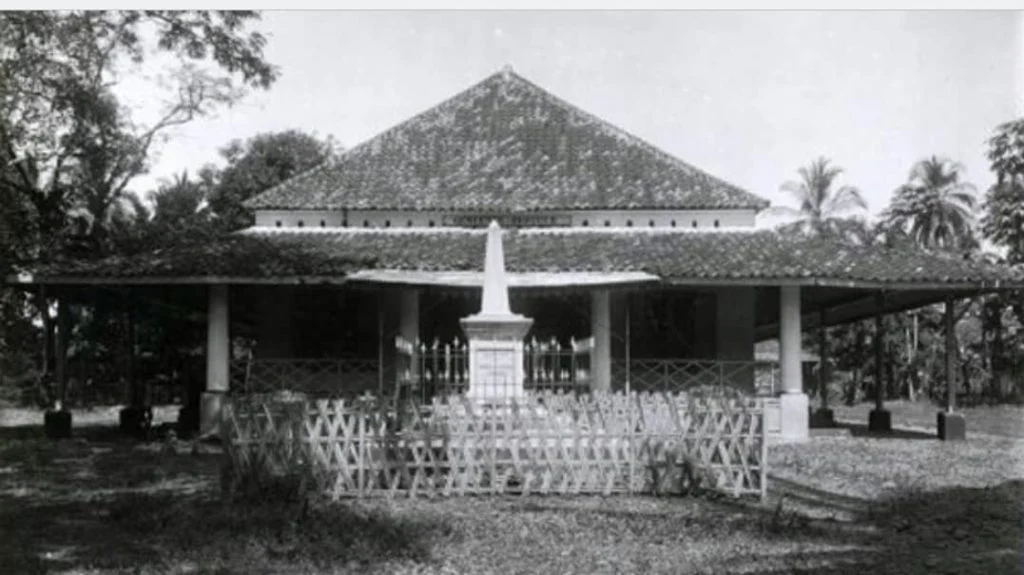
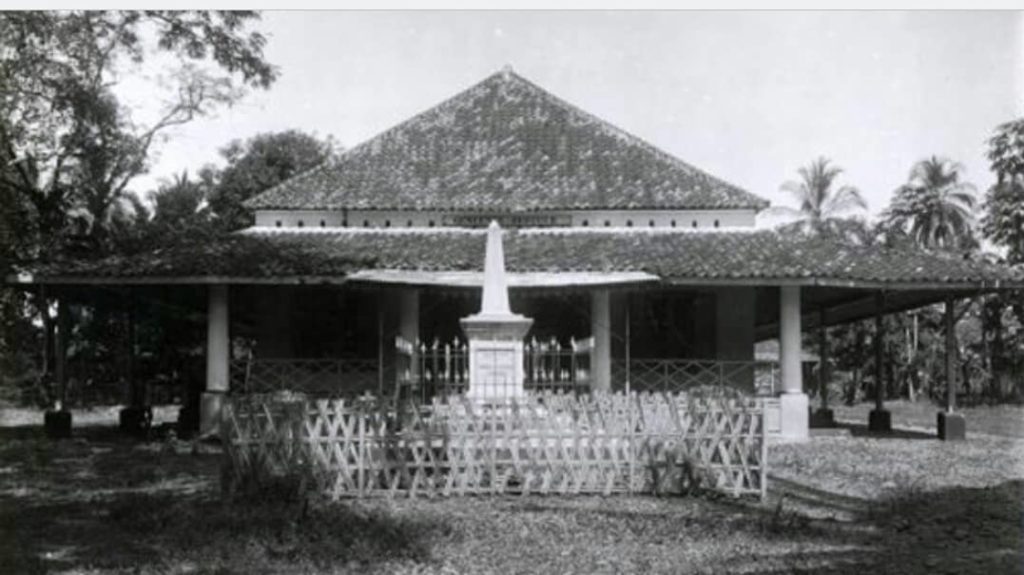
The governance structure was remarkably progressive for its time. The community instituted a democratic process, electing a president to serve a three-year term. There was no vice president; instead, the president was supported by a secretary. The administrative center of this small republic was located at what is now known as the "Tugu Depok" or the Kilometer 0 marker. Nearby, a grand government building was erected, a structure that has since been repurposed and is currently utilized as the Harapan Hospital.
Chronology of the Presidential Era:
- 1913: Gerrit Jonathans is elected as the first president of the Depok community.
- 1921: Martinus Laurens assumes the presidency.
- 1930: Leonardus Leander takes office.
- 1952: Johannes Matjis Jonathans serves as the final president before the dissolution of the private land status.
While records from this era remain sparse, historians note that the democratic experiment was a source of pride for the local residents. The presidents were tasked with managing land disputes, communal resources, and the maintenance of public infrastructure within the land particuliere.
The Transition to Modern Governance
The geopolitical shifts brought about by the Japanese occupation and the subsequent Indonesian war for independence fundamentally altered the status of Depok. By the mid-20th century, the existence of a "private state" within a newly independent nation was untenable.
In 1952, the last president, Matijs Jonathans, officially handed over the administrative control of the territory to the Republic of Indonesia. This was formalized through an act of surrender of the private land (akte penyerahan tanah partikulir). The dissolution of the Gemeente Bestuur marked the end of an era, folding the unique enclave into the broader administrative framework of the West Java provincial government.
Socio-Political Implications and Historical Analysis
The history of Depok serves as an important reminder of the complexity of Indonesian administrative history. The "Republic of Depok" was not a state in the modern sense of sovereignty, but it represented a high degree of local administrative autonomy that was rare under colonial rule.
From an academic perspective, the existence of this community highlights the legacy of land particuliere in the Indonesian archipelago. These estates often operated as mini-kingdoms, where the landlord acted as both owner and judge. However, the case of Depok is unique because of the egalitarian transition Chastelein forced upon his heirs and the subsequent adoption of democratic elections by the freed populace.
Sociologists often point to the Belanda Depok community as a fascinating study in cultural assimilation. Despite being ethnically diverse, the group adopted a shared identity centered on their unique history and legal status. Even today, the legacy of this period persists in the architecture of older buildings and the family names of many long-term residents, such as the Jonathans, Laurens, and Leander families.
Contemporary Relevance
While the modern city of Depok is now a major hub for education and commerce—hosting the University of Indonesia and serving as a residential satellite to Jakarta—the history of the 1913 government continues to interest historians and local residents alike. The Kilometer 0 marker remains a silent witness to a time when this region functioned as an independent, self-governing entity.
In recent years, local cultural preservationists have sought to document the oral histories of the descendants of the early Belanda Depok families. These efforts are crucial, as many of the written records regarding the day-to-day operations of the 1913 government were lost or destroyed during the turbulent years of the mid-20th century.
The transition from a colonial private estate to a 21st-century urban center reflects the broader evolution of the Indonesian nation. Depok’s journey—from a forest cleared by freed slaves to a regional political power—is not merely a local curiosity; it is an essential thread in the tapestry of Indonesia’s diverse and layered historical narrative. Understanding this past allows for a more nuanced appreciation of the city’s current growth and its enduring place in the West Java landscape.