For generations, the global discourse surrounding conservation, restorative economics, and climate change mitigation in Indonesia has systematically marginalized indigenous peoples and traditional communities. Within this already overlooked demographic, the most vulnerable and frequently ignored group has been women. Mainstream environmental debates have historically been dominated by patriarchal structures and urban elites, casting women into narrow, domestic roles while stripping them of their agency as active environmental stewards. However, a paradigm shift is underway, positioning mothers, young female leaders, and rural women at the vanguard of the struggle to balance ecological preservation with sustainable economic development.
This evolving narrative took center stage at the Bangkok Climate Action Week 2026, held from October 3 to October 11, 2026. As part of the summit, the Koalisi Ekonomi Membumi (KEM) hosted the Nature-based Economy Pavilion from October 5 to October 7. The pavilion served as a crucial international platform where indigenous women were given the space to share their lived experiences. Delegates detailed their daily efforts to protect ancestral forests, manage sustainable agroforestry systems, and build local economic sovereignty rooted in ancestral ecological knowledge. By showcasing these grassroots initiatives, these women are dismantling systemic barriers and redefining inclusive, sustainable climate action.
Grassroots Resilience: Voices from Sumatra to Lombok
The intersection of gender, indigenous rights, and forest conservation was highlighted during a series of panels on October 4, 2026, organized by The Asia Foundation under the "Women Forest Defenders" program. This collaborative initiative works alongside local civil society organizations to position women as front-line conservationists, leveraging legal social forestry frameworks to build sustainable livelihoods from Non-Timber Forest Products (NTFPs).
Ani Tasriah, Secretary of the Customary Forest Management Board in Penyandingan Village, South Sumatra, addressed the compatibility of state regulations and indigenous law. Pointing out that customary governance predates the modern Indonesian state, Tasriah explained how her community has successfully integrated legal social forestry rights—granted by the Ministry of Environment and Forestry in 2019—with traditional conservation protocols.
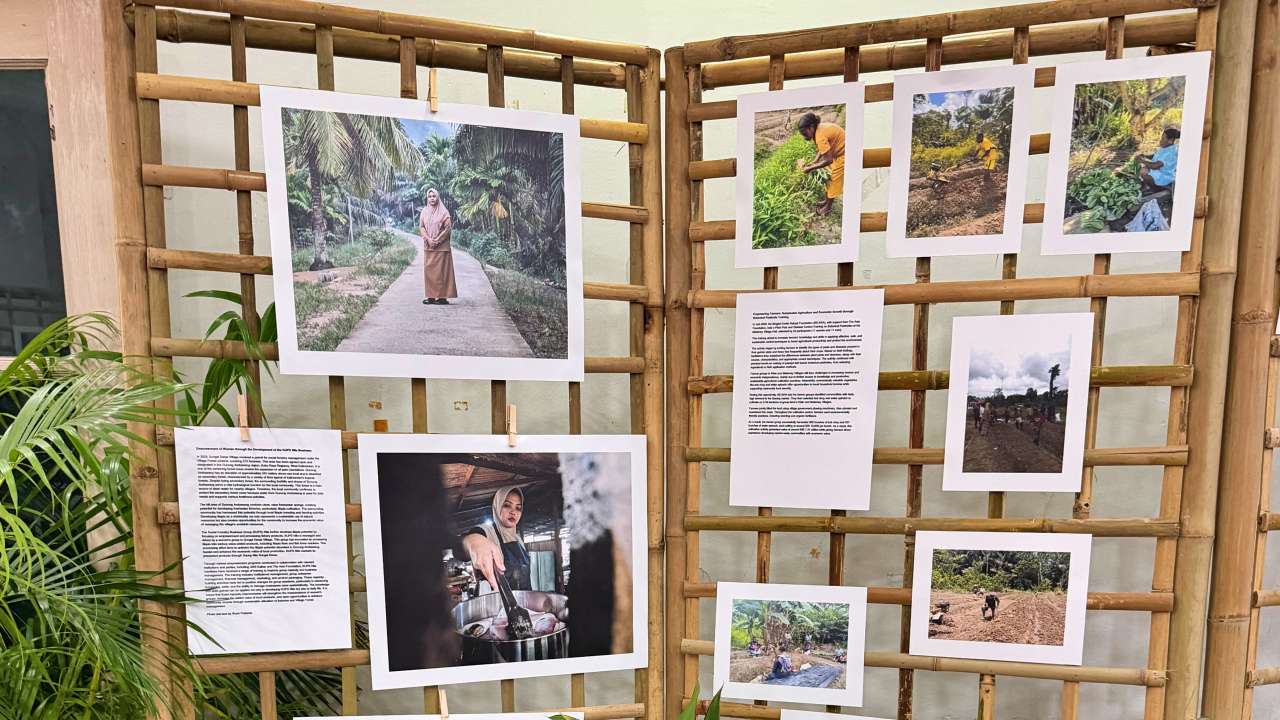
"Except for gathering firewood and bamboo for personal use, which is permitted free of charge, if a community member needs to harvest a mature tree, the customary institution convenes to mandate the planting of 15 saplings in its place," Tasriah explained during the panel. This strict adherence to customary quotas ensures that economic utility does not compromise ecological integrity.
Similar grassroots transformations have unfolded in West Nusa Tenggara (NTB). Epy Liyana, a Community Organizer with the Consortium for the Study and Development of Participation (KONSEPSI NTB), shared her insights on mentoring four women’s Social Forestry Business Groups (KUPS). Operating in a cultural landscape where women juggle domestic responsibilities, childcare, and agricultural labor, Liyana emphasized the importance of adaptive facilitation.
"The most vital lesson I have learned is that as facilitators, our role is not to hand out prefabricated answers, but to create safe spaces where community members can identify their own challenges and generate localized solutions," Liyana noted.
Further expanding on the NTB narrative, Hayatus Saadiah discussed her work supporting local women champions across two distinct hamlets. Through persistent community engagement, Saadiah successfully restructured leadership within the local business groups. At the Argapura Adventure KUPS, which focuses on gastronomy-based tourism, five women were successfully integrated into leadership roles. Meanwhile, the Gula Madu KUPS underwent a complete structural overhaul, transforming into a women-led enterprise specializing in the upstream-to-downstream production of palm sugar derivatives, such as organic crystal and liquid sugar.
Among these emerging leaders is Yulkiyani, a local woman with no prior formal organizational experience and limited education. Initially hesitant to assume leadership due to a perceived cultural and educational gap with urban markets, Yulkiyani was eventually persuaded through continuous mentorship. Today, she not only leads the Gula Madu enterprise but has also mastered cross-cultural communication, successfully marketing her community’s organic palm sugar to urban consumers.

Agroforestry and Tradition: The Kalara Borneo Model
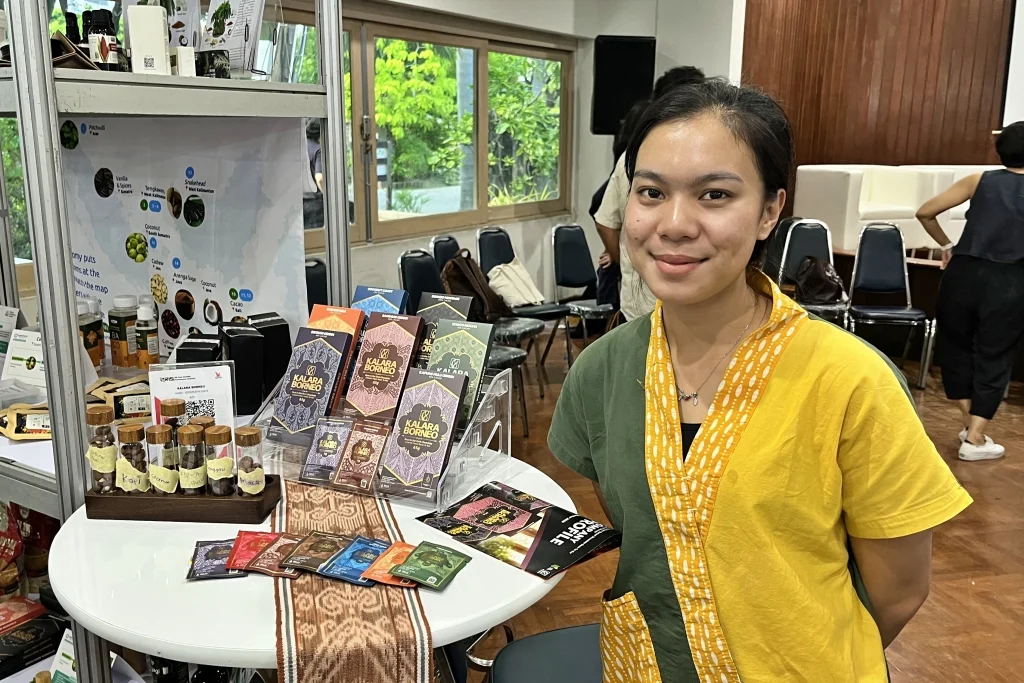
Moving to the panel discussion titled "From Forest Fires to Transboundary Haze: A Call for Collective Action in Southeast Asia" on October 6, 2026, Yessy Octavia R. Tuani Mangasih brought attention to the challenges faced by cocoa farmers in Kapuas Hulu, West Kalimantan. Mangasih, an indigenous Dayak Iban woman from Sungai Utik and Head of Production at the Pontianak-based SME Kalara Borneo, highlighted the historical failure of temporary, top-down agricultural assistance programs. Past interventions often consisted of one-off seedling distributions without sustained technical support, leaving plantations vulnerable to abandonment and recurring forest and land fires.
To combat these vulnerabilities, Kalara Borneo championing an agroforestry framework known locally as tembawai. This traditional land-use system integrates diverse tree species with agricultural crops, providing farmers with multiple income streams while mitigating climate unpredictability. Kalara Borneo has built upon this traditional foundation to pioneer West Kalimantan’s first "beans-to-bar" chocolate production model.
"Indigenous peoples are organic societies guided by ancestral wisdom that can inherently help solve contemporary climate crises," Mangasih asserted. By turning cacao agroforestry into high-value chocolate, Kalara Borneo demonstrates that standing forests can generate significantly more sustainable economic value than deforested land converted for single-use plantations.
Wastra and Heritage: Weaving Climate Solutions
The preservation of indigenous biodiversity was further exemplified by Margaretha Mala, founder of Endo Segadok Betenun, during the October 8 panel, "Local Solutions, Shared Futures: Youth Responses to Climate Crisis." Based in Dusun Sadap, Kapuas Hulu, Mala’s community of women weavers honors traditional Dayak Iban textile artistry while maintaining a symbiotic relationship with local forests.
Named after a mythical celestial weaver, Endo Segadok relies heavily on forest-derived materials. The artisans utilize approximately 29 local plant species—including various roots, wild leaves such as engkerbai, and noni bark—to create organic, chemical-free dyes. Before weaving begins, artisans perform traditional rituals to ensure the natural pigments permanently bond with the fibers, resulting in durable, heirloom-quality textiles.

Mala emphasized that the longevity of this textile tradition depends entirely on the health of customary forests, which function as biological storehouses for raw materials. However, she noted that the primary challenge facing indigenous artisans today is transitioning into effective storytellers.
"Many women weavers possess master-level skills, but they must also be empowered to articulate the complex ecological and cultural narratives behind their work," Mala explained.
Policy Implications and Future Outlook
The collective testimonies presented by indigenous women from Sumatra, Lombok, and West Kalimantan during Bangkok Climate Action Week 2026 underscore a vital policy implication: rural women are not passive victims of climate change, but active economic and ecological innovators.
Civil society organizations and local stakeholders at the summit have called for targeted governmental reforms to institutionalize these victories. Key policy recommendations include:
- Mandating the formal inclusion of women in social forestry management boards.
- Providing gender-sensitive financial assistance coupled with continuous technical training.
- Ensuring that Regional Forest Management Units (KPH) actively engage with grassroots communities rather than serving as passive regulatory bodies.
- Integrating women-led civil society groups into regional planning forums, such as the Social Forestry Working Groups (Pokja Perhutanan Sosial) and Climate Change Working Groups (Pokja Perubahan Iklim).
Ultimately, the insights emerging from international platforms like the Bangkok Climate Action Week reinforce a foundational truth: effective conservation does not require locking indigenous peoples out of their ancestral domains. Instead, it requires dismantling patriarchal barriers and extending legal recognition, resources, and leadership platforms to indigenous women who have historically sustained the forests they call home.