South Korea has rapidly ascended to the forefront of global tourism, transforming from a regional destination into a premier international hub that attracts millions of visitors annually. This surge in popularity is inextricably linked to the international phenomenon of the "Hallyu" wave—the global export of South Korean cultural content, including television dramas, cinema, and music. For many international tourists, particularly those from Southeast Asia, these media portrayals serve as a primary catalyst for travel, effectively turning urban landscapes and quiet neighborhoods into high-traffic tourism landmarks. Beyond the aesthetic allure often seen on screen, the country offers a sophisticated blend of rapid urbanization, historical preservation, and a deeply ingrained arts culture that warrants exploration for any discerning traveler.
The Cultural Drivers of Modern Korean Tourism
To understand the current state of South Korean tourism, one must analyze the symbiotic relationship between the entertainment industry and national branding. Since the early 2000s, the South Korean government has invested heavily in cultural diplomacy, utilizing the Korea Tourism Organization (KTO) to align popular filming locations with travel itineraries. According to data from the Ministry of Culture, Sports and Tourism, the "Hallyu" effect is responsible for a significant percentage of first-time visitors, who prioritize visits to locations featured in hit series like "Goblin," "It’s Okay to Not Be Okay," or "Crash Landing on You."
This trend has necessitated a shift in infrastructure. Urban planning in cities like Seoul has evolved to accommodate not just the local population, but a surge of international foot traffic, leading to the revitalization of historic districts and the creation of "Instagrammable" public spaces that bridge the gap between traditional architecture and modern lifestyle hubs.
The Metropolitan Vibrancy of Geonbae
For travelers seeking the pulse of modern South Korean nightlife and urban social culture, the district surrounding the Geonbae area serves as an essential case study. Unlike the serene palace tours that dominate standard guidebooks, Geonbae represents the "after-hours" culture of Seoul. This street, characterized by a dense concentration of bars, eateries, and neon-lit storefronts, offers a candid look at the South Korean work-hard-play-hard ethos.
Historically, these areas have transitioned from residential or small-scale commercial zones into nightlife corridors that cater to the country’s demographic of young professionals. The density of these establishments creates a unique micro-economy. Visitors observing this area will note that the ambiance is not merely for leisure; it is a manifestation of the country’s high-density urban planning, where every square meter is utilized to maximize social engagement. For the tourist, it provides an authentic, high-energy atmosphere that mirrors the cityscapes frequently featured in modern K-drama subplots involving corporate workers unwinding after a long shift.

Daehakro: The Broadway of Seoul
If Geonbae represents the nightlife of the nation, Daehakro serves as its intellectual and artistic heartbeat. Located in Jongno-gu, the name "Daehakro" literally translates to "University Street," referencing its historical proximity to Seoul National University before its relocation in the 1970s. Today, this 1.6-kilometer stretch remains the epicenter of Korea’s performing arts scene.
Daehakro is home to over 100 small-to-medium-sized theaters. It is the closest cultural equivalent to New York’s Broadway or London’s West End. The implications of this district are significant for the local arts community; it provides a platform for experimental plays, musicals, and independent films that might otherwise struggle to find a venue in the mainstream commercial market. For the visitor, it offers a distinct opportunity to consume South Korean culture in its most raw and creative form. Unlike the large-scale, highly produced idol performances often associated with K-pop, the productions in Daehakro are intimate, emphasizing narrative depth and human performance.
The Architectural Marvel of Starfield Library
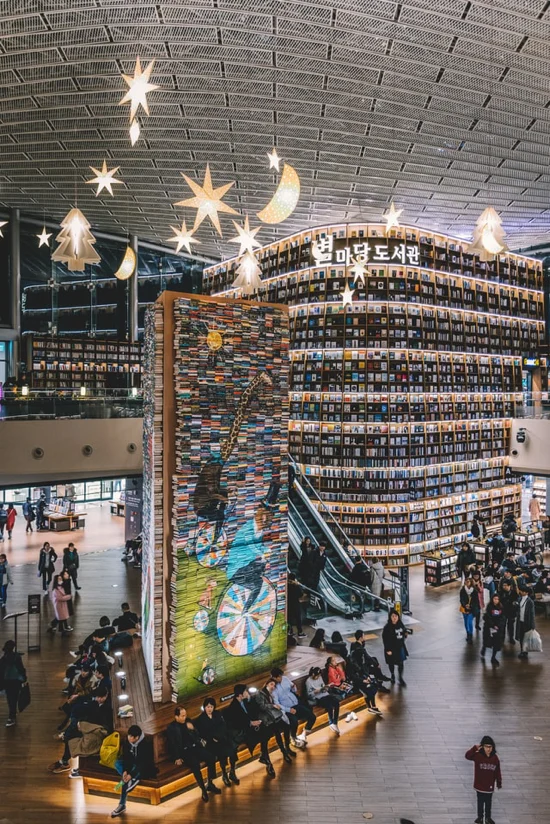
Perhaps the most iconic representation of the intersection between retail and public cultural space is the Starfield Library, located in the heart of the COEX Mall in Gangnam. Opened in 2017, the library is a testament to the modern trend of integrating public amenities into commercial structures to enhance the consumer experience.
The library features floor-to-ceiling bookshelves that stand 13 meters tall, housing over 50,000 volumes. From a design perspective, it is a triumph of vertical space utilization. The facility acts as a "third place"—a social environment separate from the home and the workplace—that fosters community interaction. The impact of the Starfield Library on the local tourism landscape cannot be understated; it has become one of the most photographed locations in Seoul. By providing a quiet, aesthetic space within a bustling shopping center, the developers have successfully curated a destination that appeals to both the casual tourist looking for a photo opportunity and the book enthusiast seeking a quiet respite.
Economic and Social Implications of Tourism Growth
The sustained growth of the tourism sector in South Korea carries broader economic implications. According to the Bank of Korea, tourism-related revenue has played a vital role in balancing the country’s export-heavy economy. However, this growth has also sparked a national conversation regarding "over-tourism" and the preservation of residential quality of life in historically significant districts.
Government bodies and municipal authorities in Seoul have recently implemented policies aimed at sustainable tourism. This includes limiting tour bus access in congested areas and incentivizing tourists to explore regions outside of the traditional Gangnam and Myeong-dong corridors. The objective is to distribute the economic benefits of tourism more equitably across the city while minimizing the disruption to local inhabitants.

Chronology of Tourism Development in South Korea
- 1988: The Seoul Olympics marked the first major international opening of South Korea to global tourism.
- 2002: The FIFA World Cup, co-hosted with Japan, significantly boosted infrastructure development, particularly in transportation and hospitality.
- 2010s: The rise of digital streaming platforms (Netflix, Viki) accelerated the global popularity of Korean media, leading to a decade of unprecedented tourism growth.
- 2020-2022: The COVID-19 pandemic caused a total stagnation in international arrivals, during which time the government utilized the downtime to renovate existing landmarks and digitize tourism services.
- 2023-Present: The post-pandemic "revenge travel" era has seen a record-breaking influx of visitors, necessitating new, data-driven approaches to crowd management and infrastructure sustainability.
Expert Perspectives on Future Trends
Industry analysts suggest that the next phase of South Korean tourism will be defined by "experience-based" travel. While landmarks like the Starfield Library and the streets of Daehakro remain popular, there is a growing demand for immersive cultural experiences, such as traditional tea ceremonies in Hanok villages or specialized workshops in local crafts.
"The modern traveler is moving away from passive sightseeing," notes a spokesperson from the Korea Tourism Board in a recent industry forum. "They want to understand the lifestyle, the history, and the daily rhythms of the people. Our strategy is now focused on facilitating that deeper connection."
Conclusion: A Balanced Itinerary
For those planning a trip to South Korea, the key to a rewarding experience lies in balancing the iconic "K-drama" locations with the deeper, more subtle cultural veins of the country. Whether it is the vibrant nightlife of Geonbae, the artistic intensity of Daehakro, or the architectural splendor of the Starfield Library, each location offers a unique lens through which to view the Korean experience.
As the nation continues to navigate the complexities of its global popularity, it remains a destination that is constantly evolving. Travelers are encouraged to look beyond the curated aesthetics of social media and engage with the local narratives that give these places their true character. With a robust transportation network and an increasingly accessible tourism infrastructure, South Korea remains one of the most compelling destinations in the world for travelers seeking a perfect harmony between the traditional and the ultra-modern. By respecting local regulations, engaging with the culture with curiosity, and planning ahead, visitors can ensure that their time in the "Land of the Morning Calm" is both memorable and culturally enriching.