Temanggung, a regency in Central Java widely celebrated for its fertile agricultural landscapes and breathtaking mountain vistas, harbors an equally rich yet often overlooked repository of classical Indonesian antiquity. Beyond its sweeping tobacco fields and undulating green hills lie fragments of a distant Hindu-Buddhist past, waiting to be uncovered by history enthusiasts and travelers alike. Among these hidden gems is Candi Pringapus, situated in the Ngadirejo district—a modest yet intricately ornamented structure that serves as a tangible gateway to eighth- and ninth-century Java.
An exploratory journey to this site on a subdued, overcast January morning reveals a landscape steeped in historical mystery. Traveling outward from Parakan, the approach to Ngadirejo sets a reflective tone, framed by the looming presence of Central Java’s volcanic peaks. Candi Pringapus, while physically diminutive compared to the sprawling temple complexes of Prambanan or the monumental scale of Borobudur, commands attention through the sheer density and refinement of its surviving sculptural reliefs. Yet, the site’s quiet exterior belies a complex narrative of structural loss, natural disasters, and ongoing archaeological puzzles that continue to intrigue scholars and heritage custodians.
The Enigma of the Missing Main Temple
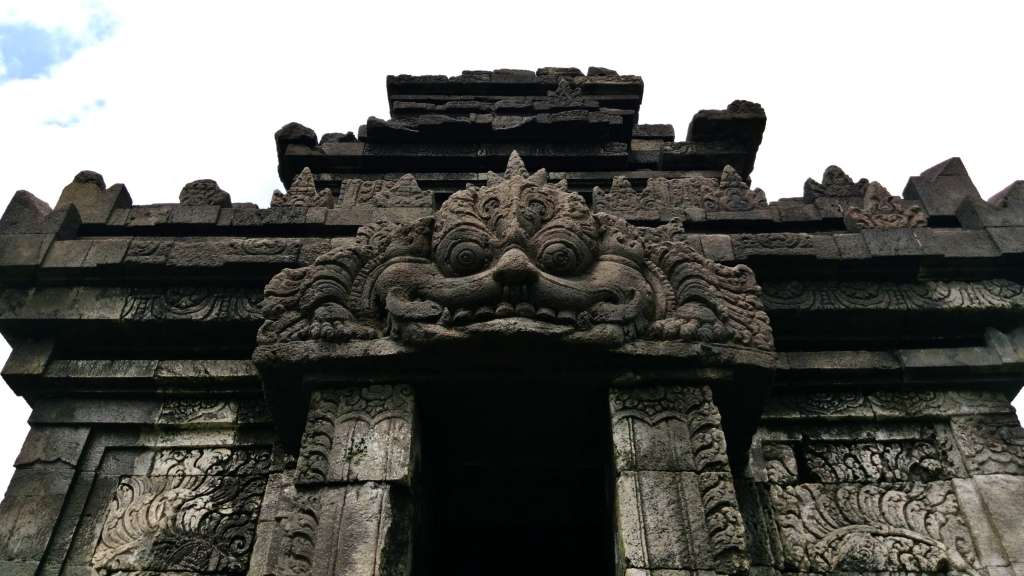
Upon arrival at the complex, visitors are often struck by the architectural completeness of the building standing before them, leading to the common assumption that it represents the primary sanctuary, or candi induk, of the site. However, dialogue with the resident heritage caretakers reveals a surprising archaeological reality: the structure currently standing at Pringapus is not the main temple, but rather a candi perwara, or secondary ancillary shrine.
Historical and archaeological assessments indicate that the principal sanctuary once stood adjacent to the surviving structure but has since vanished entirely. Local heritage custodians frequently attribute this disappearance to the violent volcanic activity of Mount Sindoro in antiquity, a geological catalyst that frequently reshaped the settlement patterns and structural integrity of ancient Central Javanese polities.
Inside the chamber of the surviving perwara shrine, visitors encounter a well-preserved arca Nandi—the sacred bull and mount of Lord Shiva. In traditional Hindu temple architecture of the Classical period, the central sanctuary typically houses a lingga-yoni, symbolizing the cosmic union of Shiva and Shakti, while the Nandi is traditionally housed in an opposing pavilion. The presence of Nandi within the primary surviving chamber at Pringapus further underscores the altered layout of the site, reinforcing the theory that the main temple complex suffered catastrophic destruction, leaving the secondary structures isolated.

Surrounding the temple grounds is a collection of scattered volcanic stone blocks. These fragments are not part of Pringapus itself, but rather the remnants of Candi Perot, another historical structure that once stood nearby before collapsing. During official restoration and documentation efforts in 1929, early researchers initially hypothesized that these collected stone fragments belonged to the missing main sanctuary of Pringapus. Subsequent archaeological analyses, however, determined that the majority of these stones originated from Candi Perot, though select architectural fragments remain integral to the stylistic identification of the Pringapus complex.
Architectural Chronology and Comparative Analysis
Dating back to the classical Mataram Kingdom era—approximately spanning the eighth to ninth centuries CE—Candi Pringapus shares stylistic and chronological affinities with other prominent Central Javanese monuments, such as Candi Badut in East Java and Candi Kalasan in Yogyakarta. Art historians and visiting researchers often note its unique architectural nuances, which subtly diverge from the temple styles found in neighboring Magelang or the Dieng Plateau.
The masonry features volcanic andesite stone, meticulously carved with floral motifs, divine figures, and mythical creatures typical of early Classical Hindu art in Java. However, the upper tiers and roof structure of the Pringapus perwara are conspicuously absent. According to site caretakers, while scattered fragments of the roof were recovered during localized excavations, they were insufficient in volume and structural integrity to warrant a complete reconstruction under standard archaeological preservation criteria. Consequently, the temple presents a truncated silhouette, adding to its melancholic aesthetic.

Among the scattered stone debris lies a heavily weathered, whitish stone sculpture. The figure’s prominent abdomen initially invites comparisons to Agastya, the sage-teacher frequently depicted in South Indian and early Indonesian Hindu iconography. Closer inspection by site personnel, however, reveals faint tracings resembling the trunk of an elephant, suggesting the possibility of a damaged Ganesha image. The extreme erosion of the stone—compounded by centuries of weathering, biological growth, and seismic activity—precludes a definitive scholarly consensus, leaving the true identity of the mutilated sculpture open to debate.
The Broader Cultural Landscape: Candi Perot and Situs Liyangan
The archaeological footprint of the Ngadirejo district extends far beyond the boundaries of Pringapus. Approximately two hundred meters to the west lies the site of Candi Perot, accessible via a short descent down a stone staircase toward a historic water basin shaded by a sprawling canopy tree.
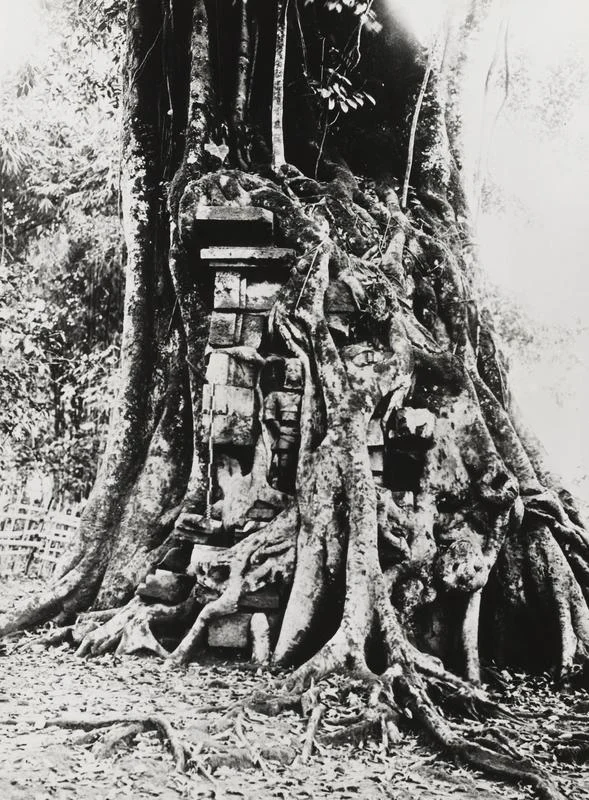
Early Dutch colonial archaeological reports from 1903 describe Candi Perot as a square-based structure featuring shallow projections designed to house specific divine imagery, including representations of Guru (often associated with Agastya), Durga, and Ganesha. Historical photographs from the late nineteenth century depict a large tree rooted directly into the masonry of Candi Perot, a visual indicator of the biological and environmental pressures that ultimately contributed to its structural collapse.

Today, the Candi Perot site is anchored by a large stone Nandi sculpture positioned near the edge of the ancient pool, its base secured with modern mortar to prevent shifting. Adjacent to the Nandi lies a perforated stone artifact resembling a traditional mortar (lumpang batu), though its exact ritual or utilitarian function within the ancient complex remains a subject of speculation. Local folklore surrounding the ancient pool weaves a tapestry of sacred guardianship and historical agrarian utility, illustrating how these ancient water management systems continue to resonate within the contemporary rural community.
Further enriching this historical matrix is the nearby Situs Liyangan, discovered in a sand quarry in 2008. Liyangan represents one of the most significant archaeological discoveries in modern Indonesian history—an exceptionally well-preserved ancient Mataram-era settlement buried beneath layers of volcanic ash from Mount Sundoro. Unlike temple sites that served purely ritual functions, Liyangan provides a multidimensional view of ancient Javanese civilization, featuring residential ruins, agricultural terracing, ritual baths, and metalworking zones.
Implications for Heritage Conservation and Tourism
The convergence of Candi Pringapus, Candi Perot, and Situs Liyangan underscores the profound historical depth of Temanggung, shifting the narrative from a region known primarily for agricultural commodities—such as tobacco and coffee—to a landscape rich in early Indonesian urbanism and sacred architecture.

Experts in heritage management emphasize that the conservation of these sites requires a delicate balance between academic research, structural stabilization, and community-based cultural tourism. The presence of rural inhabitants who integrate historical landmarks into their daily lives highlights the importance of localized guardianship. At the same time, the ongoing degradation of weathered artifacts, such as the unidentified weathered sculpture at Pringapus, underscores the urgency for enhanced protective housing, micro-climate monitoring, and advanced non-invasive documentation techniques by heritage authorities.
Ultimately, the exploration of Candi Pringapus and its surrounding archaeological satellites offers a poignant reminder of the fragility of the built heritage of the classical era. While natural disasters and centuries of abandonment have obscured much of the physical architecture, the remaining stone relics continue to pose enduring questions about the religious devotion, engineering prowess, and socio-environmental resilience of ancient Javanese societies.