The Special Region of Yogyakarta is globally renowned for its rich cultural heritage, historical landmarks, and vibrant urban arts scene. However, beyond the bustling alleyways of Malioboro and the majestic silhouette of ancient temples lies a different facet of the region’s geography: the rugged, verdant expanse of the Menoreh Hills in Kulon Progo regency. As domestic and international travelers increasingly seek out sustainable and nature-based tourism, the waterfalls of Kulon Progo have emerged as vital components of the local ecological and economic landscape. Offering a diverse array of experiences ranging from serene natural swimming pools to challenging rainforest treks, these cascades provide a refreshing alternative to conventional sightseeing. This comprehensive guide examines seven prominent waterfalls across Kulon Progo, detailing their geographic characteristics, safety protocols, and the broader implications of their rise as premier ecotourism destinations.
Geographic Background and the Rise of Menoreh Tourism
Kulon Progo regency, situated on the western flanks of the Special Region of Yogyakarta, is defined by its dramatic topographic variation. Ranging from coastal plains along the Indian Ocean to the steep, folded ridges of the Menoreh Mountain range, the topography creates microclimates characterized by high precipitation and dense tropical flora. The Menoreh Hills themselves hold significant historical and cultural value, famously serving as the stronghold for Prince Diponegoro’s forces during the Java War in the early 19th century. Today, this historic terrain functions as a natural watershed, feeding numerous rivers and streams that cascade down the escarpments, forming the distinct waterfalls that draw thousands of visitors annually.
In recent years, regional development initiatives by both the Yogyakarta Tourism Office and federal bodies, such as the Borobudur Tourism Authority (BOBA), have focused on decentralizing tourism away from urban centers like Yogyakarta city. By investing in rural infrastructure and community-based tourism models, local authorities have empowered village cooperatives (BUMDes) to manage natural attractions. This shift not only diversifies the regional economy but also fosters grassroots environmental stewardship, as local communities recognize the direct correlation between forest preservation and sustainable visitor revenue.
Detailed Profiles of Kulon Progo’s Notable Waterfalls
Understanding the distinct characteristics of each waterfall is essential for travelers planning an itinerary through Kulon Progo. Each site presents unique geological formations, accessibility levels, and environmental conditions.
-
Air Terjun Kedung Pedut
Located in Dusun Kembang, Kalurahan Jatimulyo, Kapanewon Girimulyo, Kedung Pedut is perhaps the most visually striking cascade in the regency. The site is celebrated for its unique dual-colored water, featuring crystal-clear flows that transition into striking turquoise and milky-white hues due to mineral deposits and sunlight refraction. The term "kedung" refers to the natural pools formed along the riverbed where water collects before continuing downstream. Visitors are permitted to swim in designated zones, provided they adhere to depth regulations and instructions from local wardens. Due to the rapid runoff characteristics of the Menoreh watershed, regional bodies like the Borobudur Tourism Authority consistently advise tourists to monitor weather forecasts closely and avoid visiting during peak precipitation periods to mitigate flash flood risks. -
Air Terjun Kembang Soka
Situated within the Gunung Kelir area of Jatimulyo, Girimulyo, Kembang Soka is fed by the continuous springs of the Mudal River. The surrounding landscape is characterized by lush tropical vegetation and terraced limestone formations over which the water flows. The site is engineered with modest bamboo pathways and resting platforms managed by local community groups, allowing visitors to experience the riparian ecosystem up close without severely disrupting the native flora. Kembang Soka serves as an prime example of low-impact infrastructure designed to accommodate increasing visitor volumes while preserving ecological integrity. -
Air Terjun Grojogan Sewu
Positioned deep within the undulating terrain of the Menoreh range in Girimulyo, Grojogan Sewu offers a classic mountain waterfall experience. The journey to the cascade involves navigating shaded pathways beneath a dense canopy of hardwoods. Because of its elevation, the site experiences lower ambient temperatures, particularly during the early morning and late afternoon hours. Tourism officials recommend timing visits during these cooler windows, while cautioning that stone pathways can become hazardous when wet. -
Air Terjun Setawing
Also located in the Jatimulyo administrative zone, Air Terjun Setawing is noted for its wide, curtain-like water flow cascading over moss-covered rock faces. Unlike vertical plunges that drop straight down into a deep pool, Setawing spreads horizontally across a terraced cliffside. Local tourism boards emphasize the importance of checking real-time accessibility reports prior to departure, as regional maintenance on rural approach roads and pedestrian bridges is frequently scheduled following heavy seasonal downpours.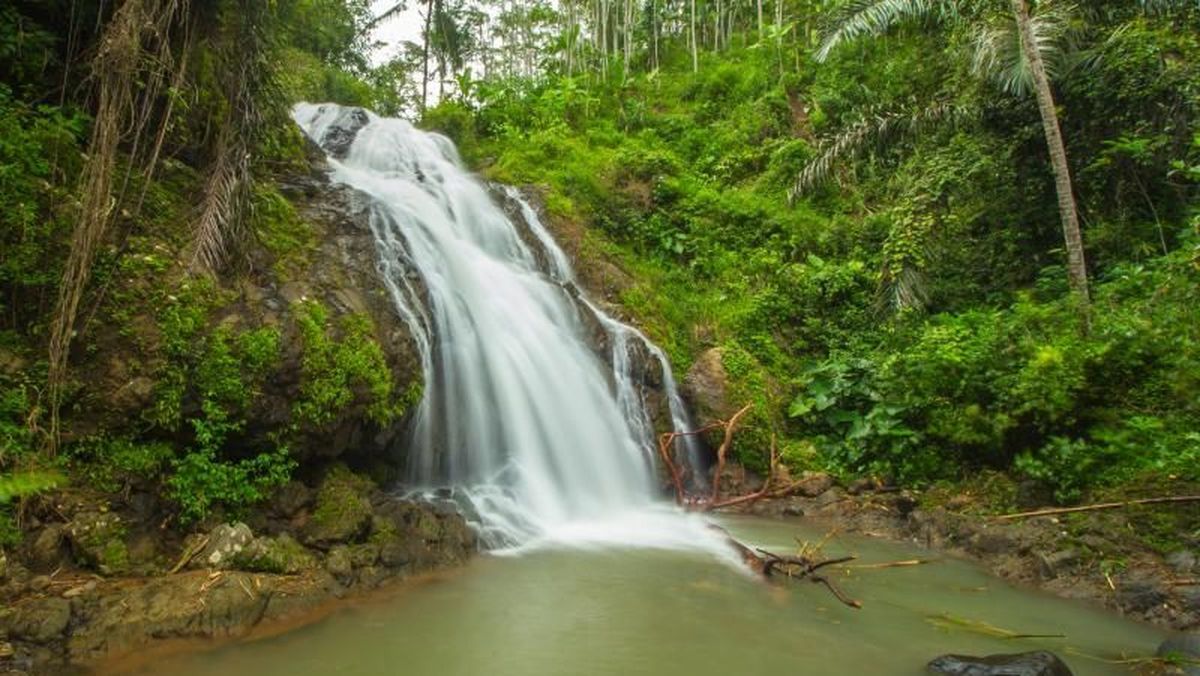
-
Air Terjun Watu Jonggol
For travelers seeking a more rugged, immersive wilderness experience, Air Terjun Watu Jonggol in the Nglinggo region of Samigaluh provides a distinct trekking challenge. Access to the waterfall requires navigating dense protected forest tracts managed in coordination with local forestry communities. Environmental guidelines strongly encourage visitors to wear high-traction footwear and allocate sufficient daylight hours for the round-trip trek, as the topography features steep inclines and uneven terrain. -
Air Terjun Cibirul
Situated in Ngentak, Pagerharjo, Air Terjun Cibirul presents a wider, more gentle flow compared to the high-drop cascades of Girimulyo. Its lower vertical height is compensated by a broad dispersion of water across flat rock formations, creating shallow wading areas. Under favorable weather conditions and subject to the discretion of on-site supervisors, visitors often utilize the calmer sections for brief, refreshing immersions. -
Grojogan Mudal
Not to be confused with the broader river system, Grojogan Mudal in Jatimulyo functions as both an ecological conservation zone and a recreational park. The spring water emerging from this site feeds a series of man-made and natural pools that boast remarkable clarity. Managed heavily by local youth organizations (Kelompok Sadar Wisata or Pokdarwis), the area features comprehensive amenities including camping grounds, changing rooms, and educational signage regarding watershed preservation.
Economic and Environmental Implications of Nature Tourism
The sustained promotion of Kulon Progo’s natural attractions carries profound implications for both the local economy and environmental conservation. From an economic perspective, the influx of travelers stimulates ancillary businesses, ranging from local culinary stalls selling traditional Menoreh snacks to homestays managed by village residents. This decentralization of tourism revenue helps alleviate economic disparities between urban Yogyakarta and the more isolated rural sub-districts.
However, rapid tourism development introduces distinct environmental challenges. Increased foot traffic risks soil compaction, accelerated trail erosion, and potential littering within delicate riparian zones. To counter these pressures, village cooperatives and regional environmental agencies have implemented stricter carrying-capacity limits and organized regular community clean-up drives. Furthermore, educational campaigns focused on Leave No Trace principles are increasingly integrated into ticketing and orientation procedures at major sites like Kedung Pedut and Grojogan Mudal.
Safety Protocols and Recommendations for Travelers
Navigating mountainous terrain during the tropical wet season requires strict adherence to safety guidelines established by regional authorities and site managers. Key recommendations for visitors include:
- Weather Vigilance: Mountainous areas like the Menoreh Hills are prone to sudden, localized convection storms. Visitors should postpone treks if heavy rainfall is forecasted upstream.
- Appropriate Gear: Sturdy trekking shoes with adequate grip are mandatory for navigating wet limestone and clay trails.
- Compliance with Local Wardens: Local Pokdarwis members possess vital knowledge regarding current water currents and safe swimming zones; their instructions must be followed at all times.
- Waste Management: Travelers are strictly required to carry out all personal waste to preserve the pristine condition of the water sources.
Conclusion
The waterfalls of Kulon Progo offer a vital counterbalance to the urban and cultural tourism that traditionally defines the Special Region of Yogyakarta. By venturing into the Menoreh Hills, travelers gain access to diverse ecological landscapes ranging from the turquoise pools of Kedung Pedut to the tranquil forest canopies of Watu Jonggol. As local communities, regional governments, and visitors continue to balance economic development with environmental preservation, these natural cascades stand poised to remain sustainable cornerstones of Yogyakarta’s rural tourism sector for generations to come.