Socio Today
Jakarta (ANTARA) – Queen Máxima of the Netherlands recently concluded a significant working visit to Indonesia, spanning from Monday, November 24, to Thursday, November 27, 2025. Her presence in the archipelago was not in her capacity as the reigning monarch of the Netherlands, but rather as the United Nations Secretary-General’s Special Advocate (UNSGSA) for Inclusive Finance for Development. This distinction underscored the mission-driven nature of her engagement, focusing intensely on advancing financial inclusion and fostering robust financial health across various strata of Indonesian society.
The four-day itinerary, with active working engagements from Tuesday to Thursday, was meticulously designed to encompass a diverse range of strategic meetings and field activities. These events aimed to directly address the challenges and opportunities in enhancing financial resilience and well-being among communities. Her journey took her to key regions, including the rural landscapes of Sragen Regency and the vibrant urban center of Solo City in Central Java, the bustling capital city of Jakarta, and the industrial heartland of Bekasi Regency in West Java, illustrating a comprehensive approach to understanding Indonesia’s financial ecosystem from grassroots to policy levels.
The Enduring Mandate of the UNSGSA for Inclusive Finance
Queen Máxima’s role as the UNSGSA for Inclusive Finance for Development, appointed in 2009, positions her as a global advocate for universal access to affordable, useful, and safe financial services. Her mandate extends to advising the UN Secretary-General and working with governments, regulators, and the private sector worldwide to advance financial inclusion as a critical enabler of sustainable development. Financial inclusion is widely recognized as a foundational pillar for achieving many of the Sustainable Development Goals (SDGs), including poverty eradication (SDG 1), zero hunger (SDG 2), good health and well-being (SDG 3), quality education (SDG 4), gender equality (SDG 5), decent work and economic growth (SDG 8), and reducing inequalities (SDG 10). By providing individuals and small businesses with access to essential financial tools such as savings accounts, credit, insurance, and payment systems, financial inclusion empowers them to manage their finances better, invest in their future, and build resilience against economic shocks.
Her current visit marked her fifth journey to Indonesia in this specific capacity, signaling a sustained commitment to the nation’s progress in financial inclusion. Previously, she had visited Indonesia as UNSGSA in 2012, 2016, and 2018. Beyond her UNSGSA duties, Queen Máxima also accompanied King Willem-Alexander on a state visit to Indonesia in 2020, demonstrating the deep bilateral ties between the two nations. Born on May 17, 1971, Queen Máxima married King Willem-Alexander in Amsterdam, the Netherlands, in 2002, ascending to the throne in 2013. Her background in international finance and economics has provided her with a unique perspective and expertise crucial for her role as UNSGSA.
Indonesia’s Landscape of Financial Inclusion: Progress and Challenges
Indonesia, as the world’s fourth most populous nation and a rapidly growing economy, presents both immense opportunities and significant challenges in the realm of financial inclusion. According to data from the World Bank’s Global Findex database, while progress has been substantial, a notable portion of its adult population remains unbanked or underbanked. The government, through institutions like the Financial Services Authority (OJK) and Bank Indonesia (BI), has set ambitious targets to increase financial inclusion, recognizing its potential to drive economic growth, reduce inequality, and empower vulnerable populations, especially women and micro, small, and medium-sized enterprises (MSMEs). Digitalization has emerged as a powerful tool, with mobile banking and fintech innovations playing an increasingly vital role in reaching remote areas and underserved communities. However, challenges persist, including low financial literacy rates, geographical barriers in archipelagic regions, and the need for tailored financial products that meet the diverse needs of different segments of society.
A Detailed Chronology of the Working Visit
Queen Máxima’s itinerary was a strategic blend of field visits, policy dialogues, and engagements with various stakeholders, designed to offer a holistic view of Indonesia’s efforts and areas for further development.
Tuesday, November 25, 2025: Grassroots Engagement in Central Java
The working visit commenced with a focus on understanding financial health at the community level.
- Sragen Regency, Central Java – Garment Factory Visit: Queen Máxima began her day by visiting a garment factory in Sragen Regency. This particular stop was crucial for understanding the financial health of industrial workers. Factories often employ a large number of low to middle-income individuals, many of whom are migrants or women supporting families. Discussions likely centered on wage management, access to formal savings mechanisms, employee benefits, and the potential for digital payroll systems to enhance financial security. The focus here was on how employers can play a pivotal role in promoting the financial well-being of their workforce, moving beyond just salaries to comprehensive financial health strategies.
- Solo City, Central Java – Kampung Batik Laweyan: Following her visit to Sragen, Queen Máxima proceeded to Kampung Batik Laweyan in Solo, a renowned hub for traditional batik production. This visit was designed to delve into the financial health of MSMEs and artisans. Many batik producers are small, family-run businesses that often operate informally or struggle with access to formal credit and financial management tools. Discussions here would have explored how financial inclusion initiatives can support these enterprises, facilitate access to working capital, enable digital payments for sales and purchases, and provide avenues for market expansion. The integration of traditional crafts with modern financial solutions was a key theme.
- Solo City, Central Java – Women’s World Banking Event at Pura Mangkunegaran: A highlight of the day was Queen Máxima’s participation in a Women’s World Banking event held at the historic Pura Mangkunegaran. This event served as a platform for direct engagement with a diverse group including youth, university students, and entrepreneurs. The discussions focused on their personal experiences with financial products and services. Hearing firsthand accounts provided invaluable insights into the practical challenges and successes individuals face in utilizing banking services, mobile money, and other financial tools. This session emphasized the importance of user-centric design in financial products and the need for financial literacy programs tailored to different demographic groups, particularly empowering women and young entrepreneurs who are often at the forefront of economic innovation. The Women’s World Banking organization plays a crucial role in promoting women’s economic empowerment through financial inclusion, making this a highly relevant stop.
Wednesday, November 26, 2025: Policy Dialogue and Innovative Solutions in Jakarta and West Java
The second day shifted focus towards high-level policy discussions and exploring innovative models for financial health.
- Jakarta – United Nations Local Office Roundtable: The morning began with a roundtable discussion at the local United Nations office in Jakarta. This gathering brought together various development organizations working in Indonesia. The dialogue aimed to foster greater collaboration and coordination among international and local bodies in supporting Indonesia’s financial inclusion agenda. Topics likely included sharing best practices, identifying funding gaps, strategizing on policy advocacy, and discussing the role of digital transformation in accelerating financial inclusion efforts across different sectors. This inter-agency consultation is vital for ensuring a harmonized approach to development goals.
- Jakarta – International Finance Corporation (IFC) Visit: Subsequently, Queen Máxima visited the International Finance Corporation (IFC), a member of the World Bank Group. The IFC focuses on private sector development in emerging markets. The discussion here centered on the role of private capital and investment in developing financial products and services that contribute to economic growth and improved financial health. This included exploring innovative financing models, risk-sharing mechanisms, and how private sector engagement can scale up access to credit for MSMEs and individuals, thereby driving broader economic development and job creation. The IFC’s expertise in market-based solutions provides a critical perspective on sustainable financial inclusion.
- Bekasi Regency, West Java – Gran Harmoni Cibitung Subsidized Housing Complex: A significant field visit took Queen Máxima to the Gran Harmoni Cibitung subsidized housing complex in Bekasi Regency. This development is notable for providing low-emission housing options for low and middle-income communities, addressing a critical need for affordable housing. During her visit, she engaged directly with residents, visiting a home and interacting with representatives of first-time homebuyers. This personal interaction offered insights into the financial challenges faced by families in securing housing and managing their household budgets.
- Innovative Payment Mechanism – Waste Bank: A particularly innovative aspect highlighted was the integration of a "waste bank" system as an alternative method for paying housing installments. This initiative, often supported by local banks like BTN, allows residents to deposit sorted waste, which is then converted into monetary value that can be applied towards their mortgage payments. Queen Máxima observed the process at a local waste bank, praising its dual benefits of promoting environmental sustainability and enhancing financial resilience. This model provides a practical solution for individuals with irregular incomes to meet their financial obligations while also contributing to waste management efforts.
- Home Purchase Agreement Ceremony: She also witnessed the signing of home purchase agreements for dozens of prospective homeowners, symbolizing the tangible impact of accessible housing finance on people’s lives. This demonstrated the last mile delivery of financial services and the realization of homeownership dreams for many.
- Jakarta – Deloitte Indonesia Engagement: In the afternoon, Queen Máxima visited Deloitte Indonesia. Here, she engaged in discussions with employers about how they can proactively contribute to the financial health of their employees and clients. This session explored corporate responsibility in financial well-being, including offering financial literacy programs, access to affordable credit, and retirement planning services as part of employee benefits. The focus was on shifting the paradigm from purely transactional employment to one that fosters holistic employee well-being, recognizing that financially healthy employees are often more productive and engaged.
Thursday, November 27, 2025: High-Level Policy Dialogue and Presidential Meeting
The final day was dedicated to high-level policy discussions and a crucial meeting with the President of Indonesia.
- Jakarta – Financial Literacy Agenda with OJK, BI, and Kemenkeu: Queen Máxima participated in a key agenda focused on financial literacy, involving the Financial Services Authority (OJK), Bank Indonesia (BI), and the Ministry of Finance (Kemenkeu) of the Republic of Indonesia. This meeting underscored the government’s commitment to improving financial literacy and inclusion across the nation. Discussions likely revolved around national strategies for financial education, regulatory frameworks supporting innovation, consumer protection in financial services, and leveraging digital platforms to reach a wider audience. The coordinated efforts of these three institutions are vital for creating an enabling environment for financial inclusion.
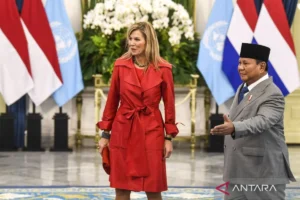
- Jakarta – Meeting with President Prabowo Subianto at Merdeka Palace: The culminating event of her visit was a meeting with President Prabowo Subianto at Merdeka Palace in Jakarta. This high-level engagement provided Queen Máxima with the opportunity to convey her findings, impressions, and key recommendations from her extensive tour. The meeting, which included a private session and a luncheon, served to reinforce the strategic partnership between Indonesia and the United Nations in advancing financial inclusion. It also allowed for a direct exchange of views on policy priorities, potential areas for international cooperation, and the sustained commitment of Indonesia to its financial inclusion goals. Such presidential endorsement is critical for galvanizing national efforts and ensuring the integration of financial inclusion into broader national development agendas.
Broader Impact and Implications
Queen Máxima’s fifth visit to Indonesia as UNSGSA carries significant implications. Firstly, it reaffirms Indonesia’s position as a key partner in global financial inclusion efforts, acknowledging the country’s innovations and progress while highlighting areas for further development. Her direct engagement with diverse stakeholders—from factory workers and batik artisans to policymakers and corporate leaders—provides a comprehensive assessment of the ground realities and policy effectiveness.
The emphasis on "financial health" over mere "financial access" signals a maturing understanding of financial inclusion. It implies a shift towards ensuring that individuals not only have access to financial products but also possess the knowledge, skills, and appropriate tools to use them effectively for long-term well-being and resilience. The innovative waste-to-mortgage payment scheme in Bekasi, for instance, exemplifies how local creativity can address multiple development challenges simultaneously, promoting environmental sustainability alongside financial security.
Furthermore, the high-level meetings with OJK, BI, Kemenkeu, and President Prabowo underscore the political will and commitment at the highest echelons of Indonesian government to prioritize financial inclusion. This strong endorsement is crucial for translating policy aspirations into concrete actions and ensuring the necessary regulatory and infrastructural support for continued progress.
Her visit is expected to catalyze further discussions and potentially inspire new initiatives aimed at strengthening financial literacy, fostering responsible digital financial services, and expanding access to credit and insurance for vulnerable populations. It serves as a reminder that financial inclusion is not merely an economic agenda but a fundamental human development imperative, vital for fostering equitable growth and building a more resilient society. The insights and recommendations gleaned from her tour will undoubtedly contribute to shaping Indonesia’s future strategies in this critical domain, reinforcing its journey towards comprehensive and inclusive prosperity.