Nestled along the rugged coastline of the Brittany region in northwestern France, the ancient port city of Saint-Malo stands as a formidable testament to medieval European architecture and maritime history. Enclosed entirely by massive stone ramparts that brave the relentless Atlantic tides, Saint-Malo offers travelers an immersive journey into a bygone era of maritime dominance, exploration, and daring seafaring exploits. Often celebrated as one of the most visually striking walled cities in Europe, this coastal enclave seamlessly bridges its storied past with modern cultural vitality, attracting historians, architecture enthusiasts, and leisure travelers alike.
Main Facts and Geographic Significance
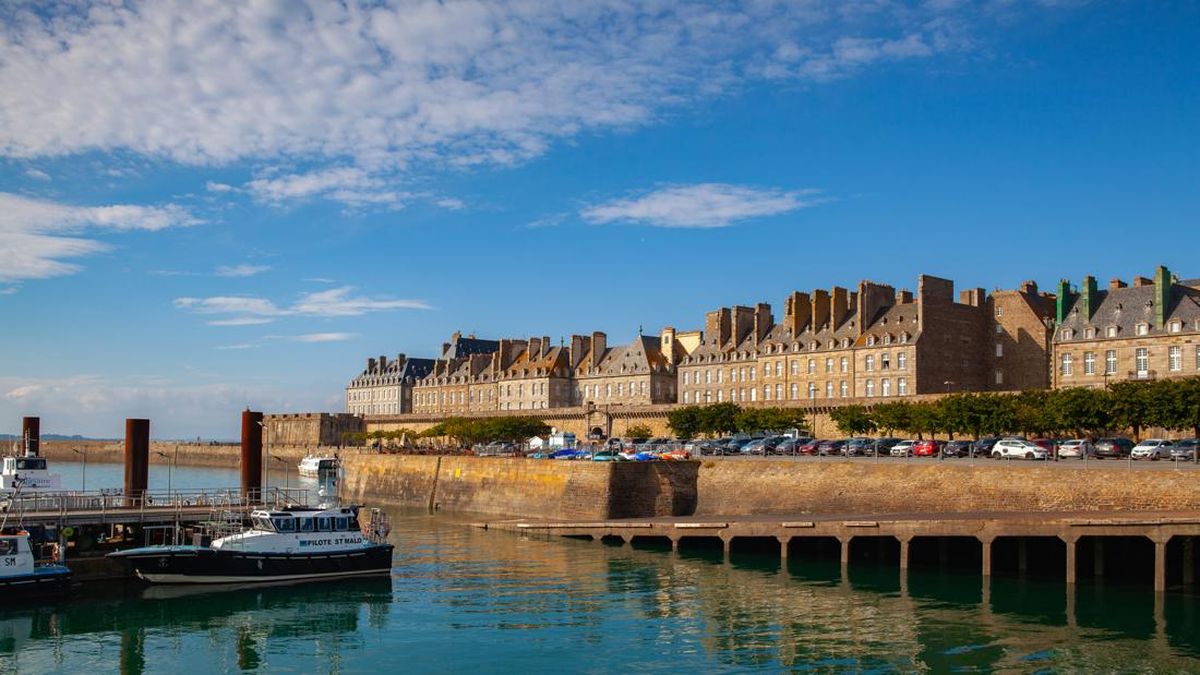
Saint-Malo commands a strategic position on the English Channel, anchoring the northern coast of Brittany and serving as a gateway to both the neighboring region of Normandy and the broader Atlantic seaboard. The city’s defining architectural feature is its defensive stone wall, which perimeter-seals the historic core known locally as the Intra-Muros. This urban layout not only protected the city from centuries of naval invasions and privateering reprisals but also created a dense, vertically oriented cityscape characterized by granite townhouses, narrow cobblestone alleyways, and imposing fortifications.
Geographically, Saint-Malo experiences some of the most dramatic tidal shifts in all of Europe. The difference in water levels between high and low tide can reach an astonishing 13 meters, completely transforming the coastal landscape within a matter of hours. When the tide recedes, vast expanses of sand are exposed, connecting the mainland to nearby rocky islets such as Grand Bé—where the famous French romantic writer François-René de Chateaubriand is buried—and Cézembre. Conversely, incoming tides surge rapidly against the protective seawalls, creating a dramatic natural spectacle that underscores the city’s eternal dialogue with the ocean.
Chronology and Historical Evolution: The Age of the Corsair
To fully understand Saint-Malo, one must look beyond its picturesque aesthetics and examine its complex socio-political history, which was profoundly shaped by maritime law and geopolitical conflict. During the 17th and 18th centuries, Saint-Malo achieved legendary status as the capital of the corsairs—government-sanctioned privateers who operated similarly to pirates but held official letters of marque from the French Crown. These state-authorized captains were legally permitted to attack and plunder enemy merchant vessels, enriching both themselves and the municipal coffers of Saint-Malo with vast spoils, including spices, silk, precious metals, and foreign artifacts.
The wealth generated by the corsairs fueled a construction boom, transforming Saint-Malo into an affluent independent-minded republic before it was fully integrated into the centralized French state. Among the most prominent figures of this era was François Auguste Magon de la Lande, a wealthy shipowner and privateer whose legacy endures through the iconic Hôtel Magon, also known as the Demeure de Corsaire.
The Historical Night Watch and Canine Sentinels
One of the most fascinating historical customs unique to Saint-Malo involves its medieval security protocols, which highlight the constant threat of cargo theft during the height of the corsair era. When massive merchant vessels returned from lengthy voyages laden with valuable treasures, the unloading process often took days. Due to the extreme tidal fluctuations, large ships frequently found themselves grounded and listing precariously on exposed sandbanks during low tide, leaving their cargo vulnerable to opportunistic thieves.
To safeguard the port and the valuable merchandise housed within the walled city, Saint-Malo implemented a rigorous nocturnal security system. Every evening at 10:00 PM, a bell tolled across the city, mandating that all civilian residents remain indoors. Once the curfew was established, large English Mastiff dogs—locally known as chiens du guet—were released from the garrison to patrol the ramparts and dark streets until dawn. These dogs were kept deliberately lean and aggressive to deter intruders. While the modern city no longer deploys packs of guard dogs to secure its alleys, the cultural memory of the night watch remains an integral part of Saint-Malo’s historical folklore.
World War II Destruction and Architectural Restoration
The twentieth century brought profound devastation to Saint-Malo, testing the resilience of its population and the integrity of its historic fabric. During the bitter fighting of World War II, particularly in August 1944 following the Allied landings in Normandy, Saint-Malo became the site of intense combat between retreating German forces and advancing Allied troops. Heavy aerial bombardment and artillery fire reduced approximately 80 percent of the historic Intra-Malo core to rubble.
Despite the catastrophic destruction, the city’s inhabitants demonstrated an unwavering commitment to their heritage. In the post-war decades, urban planners and master builders undertook a meticulous reconstruction effort. Rather than modernizing the urban landscape, authorities resolved to rebuild Saint-Malo stone by stone, adhering strictly to archival blueprints, historical documents, and architectural styles from the 17th and 18th centuries. The result is a seamless triumph of historical restoration: a city that appears medieval and ancient to the naked eye, yet incorporates modern engineering standards beneath its weathered granite facades.
Landmarks and Cultural Heritage
Today, exploring Saint-Malo offers visitors a dense concentration of architectural and historical landmarks within a compact, pedestrian-friendly zone.
The Intra-Muros district serves as the primary hub of activity, featuring boutiques, traditional creperies, seafood restaurants, and civic monuments. Dominating the skyline of the old town is the Cathedral of Saint-Vincent-de-Saragosse, a magnificent structure blending Romanesque and Gothic architectural elements. The cathedral features stunning stained-glass windows added during the post-war restoration and serves as the final resting place of Jacques Cartier, the famed 16th-century French explorer who claimed Canada for the French Crown.
Adjacent to the civic center stands the Château de Saint-Malo, a multi-towered fortress constructed by the Dukes of Brittany to assert control over the fiercely independent port city. Today, the castle houses the City History Museum (Musée d’Histoire de Saint-Malo), which details the evolution of the port, the exploits of its corsairs, and the maritime heritage of the region.
For panoramic vistas of the Emerald Coast, visitors can walk the entirety of Les Remparts—the elevated defensive walls originally designed by military engineer Siméon Garangeau, a pupil of the legendary fortification master Vauban. From the ramparts, one can observe the crashing waves of the English Channel, the surrounding offshore forts such as the Fort National and Fort du Petit Bé, and the bustling harbor activity.
Beyond the Intra-Muros, the Chaussée du Sillon links the historic core to the mainland, lined with elegant Belle Époque hotels and grand seaside villas that reflect the town’s evolution into a premier 19th-century coastal resort destination.
Regional Connectivity and Economic Implications
From an infrastructural and economic perspective, Saint-Malo functions as a vital tourism and transport hub for northwestern France. The city is exceptionally well-connected to the French capital via the TGV InOui high-speed rail network. Departing regularly from Paris Montparnasse station, the direct train journey to Saint-Malo takes approximately two and a half hours, making the coastal destination easily accessible for both domestic weekend travelers and international tourists.
Furthermore, Saint-Malo serves as a strategic launchpad for broader regional exploration. Travelers frequently use the city as a base to visit neighboring destinations such as Dinard—known for its grand Victorian villas and film festivals—or to venture eastward into Normandy to explore the historic D-Day landing beaches (including Utah, Omaha, Gold, Juno, and Sword), the artificial harbor vestiges at Arromanches, the oyster-farming capital of Cancale, and the awe-inspiring tidal island sanctuary of Mont-Saint-Michel.
Broader Impact and Analysis of Heritage Tourism
The preservation and global promotion of Saint-Malo highlight a broader trend in modern European heritage management: the delicate balance between accommodating mass tourism and safeguarding fragile historical infrastructure. As visitor numbers continue to rise steadily year over year, municipal authorities face ongoing challenges regarding urban congestion, environmental sustainability, and the management of sensitive coastal ecosystems vulnerable to rising sea levels and extreme weather events.
Economically, the tourism sector remains the cornerstone of Saint-Malo’s local economy, generating employment, supporting local maritime trades, and funding the continuous maintenance of its historic fortifications. However, regional economists and urban planners emphasize the necessity of diversified economic policies to ensure that the city retains its year-round residential population rather than transforming entirely into a seasonal resort enclave.
Ultimately, Saint-Malo endures not merely as a monument to past conflicts and maritime triumphs, but as a living, breathing community. By fiercely protecting its architectural legacy while adapting to the demands of contemporary European mobility and tourism, this ancient Breton stronghold ensures that the echoes of its corsair past will continue to resonate along the shores of the English Channel for generations to come.