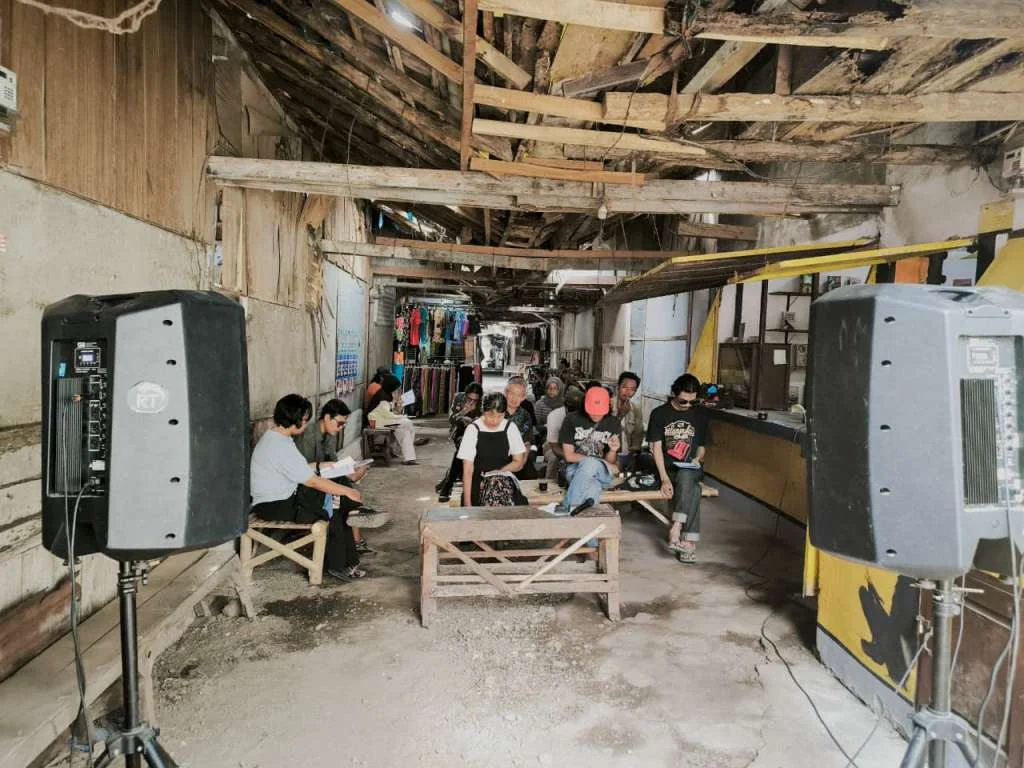
On a quiet Sunday afternoon, as the midday heat began to wane over the old market of Kalisat in Jember, a small collective of avid listeners and community members gathered in front of Ruli’s bookstore. The occasion was an exclusive pre-release listening session for Stambul Arkipelagia Vol. 3, the latest musical project by the acclaimed Indonesian folk-pop ensemble Orkes Silampukau. Far from a conventional modern venue, the event took place amidst the rustic alleys of a traditional East Java marketplace—a setting that unexpectedly mirrored the thematic depth, historical resonance, and working-class grit embedded within the album’s intricate compositions.
The event, organized locally by the Sudut Kalisat community, offered attendees an immersive preview of the ten-track record. As participants settled onto benches provided outside the modest book kiosk, armed with commemorative zines detailing the album’s lyrics and artist statements, the market transformed into an acoustic amphitheater. Through twin stereo speakers positioned at the heart of the old market, Orkes Silampukau delivered another masterclass in socio-political storytelling wrapped in rich, vintage orchestration.
A Tapestry of Sound and Setting in Kalisat
The choice of Pasar Kalisat as the listening venue was far from arbitrary. The aging marketplace, characterized by weather-worn wooden pillars, canvas tarpaulins stretched overhead to block the equatorial sun, and rows of modest kiosks selling traditional garments, provisions, and poultry, provided a tangible connection to the past. While commercial activity had slowed considerably by early afternoon—with vendors quietly awaiting late-day patrons or engaging in idle chatter—the arrival of the listening party injected a distinct intellectual and artistic energy into the space.
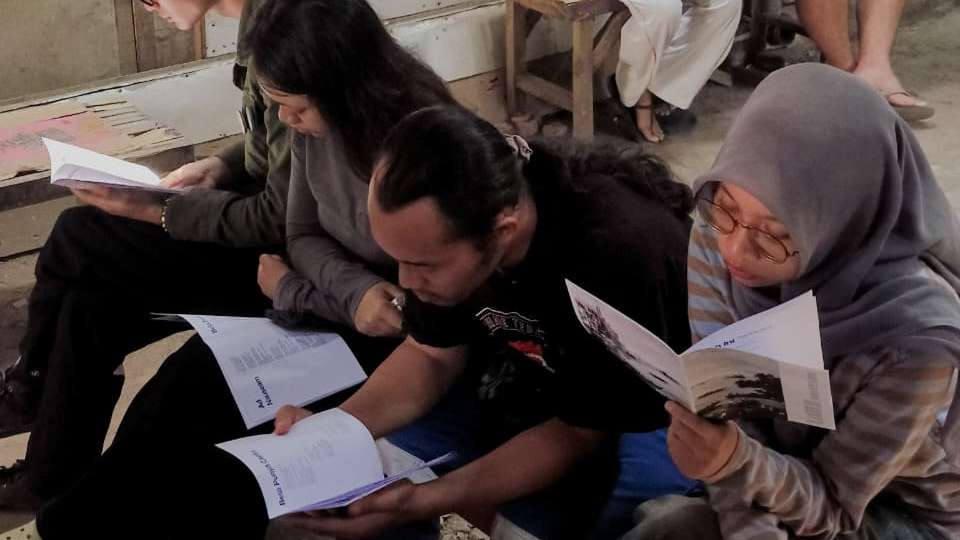
As the clock struck 1:00 PM, the session commenced with minimal preamble. The anticipation among the attendees was palpable. Armed with zines featuring introductory notes, track lyrics, and a poignant artist statement penned by band member Kharis Junadharu, the audience leaned into the unfolding auditory experience. The opening track, Subuh Ini (This Dawn), immediately established an intense, visceral mood. The intricate interplay of acoustic guitar picking, cello arrangements, and traditional orchestration moved through the market speakers, prompting shared glances of appreciation among the listeners.
The complexity of the instrumentation sparked immediate discourse among the crowd. Attendees marveled at the technical proficiency required to produce such sophisticated arrangements, noting that the depth of Orkes Silampukau’s sound typically demands formal conservatory training and substantial financial investment. Yet, here it was, broadcasted raw and unfiltered through modest speakers in a provincial market.
Deconstructing Stambul Arkipelagia Vol. 3: Poetic License and Subversive Anger
Across its ten tracks, Stambul Arkipelagia Vol. 3 challenges listeners not only through its lush instrumentation but also via its dense, literary lyricism. Songs like Ad Nauseam and Pandemonium Ekosida utilize vocabulary and metaphorical structures that extend far beyond colloquial everyday language. This deliberate employment of poetic license (licentia poetica) forces the audience to confront uncomfortable realities rather than passively consume entertainment.
During post-listening discussions, attendees and local cultural observers compared Orkes Silampukau’s approach to contemporary protest music from other bands released during the same period. While many contemporary acts voice socio-political grievances through direct, plainspoken rhetoric, Orkes Silampukau operates differently. Their anger is heavily mediated by metaphor, historical pastiche, and stylistic irony. Listeners are invited to process systemic grief and ecological devastation—such as the chilling sonic atmospheres constructed in Pandemonium Ekosida—while simultaneously being swept up in contradictory movements like the cha-cha or waltz.

This juxtaposition of rage and elegance forms the core of the album’s artistic thesis. As noted in the zine’s artist statement written by Kharis Junadharu, the project positions itself as a continuation of a long-standing tradition shared by musicians and writers who continuously seek the most articulate language to record human suffering across generations. The suffering depicted is not a localized, isolated event; rather, it is portrayed as cyclic, pervasive, and unending—occurring ad nauseam.
The Convergence of Environment and Artistry
The ambient soundscape of Pasar Kalisat during the listening session inadvertently enhanced the thematic weight of the music. During the playback of Waltz Pendek Untukmu (A Short Waltz for You), the rhythmic clinking of wooden instruments carried by a passing street vendor selling Kupang (a traditional shellfish dish) blended seamlessly with the recording’s minor-key melodies. For a brief moment, the boundary between the recorded performance and the lived reality of the marketplace dissolved.
This acoustic coincidence invited lighthearted remarks among the crowd regarding the historical continuity of working-class survival from the colonial era to the present day. However, the underlying gravity of the music remained anchored in serious socio-historical inquiry. By framing structural suffering within traditional musical forms like stambul, Orkes Silampukau bridges the gap between historical memory and contemporary anxiety.
Broader Implications and Cultural Impact
The pre-release listening session in Jember highlights a growing trend in decentralized music distribution and community-led engagement within Indonesia’s independent music scene. By partnering with grassroots collectives like Sudut Kalisat and utilizing non-traditional public spaces such as traditional markets, artists can foster intimate, highly contextual dialogues with their audiences.

Furthermore, the reception of Stambul Arkipelagia Vol. 3 underscores the appetite for intellectually rigorous popular music in regional areas. The willingness of listeners in Kalisat to grapple with complex metaphors, unfamiliar terminology, and multifaceted sonic arrangements demonstrates that provincial audiences are eager consumers and critical participants in high-level cultural discourse.
Ultimately, Orkes Silampukau’s latest offering transcends standard genre boundaries. Through a careful synthesis of historical musical forms, literary lyricism, and sharp social commentary, the ensemble has crafted a body of work that captures the bitterness of systemic hardship without sacrificing artistic beauty. As the afternoon concluded and the attendees slowly dispersed from Ruli’s bookstore—leaving behind the lingering echoes of stambul melodies and the rustle of zine pages—it became evident that Stambul Arkipelagia Vol. 3 has successfully expanded the lexicon of contemporary Indonesian protest music, offering a sophisticated vehicle for processing collective grief across time and space.