Socio Today
The legal battles surrounding prominent Indonesian celebrity and actress Nikita Mirzani have reached a critical juncture following a definitive ruling by the Supreme Court of Indonesia (Mahkamah Agung). The nation’s highest judicial body officially rejected the extraordinary legal remedy, known as Peninjauan Kembali (PK), filed by Nikita Mirzani’s legal team. With this final judicial rejection, the previously adjudicated six-year prison sentence remains fully intact, sealing a turbulent chapter in the high-profile legal dispute.
The decision has triggered widespread public commentary across traditional and digital media platforms. In a surprising turn of events, public figures, legal practitioners, and former adversaries have weighed in on the outcome. Notably, Tengku Zanzabella, a well-known social media personality who had previously engaged in public feuds and bitter conflicts with Nikita, offered an unexpected message of solidarity rather than celebrating the downfall of her former rival. As the legal avenues narrow for the embattled actress, legal analysts are closely monitoring the remaining options available to her defense team, while societal debates regarding the enforcement of white-collar and financial crimes in the entertainment industry continue to unfold.
Chronology of the Legal Proceedings
The legal tribulations enveloping Nikita Mirzani did not materialize overnight; rather, they are the culmination of a protracted judicial process that wound its way through multiple tiers of the Indonesian court system. The origin of the criminal case traces back to formal legal complaints filed by Dr. Reza Gladys, a prominent aesthetic doctor and entrepreneur, who alleged financial and professional grievances against the celebrity.
The initial phase of the litigation was handled by the South Jakarta District Court (Pengadilan Negeri Jakarta Selatan). During the primary trial, the panel of judges scrutinized the evidence presented by the prosecution, which included testimonies from financial experts, digital forensics, and various witnesses. Ultimately, the South Jakarta District Court delivered a verdict finding Nikita Mirzani guilty of specific charges, sentencing her to four years of imprisonment alongside a mandatory financial penalty of Rp1 billion, with an alternative subsidiary provision of three additional months of confinement in the event of non-payment.
Dissatisfied with the initial verdict, the prosecution elevated the matter to the Jakarta High Court (Pengadilan Tinggi DKI Jakarta) through an official appeal. The appellate court reviewed the evidentiary weight and legal interpretations applied during the first instance. In a significant escalation, the Jakarta High Court overturned certain facets of the lower court’s findings, ruling that Nikita was indeed culpable for the more severe charge of Money Laundering (Tindak Pidana Pencucian Udang – TPPU), a count that the primary court had previously dismissed. Consequently, the appellate judges significantly increased the severity of her punishment, raising the prison term from four years to a definitive six years.
Seeking to overturn the harsher appellate decision, Nikita’s legal representatives subsequently filed a formal cassation (kasasi) petition with the Supreme Court. However, the highest court upheld the appellate ruling, prompting the defense to utilize their final extraordinary legal recourse: the Judicial Review or Peninjauan Kembali (PK). With the recent announcement that the Supreme Court has officially dismissed the PK application, the six-year imprisonment term stands as the legally binding outcome of the judiciary branch.
An Unexpected Gesture of Reconciliation
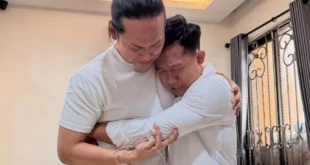
Amid the gravity of the Supreme Court’s dismissal, public attention was drawn toward an unforeseen reaction from Tengku Zanzabella. Given the history of public animosity and sharp rhetorical exchanges between Nikita Mirzani and Zanzabella, observers anticipated caustic remarks or schadenfreude from the social media influencer.
Instead, Zanzabella took to digital platforms to express empathy and extend moral support to her former adversary. In public posts shared on Saturday, Zanzabella conveyed wishes for Nikita’s health and resilience while navigating the rigors of incarceration. "Stay healthy, Nyai (Nikita)," Zanzabella wrote, utilizing the popular honorific often ascribed to the actress.
Furthermore, the influencer pragmatically suggested potential administrative avenues that could alleviate the burden of the lengthy sentence. Zanzabella publicly recommended that Nikita and her team focus on pursuing sentence reductions through official remission mechanisms, which are routinely granted to inmates demonstrating exemplary conduct and rehabilitation progress within the correctional system. Concluding her digital statements, Zanzabella offered words of encouragement, writing, "Keep your spirits up, Nik."
This public display of reconciliation has been interpreted by cultural analysts as a reflection of shifting dynamics within the Indonesian celebrity ecosystem, where long-standing personal grievances frequently yield to broader human sympathy when individuals face severe institutional adversity.
Remaining Legal Avenues and Expert Analysis
With the exhaustion of the Peninjauan Kembali (PK) pathway, legal experts have analyzed the remaining options available within the Indonesian criminal justice framework. While standard and extraordinary judicial appeals within the court system have concluded, practitioners note that executive avenues still exist for convicted individuals under specific constitutional provisions.
Prominent legal practitioner Ricky Sitohang publicly addressed the situation, pointing out that Nikita Mirzani retains the option to submit a formal petition for presidential clemency, universally known as grasi. According to Indonesian law, grasi is an executive prerogative granted exclusively by the President of the Republic of Indonesia to a convicted person. This instrument of mercy can manifest as a total pardon, a commutation, a reduction in the duration of the sentence, or a complete removal of the criminal execution.
"If we look at the current standing, the PK has been rejected by the Supreme Court, leaving practically one remaining path: to submit a petition for clemency to the President," Ricky Sitohang explained to members of the media.
Nevertheless, legal analysts emphasize that filing for presidential clemency is entirely at the discretion of the convicted individual and her legal counsel. Furthermore, obtaining a presidential pardon is an extraordinary executive measure that requires demonstrating compelling humanitarian grounds, profound remorse, or extraordinary circumstances, rather than serving as a routine continuation of judicial defense.
Broader Socio-Legal Implications
The finalization of Nikita Mirzani’s legal case carries significant implications for both the Indonesian entertainment industry and the broader enforcement of financial transparency laws. The prosecution and subsequent conviction under Money Laundering (TPPU) charges underscore a tightening regulatory environment for high-net-worth individuals and public figures engaged in commercial ventures, digital endorsements, and private enterprise.
In recent years, Indonesian law enforcement agencies and judicial institutions have intensified scrutiny on financial transactions involving public personalities, signaling that fame and social media influence do not provide immunity from rigorous financial auditing and criminal prosecution. The progression of Nikita’s case from initial district court proceedings to the highest appellate levels demonstrates the functional mechanics of the nation’s judicial review processes, albeit drawing intense public scrutiny at every single stage.
As the legal saga reaches its structural conclusion within the courts, public discourse has shifted toward the humanitarian aspects of incarceration, the rehabilitation of high-profile inmates, and the potential utilization of administrative remissions or executive clemency. Whether Nikita Mirzani’s legal team will formally initiate the presidential clemency process remains to be seen, but the definitive ruling by the Supreme Court ensures that her case will be recorded as a landmark proceeding in contemporary Indonesian celebrity jurisprudence.