
The University of Oxford, one of the oldest and most prestigious academic institutions in the world, has long been synonymous with rigorous intellectual tradition and pedagogical excellence. Recently, Ayana Jihye Moon, a prominent public figure currently pursuing a Master’s degree in Public Policy at the institution, provided a rare glimpse into the daily realities of studying at such a historic university. Contrary to the modern assumption that elite global universities are hubs of seamless digital integration, Ayana revealed that the classroom experience at Oxford remains deeply rooted in traditional methods, specifically regarding the prohibition of tablets and laptops during lectures.
The Reality of Modern Academia at a Historic Institution
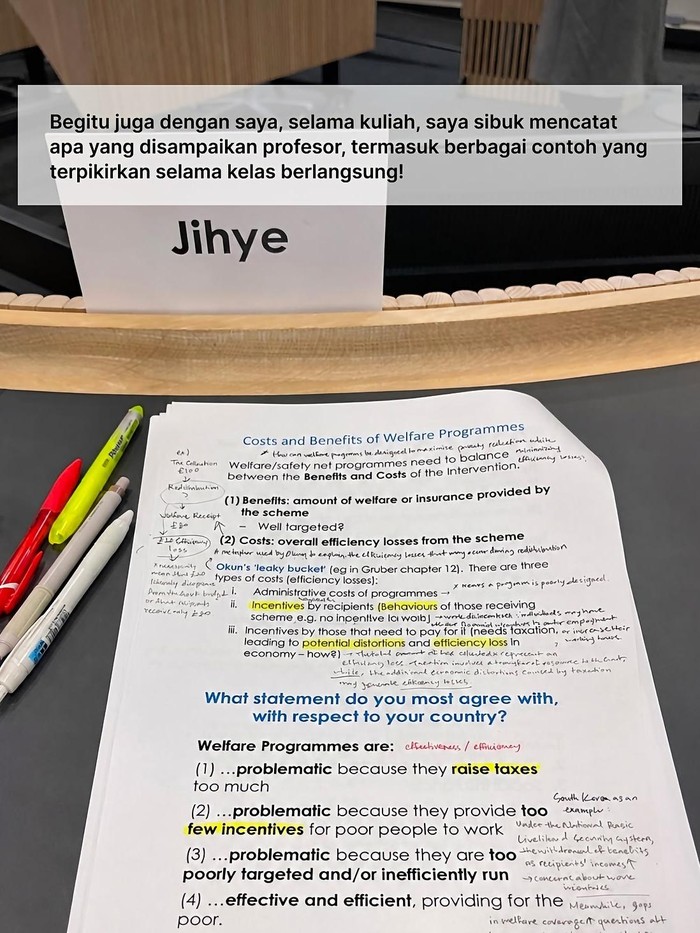
For many students globally, the university experience has become inextricably linked to digital convenience. From cloud-based note-taking applications to real-time digital collaboration tools, the expectation is often that a top-tier education requires the latest hardware. However, Ayana Moon’s experience highlights a different philosophy practiced within the hallowed halls of Oxford. In her recent social media disclosures, she described her current academic routine as a "Stone Age experience," referring to the mandate that students rely on manual, analog methods for recording information during class.

This policy is not merely a quirk of a single department but reflects a broader pedagogical stance held by several faculties at Oxford and similar traditional universities. The rationale is often centered on the cognitive benefits of handwriting over typing. By forcing students to engage with material through the physical act of writing, institutions aim to improve information retention, critical synthesis, and active listening skills. For Ayana, the adjustment required a significant shift in her study habits, moving from the efficiency of digital devices to the deliberate, slower pace of pen-and-paper engagement.
Academic Chronology and the Transition to Oxford
Ayana Moon’s journey to the University of Oxford is part of a broader trajectory of personal and professional development that has garnered significant public attention. Known for her career as a model and media personality, her decision to pursue advanced studies in Public Policy signifies a pivot toward substantive intellectual work. Since enrolling in the program, she has documented her transition from the fast-paced world of digital media to the intense, research-heavy environment of postgraduate study in the United Kingdom.
The chronology of her studies suggests that the adjustment period was marked by the realization that Oxford’s prestige comes with a demanding workload. Unlike undergraduate programs that might focus on rote memorization, a Master’s in Public Policy at a research-intensive university like Oxford requires constant interaction with primary sources, lengthy policy documents, and theoretical frameworks. The prohibition of laptops is intended to ensure that students are not distracted by secondary digital tasks, forcing them to remain fully present during high-level academic discourse.

The Cognitive Science Behind Analog Learning
While the prohibition of digital devices might appear archaic to the casual observer, it is supported by a growing body of academic literature. Research published in journals such as Psychological Science has indicated that students who take notes by hand are often better at conceptualizing and synthesizing information compared to those who transcribe lectures verbatim on a laptop.
The mechanism is simple: when typing, students tend to capture the professor’s words word-for-word, which requires less cognitive processing. When writing by hand, the physical limitation on speed forces the student to listen, digest, and summarize the core message of the lecture in real-time. This process of active filtering is essential for the level of analytical rigor expected at the postgraduate level. Ayana’s experience, therefore, serves as a practical case study for this pedagogical strategy, as she has noted that she feels more "prepared" and "independently minded" without the constant crutch of digital technology.
The Institutional Context of Oxford’s Pedagogy
The University of Oxford operates on a collegiate system that prioritizes the "tutorial" method. This involves small groups of students engaging in deep, face-to-face discussions with experts in their field. In this setting, the use of a laptop can create a physical and psychological barrier between the student and the tutor. By removing digital devices, the university preserves the sanctity of the intellectual exchange.
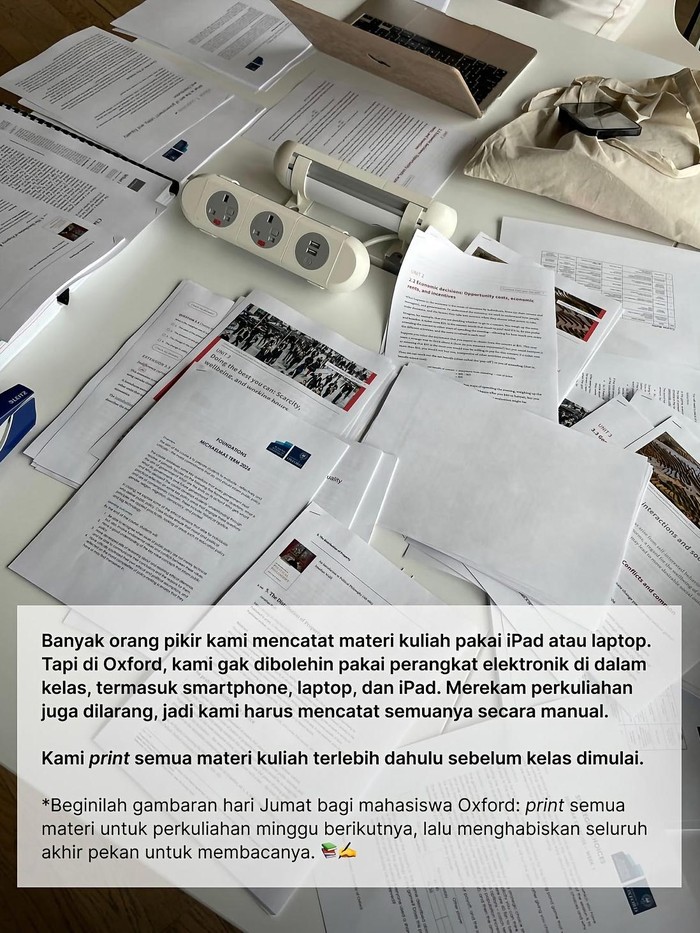
Furthermore, the logistical preparation required for these classes is substantial. As Ayana noted, students are expected to print their materials and engage with physical copies of readings prior to the start of the session. This "paper-heavy" culture is a defining characteristic of the Oxford experience. It encourages students to annotate texts directly, creating a tactile relationship with the literature that is difficult to replicate on a screen.
Broader Implications for Global Education
The discourse surrounding Ayana Moon’s experience touches upon a larger debate in higher education: the efficacy of the "digital-first" classroom. While technology has democratized access to information and enabled remote learning, there is an ongoing critique regarding the impact of digital devices on student attention spans.
The "Oxford Model," as experienced by Ayana, provides a counter-narrative to the trend of technological saturation. It suggests that, in the most demanding academic environments, the best tool for processing complex information remains the human brain, assisted by the simple pen and paper. This perspective is becoming increasingly relevant as educators look for ways to combat digital burnout and the fragmentation of attention caused by constant connectivity.
Official Perspectives and Academic Standards
While the University of Oxford does not explicitly ban laptops across every single department, the autonomy of individual professors and lecturers remains absolute. Faculty members have the right to define the "digital hygiene" of their classrooms to facilitate the best possible learning environment. Ayana’s reports align with established reports from alumni and current students who have navigated similar expectations in humanities and social science courses.
The university’s stance is inherently rooted in the belief that an elite education should be an immersive experience. By limiting digital distractions, the institution ensures that students are not merely consuming data but are actively participating in the production of knowledge. This fosters a community where the priority is the depth of argument and the quality of discussion rather than the speed of information processing.
The Cultural Impact of Ayana Moon’s Disclosure
Ayana Moon’s transparency regarding her academic life serves as an educational tool for her followers. By demystifying the experience of studying at an Ivy League-equivalent institution, she provides a realistic view of the effort required to excel at the highest level. Her commentary on feeling "more mandiri" (independent) in her thinking highlights the personal growth that comes from embracing a more rigorous, albeit analog, learning environment.
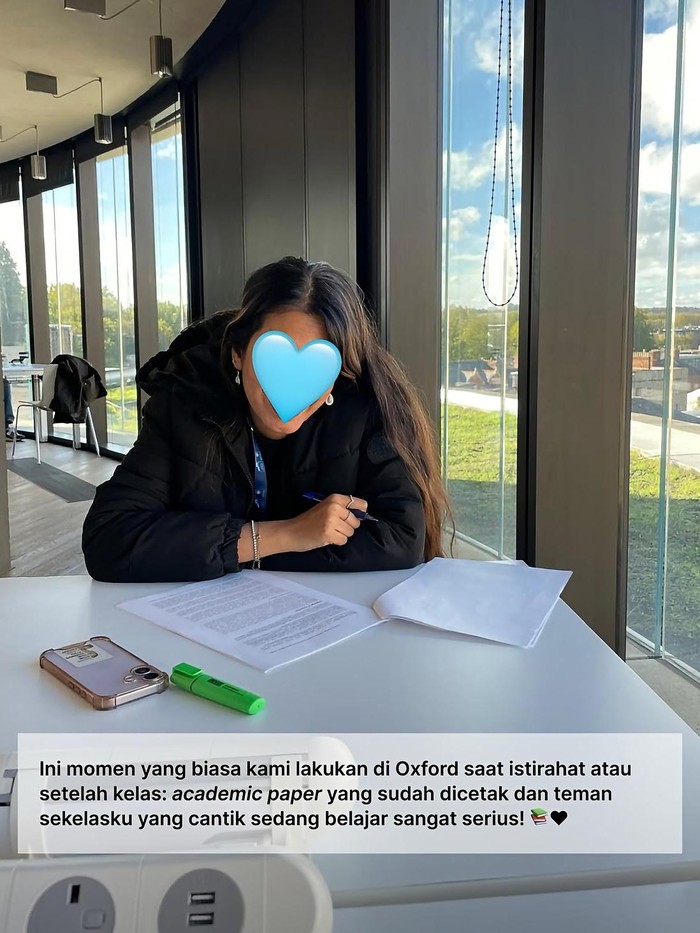
Her journey also reflects a global trend where high-profile figures are increasingly prioritizing intellectual rigor over their public personas. By documenting the challenges—such as the manual note-taking and the extensive preparation—she bridges the gap between the public’s perception of "glamorous" overseas education and the reality of the grueling academic workload.
Conclusion: A Return to Intellectual Foundations
The story of Ayana Moon’s time at Oxford is ultimately one of adaptation and intellectual maturation. In an era defined by rapid technological advancement, the insistence on manual note-taking and deep, screen-free engagement serves as a reminder of the enduring value of traditional learning.
As she continues her studies in Public Policy, her experience remains a pertinent example of how pedagogical constraints, when implemented with purpose, can lead to superior learning outcomes. By trading the digital interface for the pen, Ayana is not just fulfilling a requirement; she is participating in a centuries-old tradition of scholarship that values the internal synthesis of ideas over the external convenience of technology. For students and observers alike, her experience offers a compelling case for the necessity of "slowing down" to achieve a deeper understanding of the complex, ever-evolving landscape of public policy.