The urban landscape of Surakarta, historically known as Solo, is a living museum where modern commercial developments continuously intersect with profound remnants of the Mataram royal heritage. Among the enduring architectural and historical treasures of this Central Javanese city is Ndalem Kalitan, a sprawling estate located in Kampung Kalitan, Penumping district. Originally established as a royal retreat or buitenverblijf for the monarch of the Kasunanan Surakarta Hadiningrat, the property has undergone significant transformations over the centuries. From its inception as a secluded sanctuary for King Sunan Pakubuwana VIII in the early 19th century to its eventual association with the family of Indonesia’s second president, Suharto, Ndalem Kalitan remains a crucial physical archive of Javanese royal history, colonial-era urban development, and shifting socio-political dynamics.
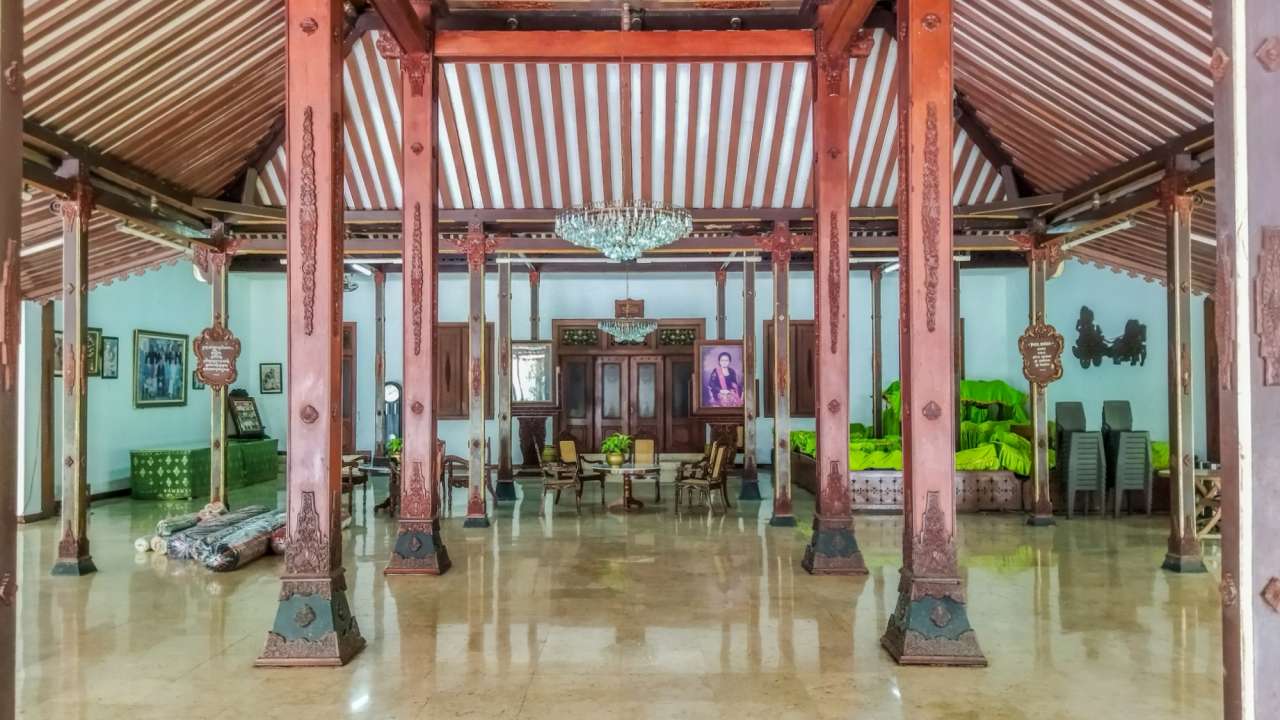
Architectural Splendor and Original Function
Constructed around 1820, Pesanggrahan Kalitan—as it was initially named—served as an official countryside retreat outside the immediate high-walled perimeter of the Surakarta Palace (Keraton). Unlike many other royal rest houses that fell into total disrepair or vanished entirely, particularly those scattered across the neighboring Boyolali regency, Ndalem Kalitan has survived in a relatively pristine state. Historical accounts, most notably from the travel journals of Raden Mas Arya Purwolelana Candranegara, a Bupati of Demak who documented his journeys to Surakarta in 1830, describe the estate as a magnificent blend of traditional Javanese structural mastery and European aesthetic influences.
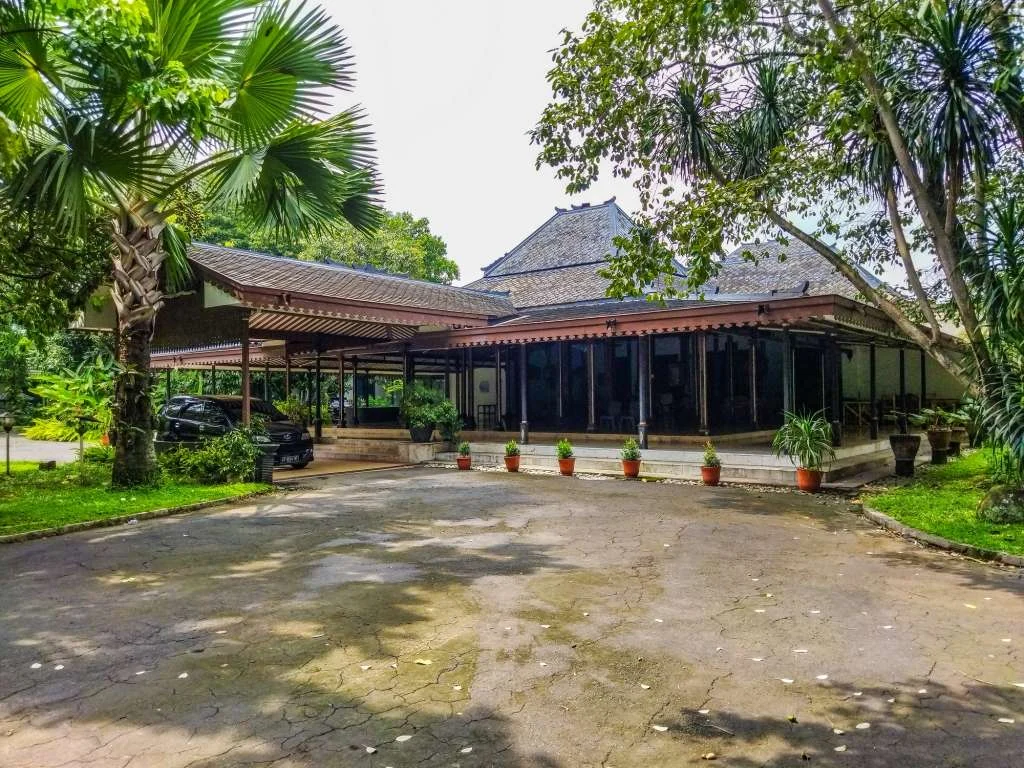
The estate’s layout features a classic Javanese architectural hierarchy. At the forefront stands a grand pendopo, an open-air pavilion supported by heavy wooden pillars (soko guru), which historically functioned as a prestigious space for receiving high-ranking guests, European dignitaries, and indigenous elites. Behind the pendopo lies the ndalem ageng, the main residential core, flanked by structural connectors known as pagelaran. Historical descriptions from the 19th century note that the complex was enclosed by sturdy brick walls (pagar banon), featured traditional shingle roofing (sirap), and was surrounded by meticulously landscaped gardens adorned with decorative statues and Dutch-style interior furnishings. This hybrid architectural identity reflects the cosmopolitan nature of the Vorstenlanden (the Javanese principalities) during the colonial era, where European tastes increasingly influenced indigenous royal architecture.

Chronology of Ownership and Dynastic Shifts
The stewardship of Ndalem Kalitan evolved alongside the shifting political and dynastic landscape of the Kasunanan Surakarta. Following the passing of Sunan Pakubuwana VIII, the estate continued to function as a royal retreat during the early reign of subsequent monarchs. A major turning point occurred under the rule of Sunan Pakubuwana X, who reigned from 1893 to 1939. Known as an era of modernization and administrative reorganization within the Kasunanan, the king formally transferred ownership of the pesanggrahan to his eldest daughter, Ratu Alit, effectively converting the royal rest house into a permanent private residence and renaming it Ndalem Kalitan.
In Javanese royal custom, residential allocations for members of the royal family outside the central palace complex of Baluwarti followed strict protocols. While male heirs and princes were typically assigned residences within specific royal quarters, princesses who did not directly inherit administrative authority were often granted estates tailored to their status. The relocation of Ratu Alit to Ndalem Kalitan established a precedent of elite residential settlement in the Penumping area, setting the estate apart from the traditional inner-palace compounds.

By the mid-20th century, the property transitioned out of the direct direct-line Kasunanan administration. In 1960, Ndalem Kalitan was acquired by Kanjeng Pangeran Harya (KPH) Prawironegoro, a nobleman originating from the Pura Mangkunegaran—the neighboring autonomous principality in Surakarta—and a relative of KPH Soemoharyomo. Consequently, the estate became the family home of KPH Soemoharyomo and his wife, Kanjeng Raden Ayu (KR.Ay) Hatmanti Hatmohoedojo. Through this lineage, the property eventually became deeply associated with their daughter, Bendara Raden Ayu (BRay) Siti Hartinah—widely known as Madame Tien Soeharto, the wife of Indonesia’s second president, Suharto. Under the care of the Soeharto family, the estate was meticulously preserved as a private retreat, maintaining its traditional Javanese spatial organization while serving as a silent witness to modern Indonesian political history.
Urban Development of Penumping and the Kalitan Enclave
The historical significance of Ndalem Kalitan cannot be fully understood without examining the broader socio-spatial evolution of Kampung Kalitan and the Penumping district. Situated just north of the major thoroughfare now known as Jalan Slamet Riyadi, Penumping has functioned as an elite residential zone since the 18th century. Historical urban analyses indicate that the area served as a settlement for high-ranking indigenous nobility (priyayi bumiputra) serving both the Kasunanan Surakarta and the Pura Mangkunegaran.

The spatial configuration of Surakarta during the colonial period was heavily influenced by transportation infrastructure and proximity to economic hubs. Jalan Slamet Riyadi historically served as a vital arterial corridor, separating the northern Penumping sector (including Kalitan) from the renowned batik-producing trading hub of Laweyan to the south. While Laweyan developed an industrial character dominated by indigenous merchant houses and batik enterprises, Penumping maintained an aristocratic and administrative character.
By the late 19th and early 20th centuries, the neighborhood attracted a multi-ethnic elite. Records from colonial travelers and local historians highlight the presence of prominent European and Chinese personages residing in the vicinity alongside Javanese nobility. Notable figures included Kwik Djin Gwan, a prominent Kapitan Tionghoa (Chinese Captain) of Surakarta, and Dorothea Boode, the wife of European landowner Johannes Agustinus Dezentje. The introduction of steam-powered tram systems (Solosche Tramweg Maatschappij) further elevated the strategic and economic value of the corridor, connecting the heart of Surakarta to surrounding agricultural and manufacturing centers.

Despite this rapid modernization, Kampung Kalitan retained its name and identity as a direct derivative of the royal estate located within its boundaries. In traditional Javanese urban naming conventions, neighborhoods often derived their monikers from prominent geographical landmarks (landmark) or significant estate complexes as a form of cultural recognition. As contemporary Surakarta experiences accelerated urban growth, characterized by modern housing developments and an influx of migrant populations, Ndalem Kalitan stands as one of the few surviving historical anchors preserving the spatial memory of the city’s royal past.
Preservation and Cultural Implications
The survival and active maintenance of Ndalem Kalitan offer valuable insights into historic preservation challenges within modern Indonesian cities. Heritage conservation experts note that private ownership has paradoxically played a critical role in safeguarding the physical integrity of the estate. Unlike state-owned or publicly managed heritage sites that frequently face budgetary constraints or bureaucratic hurdles regarding adaptive reuse, privately held royal residences like Ndalem Kalitan have historically benefited from continuous private funding for maintenance, structural reinforcement, and custodial care.

However, this private status also presents distinct challenges regarding public accessibility and historical education. While architectural historians and cultural researchers recognize the estate as an invaluable repository of 19th-century Javanese-European architectural fusion and royal genealogy, public entry remains restricted due to its status as a private family residence. Cultural institutions and local heritage advocates have frequently emphasized the need for balanced documentation, suggesting that digital archives, academic publications, and guided historical documentation remain essential tools for making the history of Ndalem Kalitan accessible to the broader public.
As Surakarta navigates its contemporary identity as a cultural tourism destination balancing economic modernization with heritage preservation, sites like Ndalem Kalitan underscore the layered complexity of the city’s history. Far beyond its association with modern political figures, the estate represents a physical chronicle of the Vorstenlanden era—capturing the intersection of royal retreat architecture, colonial infrastructure development, and the enduring legacy of Javanese aristocratic culture in the heart of Java.