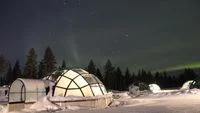
The evolution of modern hospitality has increasingly focused on experiential travel, shifting from traditional luxury urban hotels to immersive, nature-centric accommodations. Among the most striking trends in this sector is the rise of geodesic domes and glass-roofed structures inspired by the traditional Inuit igloo. These architectural marvels combine the rugged wilderness of remote destinations with high-end comfort, allowing travelers to gaze at the starry night sky or witness the mesmerizing aurora borealis directly from their beds.
Drawing from global travel insights compiled by publications like Condé Nast Traveller, a growing portfolio of unique igloo-style retreats spans from the snowy landscapes of the Arctic Circle to the private woodlands of Western Europe. These properties represent a significant shift in contemporary tourism, prioritizing isolation, architectural innovation, and unobstructed views of the natural world.
The Architectural Evolution of Modern Igloos
Traditional igloos—domed shelters built from blocks of compressed snow by the Inuit people of the Canadian Arctic and Greenland—were engineered purely for survival against extreme sub-zero temperatures. In contrast, contemporary geodesic domes and glass igloos serve as sanctuaries for eco-tourism and astrotourism.
Engineered with advanced materials such as thermal-resistant glass, polycarbonate panels, and reinforced wooden frames, these modern iterations withstand harsh weather conditions while maximizing interior light and panoramic visibility. The integration of specialized technologies, such as frost-removal systems on glass roofs, ensures that guests maintain a crystal-clear view of the sky even during severe winter storms. This fusion of engineering and hospitality has catalyzed a boom in high-end remote tourism, appealing to travelers seeking solitude, digital detoxes, and extraordinary visual experiences.
Immersive Stays Across Europe
Europe hosts a significant share of these architectural hideaways, taking advantage of vast wilderness areas, deep forests, and high latitudes optimal for stargazing.
1. Woodland Dome, Shropshire, United Kingdom
Tucked away inside a sprawling 45-hectare private woodland in Shropshire, the Woodland Dome caters to travelers looking to escape urban congestion. Engineered to host up to four guests, the dome features a king-size bed, folding single beds, an ensuite bathroom, and a compact kitchenette. Beyond the transparent walls, visitors have access to a private deck equipped with a barbecue grill and a wood-fired Scandinavian hot tub, bridging the gap between rustic camping and refined leisure.
2. Luxury Glass Igloo, Kuusamo, Finland
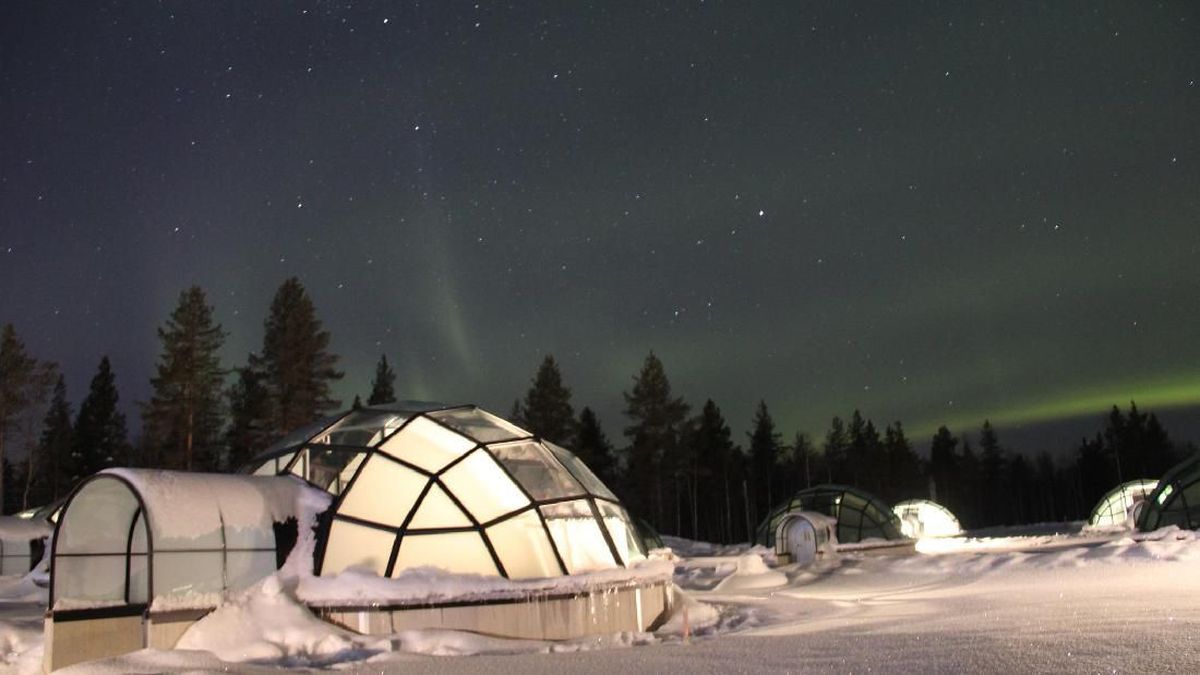
Located in the heart of Lapland, Finland, these glass-domed structures are specifically designed for aurora hunting. Nestled amidst dense pine forests, each unit accommodates up to three guests and offers unobstructed overhead views of the winter sky. To complement the sub-zero outdoor climate, the resort provides authentic Finnish saunas and heated outdoor baths, with nightly rates starting around £336 (approximately Rp6.8 million).
3. Dome Smiberget, Trondheim Fjord, Norway
Positioned along the scenic Trondheim Fjord, Dome Smiberget utilizes hexagonal window panels wrapping around the sleeping and seating quarters. This specific geometric design offers sweeping vistas of both the surrounding fjords and the night sky. The property caters to couples, providing a private terrace overlooking the water, with rates beginning at approximately £290 (Rp5.9 million) per night.
4. Geodesic Domes, Żyrardów County, Poland
Set within a secluded forest in Poland, these geodesic domes offer a more grounded, budget-friendly entry into dome living at roughly £70 (Rp1.4 million) per night. Accommodating up to three guests per dome, the interiors maintain a minimalist aesthetic. However, communal and outdoor amenities elevate the experience, featuring a covered gazebo with a jacuzzi, a designated fire pit, and a barbecue area. Larger groups can also rent an adjacent wooden cabin that sleeps four.
5. Rüdehof, Amt Neuhaus, Germany
Diverging slightly from the traditional spherical igloo design, the accommodations at Rüdehof in Lower Saxony draw architectural inspiration from mythical hobbit dwellings. Situated in the Elbe River valley rural landscape about 90 minutes from Hamburg, these earth-sheltered structures feature double beds, compact kitchens, bathrooms, and dining areas framed by expansive panoramic windows. Rates start at approximately £324 (Rp6.5 million) for a two-night stay.
6. Cosy Igloo, Rovaniemi, Finland
Also situated in the Finnish Arctic hub of Rovaniemi, this property emphasizes traditional Nordic cosiness. Interiors are outfitted with thick woolen blankets, heavy carpets, and wood-burning stoves. Large windows frame landscapes choked with fresh snow and frosted pine branches, with nightly tariffs averaging around £300 (Rp6 million).
7. Floating Glass Igloos on Lake Ranuanjärvi, Finland
Offering seasonal versatility, these unique structures float on the waters of Lake Ranuanjärvi during the summer months. When winter sets in and the lake freezes solid, the igloos are positioned onto the ice sheet in remote isolation. This dual-state operation allows guests to experience midnight sun reflections on the water or absolute stillness surrounded by snow-covered hills under winter constellations, all through panoramic glass panes.
8. Unique Wooden Igloo, Orbaizeta, Spain
Moving south to the Pyrenees, the Selva de Irati forest in Orbaizeta, Spain, houses a wooden dome perched atop a ridge. Overlooking the Aezkoa Valley and surrounding mountain ranges, this four-person retreat relies on a simpler, timber-centric construction to harmonize with the dense canopy, priced from £272 (Rp5.5 million) per night.
9. Glass-Topped Cabin, Kittilä, Finland
Tailored for family excursions in Finnish Lapland, these premium cabins feature specialized glass ceilings integrated with automated anti-frost technology. This ensures uninterrupted observation of the night sky, including the elusive aurora borealis, regardless of external temperatures. Reflecting its high-end positioning and advanced climate-control engineering, rates begin at approximately £620 (Rp12.6 million) per night.
North American Wilderness Retrets
10. Lakeside Dome, Minnesota, United States
Representing North America in this niche sector, the Lakeside Dome is situated on elevated terrain overlooking Lake Superior in Minnesota. The geodesic structure centers its appeal around a private outdoor deck complete with a hot tub positioned directly in line with the lake horizon. Priced from around £388 (Rp7.8 million) per night, the property capitalizes on the growing demand for secluded lakeside wellness tourism.
Economic Implications and Industry Analysis
The proliferation of igloo-style and geodesic dome accommodations highlights a broader structural change in the global hospitality market. According to tourism analysts, the demand for off-grid, low-impact luxury properties has surged in the post-pandemic era. Travelers increasingly favor destinations that offer psychological restoration, physical isolation, and direct engagement with nature over densely populated resort complexes.
From an economic perspective, these properties offer high yield potential for resort operators. Despite requiring specialized initial capital investments—particularly for thermal-insulation engineering, reinforced glass manufacturing, and remote utility hookups—geodesic domes generally feature lower structural footprints and shorter construction timelines than traditional multi-story hotels. Furthermore, their unique aesthetic drives high engagement on digital media platforms, significantly reducing traditional marketing expenditures for operators in remote regions.
As sustainable tourism regulations tighten globally, designers are also focusing on eco-friendly materials, solar-powered heating systems, and biodegradable waste management solutions for these dome villages. Industry forecasts indicate that the market for experiential, nature-integrated accommodations will continue its upward trajectory, cementing transparent domes and modern igloos as staples of high-end wilderness travel for the foreseeable future.