Socio Today
This privilege is not a matter of mere celebrity or wealth; it is a fundamental expression of national sovereignty and the legal architecture of the states they represent. The individuals in question are King Charles III of the United Kingdom and the Emperor and Empress of Japan, Naruhito and Masako. To understand why these three individuals are exempt from a requirement that binds even the most powerful presidents and prime ministers, one must look into the historical origins of travel documents and the unique legal status of a reigning monarch.
The British Monarchy: The Sovereign as the Source of Authority
The first individual on this exclusive list is King Charles III, the reigning monarch of the United Kingdom and 14 other Commonwealth realms. The reason the King does not require a passport is rooted in the very language printed on every British travel document. If one examines the first internal page of a British passport, it contains a request issued in the name of the Sovereign.
The text currently reads: "His Britannic Majesty’s Secretary of State requests and requires in the Name of His Majesty all those whom it may concern to allow the bearer to pass freely without let or hindrance, and to afford the bearer such assistance and protection as may be necessary."
Under British constitutional law, the passport is issued under the Royal Prerogative. Because the document is essentially a request from the King to foreign powers to allow his subjects to travel, it is legally redundant for the King to issue a request to himself. As the "fountain of justice" and the ultimate authority from which the passport derives its power, the King is considered the living embodiment of the state’s authority. Therefore, he does not need to carry a physical manifestation of that authority to prove who he is.
This tradition was famously upheld by his mother, the late Queen Elizabeth II. During her 70-year reign, she visited over 100 countries and logged hundreds of thousands of miles without ever possessing a passport. Upon his accession to the throne in September 2022, this unique status automatically transferred to King Charles III.
However, it is important to note the strict limitations of this privilege. It applies exclusively to the reigning Sovereign. Every other member of the British Royal Family, including Queen Camilla and the Prince of Wales, Prince William, is required to carry a passport. While they typically utilize diplomatic passports—which offer certain immunities and expedited processing—they are still subject to the administrative requirement of presenting a document at the border. Similarly, while the King does not require a driver’s license because licenses are also issued in his name, other royals must maintain valid driving credentials.
The Japanese Imperial Family: A Diplomatic Directive
The other two individuals who enjoy passport-free travel are Emperor Naruhito and Empress Masako of Japan. Their exemption is governed by a specific administrative framework established by the Japanese government in the late 20th century. Unlike the British system, which relies on centuries of common law and the Royal Prerogative, the Japanese exemption was formalized through a Ministry of Foreign Affairs directive.
On May 10, 1971, the Japanese Ministry of Foreign Affairs issued a ruling stating that it would be "highly inappropriate" for the Emperor or Empress to be issued a standard passport or to be subjected to the standard immigration and visa procedures of foreign nations. The logic behind this decision was that the Emperor, as the "symbol of the State and of the unity of the People" under the Japanese Constitution, occupies a status that transcends ordinary administrative requirements.
When the Emperor and Empress travel abroad, the Japanese government does not issue them passports. Instead, the Ministry of Foreign Affairs issues a formal diplomatic notification to the destination country well in advance. This document, often referred to as a "Note Verbale," informs the host nation that the Emperor and Empress are arriving and requests that they be granted all necessary courtesies and immunities. Upon arrival, the imperial couple is greeted by high-ranking officials, and their entry is recorded as a matter of state protocol rather than a standard immigration event.
Just as in the United Kingdom, this privilege is highly restricted. It does not extend to the wider Imperial Family. For example, the Emperor’s brother, Crown Prince Akishino, and his family must use diplomatic passports when traveling internationally. The exemption is a singular honor reserved for the head of state and their consort, reflecting the unique spiritual and political role the Emperor plays in Japanese society.
The Logistics of Passport-Free Travel
While these three individuals do not carry passports, their travel is far from unmonitored. International travel for a head of state is a massive logistical undertaking involving months of coordination between foreign ministries, intelligence agencies, and protocol departments.
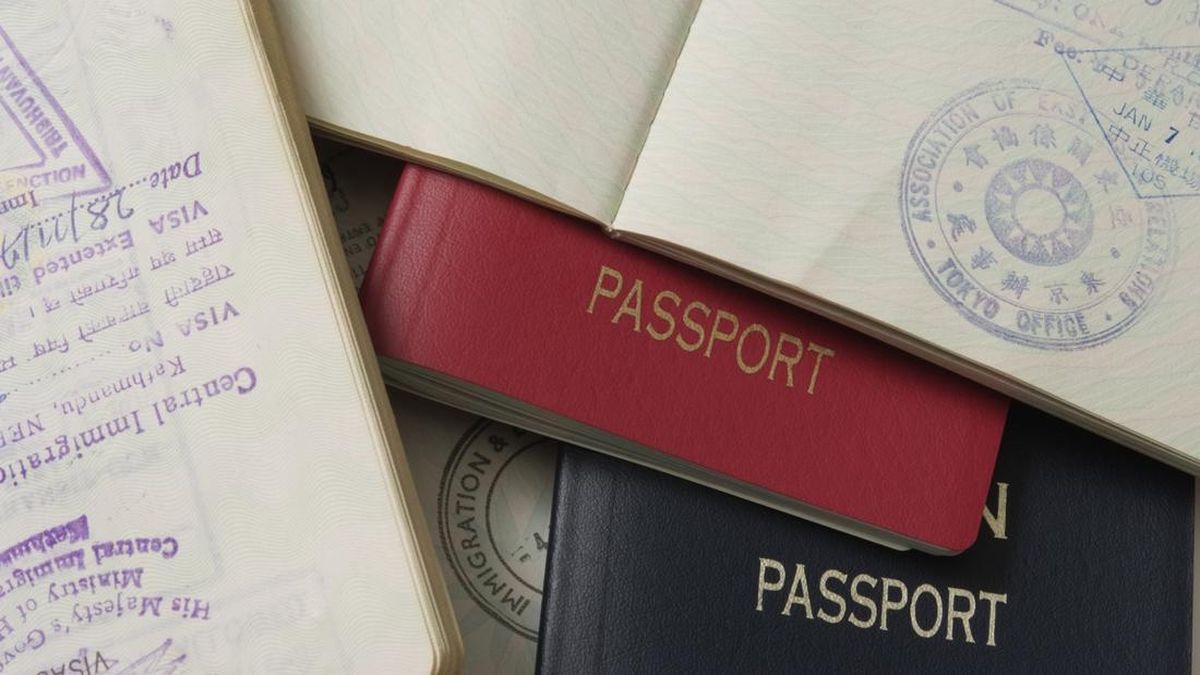
When King Charles III or Emperor Naruhito prepares for a state visit, their private secretaries and diplomatic staff handle all the necessary paperwork. In the case of the British King, his private secretary will send a formal notification to the host country’s government, ensuring that the King’s identity is recognized and his entry is pre-cleared.
Furthermore, these individuals travel on state-owned aircraft or chartered flights that land at military bases or private terminals, bypassing the standard commercial infrastructure where passport control is typically located. The "check-in" process for a monarch involves a diplomatic greeting rather than a biometric scan. This process ensures that while the physical document is absent, the legal requirements of international border crossing—namely, the identification of the individual and the granting of permission to enter—are satisfied through higher-level diplomatic channels.
Sovereignty vs. Diplomacy: Why Presidents Still Need Passports
A common question arises: why do powerful heads of state, such as the President of the United States or the President of France, still require passports? The answer lies in the difference between a republic and a monarchy.
In a republic, the President is a citizen who has been elected to a temporary office. They are not the "source" of the law but are subject to it. A U.S. passport is issued by the Secretary of State, but it is not issued "on behalf" of the President in a personal, sovereign sense. Therefore, President Joe Biden carries a dark-blue diplomatic passport. While he certainly doesn’t wait in the standard customs line, his staff must still present his credentials to foreign officials.
Monarchs like King Charles III and Emperor Naruhito are different because they represent a continuous, sovereign authority that predates modern administrative bureaucracy. In their respective systems, they are the ultimate grantors of the right to travel. This distinction highlights a fascinating vestige of ancient law surviving in the digital age.
The Historical Evolution of Travel Documents
To appreciate the gravity of this exemption, one must consider the history of the passport itself. The earliest reference to a travel document can be found in the Hebrew Bible (Nehemiah 2:7-9), where a traveler requested letters from King Artaxerxes I of Persia to ensure safe passage through foreign lands. In England, the "Safe Conduct" act of 1414 under King Henry V is often cited as the precursor to the modern passport.
For centuries, these documents were hand-written letters of introduction. It was only after World War I, under the auspices of the League of Nations in 1920, that the passport began to be standardized into the booklet format we recognize today. As the world moved toward biometrics, microchips, and digital tracking in the 21st century, the passport became more than just a letter; it became a high-tech security device.
The fact that the British King and the Japanese Emperor remain exempt from this global standardization is a testament to the enduring power of symbolic sovereignty. It serves as a reminder that in the realm of international law, the head of state is not merely a high-ranking official, but the personification of the nation itself.
Implications and Modern Perspectives
The existence of "passport-less" individuals has broader implications for international law and security. It underscores the principle of "sovereign immunity," which dictates that a head of state is generally immune from the jurisdiction of foreign courts and administrative procedures while in office.
From a security standpoint, the absence of a passport for these three individuals poses zero risk. Their identities are among the most verified on the planet, and their movements are tracked with the highest level of precision by multiple national security apparatuses. The lack of a physical booklet is a legal technicality that reflects their status, not a gap in border security.
In conclusion, the exemption of King Charles III, Emperor Naruhito, and Empress Masako from the requirement of carrying a passport is one of the last remaining "super-privileges" of the modern world. It is a unique intersection of history, law, and diplomacy. While the rest of the world navigates the complexities of visas and expiry dates, these three figures move across the globe as living symbols of their respective nations, carrying their authority not in a pocket-sized booklet, but in their very titles and persons. This rare status serves as a fascinating window into how ancient traditions of monarchy continue to adapt and hold their place within the rigid structures of the 21st-century international order.