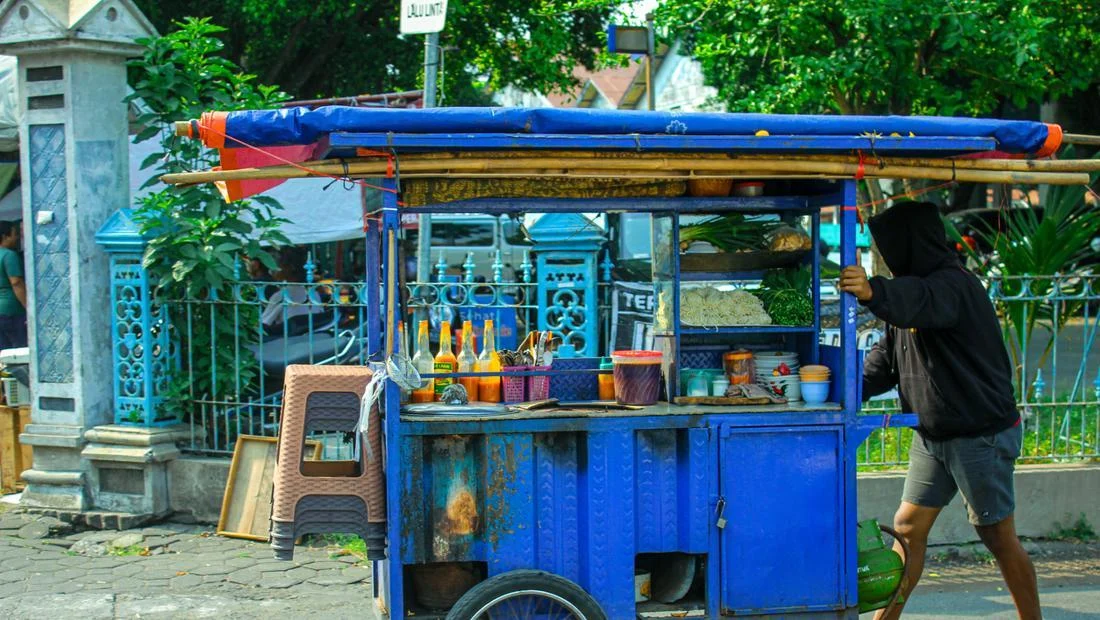
Mie ayam, the ubiquitous Indonesian chicken noodle dish, serves as a cornerstone of the nation’s street food culture. From the bustling sidewalks of Jakarta to the quiet residential alleys of smaller municipalities, the sight of a wooden cart—typically painted in vibrant shades of blue, brown, or green—is synonymous with affordable and comforting sustenance. While these colors have become a familiar visual shorthand for millions of Indonesians, they have also birthed a complex web of cultural folklore. For decades, urban legends and community-held beliefs have suggested that the hue of a mie ayam cart serves as a definitive indicator of the merchant’s geographical origin and, by extension, the specific flavor profile of the dish. However, a deeper examination of the history of Indonesian street food reveals that these color-coded associations are more a product of social evolution and pragmatic necessity than a rigid industry standard.
The Origins of Migrant Entrepreneurship in the Culinary Sector
To understand the prevalence of these carts, one must look at the migration patterns of the mid-20th century, particularly from the Central and West Java provinces. Historically, Wonogiri—a regency in Central Java—has been a major hub for labor migration, with a significant portion of its population moving to urban centers to pursue livelihoods in the food and beverage industry. These entrepreneurs popularized a specific style of mie ayam characterized by a savory, soy-based chicken topping and a clear, flavorful broth.
As these migrants established their presence in major cities like Jakarta, they relied on standardized wooden carts that could be easily maneuvered through narrow streets. The choice of blue and brown paint for these vehicles became a recurring theme among Wonogiri merchants. Sociologists suggest that this was less of an intentional branding strategy and more of a practical consequence of the availability of industrial paints at the time. Darker, saturated colors were favored because they were cost-effective and, crucially, excelled at masking the inevitable grime and grease associated with roadside cooking. Over time, as customers began to recognize the blue or brown carts as "the Wonogiri style," the association solidified in the public consciousness, creating a feedback loop where merchants continued the trend to signal authenticity.
Conversely, the green-painted carts are frequently associated with merchants hailing from the Priangan region of West Java. The cultural landscape of West Java’s culinary scene emphasizes different seasoning profiles, often incorporating more aromatic herbs and distinct chili pastes. The adoption of green, a color often associated with the lush landscapes of the Sundanese highlands, became the hallmark of these vendors. While these regional associations remain a popular topic of conversation among food enthusiasts, they lack a formal regulatory basis. The "color code" is an informal cultural artifact rather than an official industry designation.
Chronology and Evolution of Street Food Branding

The standardization of street food carts in Indonesia has undergone several phases of evolution. In the early post-independence era, carts were often left in their natural wood finish or painted with whatever leftover paint was available. The mid-1970s and 1980s marked the professionalization of the street food trade, as municipal governments began to implement basic zoning for street vendors. During this period, the need for durability led to the widespread use of oil-based paints, which provided a protective layer against the tropical humidity and heavy rain.
Market competition in the 1990s and 2000s saw a shift in how vendors approached their carts. The "blue-brown-green" color palette became a default template for carpenters and cart manufacturers. When a new vendor entered the market, they would often purchase a pre-fabricated cart from a specialized workshop. These workshops, which catered to the high volume of migrants entering the trade, essentially standardized the design, further cementing the regional color associations. It was during this time that the "myth" of the color-coded flavor profile reached its peak; customers would claim that a blue cart indicated a sweeter, Central Javanese-style broth, while a green cart signaled a more savory, West Javanese-influenced flavor.
Statistical and Analytical Perspectives on Flavor
From a culinary standpoint, the assertion that the cart’s color dictates the taste of the noodle is a fallacy. Data from food science researchers and culinary historians indicates that the flavor of mie ayam is determined by a complex interplay of variables that transcend the exterior paint of the vendor’s stall. These variables include the quality of the wheat-based noodles, the concentration of the chicken-fat emulsion used in the dressing, the specific blend of aromatics—such as shallots, garlic, and candlenut—in the chicken topping, and the freshness of the vegetables used as a garnish.
Furthermore, the rise of "fusion" street food has blurred these lines significantly. A merchant from Wonogiri might adapt their recipe to suit the preferences of their local customers in a West Javanese city, or a merchant from West Java might adopt the "Wonogiri-style" chicken topping if they find it sells better in their specific market. Consequently, the color of the cart has effectively become decoupled from the culinary technique. Today, a blue cart is as likely to serve a spicy, modern iteration of mie ayam as it is a traditional recipe from the 1970s. The flavor profile is defined by the individual vendor’s "tangan" (cooking hand) rather than the pigment of their cart.
Socio-Economic Implications of Street Food Culture
The reliance on these carts as a primary source of income for millions of families underscores the importance of the street food economy to Indonesia’s national GDP. According to recent reports from the Ministry of Cooperatives and SMEs, the informal food sector accounts for a significant portion of urban employment. The aesthetic of the carts—their colors, their bells, and their arrangement—serves as a vital piece of the nation’s intangible cultural heritage.

The "blue, brown, and green" phenomenon also highlights the resilience of migrant communities. In a hyper-competitive urban environment, these carts serve as a beacon of home for migrants, providing a sense of identity and community in a rapidly modernizing metropolis. Even as technology, food delivery applications, and modern food courts change the way Indonesians consume their meals, the humble street cart remains the most accessible and democratic food outlet. The durability of these colors represents a continuity of tradition that bridges the gap between generations.
Official and Community Responses
While there are no government regulations dictating the color of food carts, some municipal administrations have occasionally encouraged vendors to adopt more "hygienic" or "uniform" colors to improve the aesthetic appeal of tourist-heavy areas. However, these initiatives are often met with resistance, as the existing color schemes are deeply intertwined with the branding of individual businesses. For many, the cart is their store, their kitchen, and their primary marketing tool.
Food industry observers and experts generally agree that the color of the cart is an example of "folk branding." It is a spontaneous, grassroots marketing strategy that occurred organically over decades. From an analytical perspective, this suggests that the power of consumer perception is immense. Even in the absence of scientific evidence linking paint color to culinary quality, the belief remains pervasive because it provides customers with a sense of security and familiarity. In a world of increasing choices, the "color-coded" cart offers a comforting heuristic that simplifies the decision-making process for the hungry commuter.
Conclusion: Beyond the Surface
In conclusion, while the blue, brown, and green colors of Indonesian mie ayam carts are steeped in history and regional pride, they should be viewed as cultural markers rather than definitive guides to quality or origin. The reality is that the Indonesian culinary landscape is far more fluid and diverse than the color of a wooden cart would suggest. As the nation continues to urbanize, the street food sector will inevitably evolve, potentially incorporating new materials, designs, and branding strategies. However, the legacy of the traditional cart will remain a testament to the ingenuity and communal spirit of the migrants who built the foundations of Indonesia’s vibrant street food culture. The next time a customer stops at a blue or green cart, they are participating in a tradition that spans generations—a ritual where the true flavor lies not in the paint, but in the history, labor, and passion poured into every bowl.