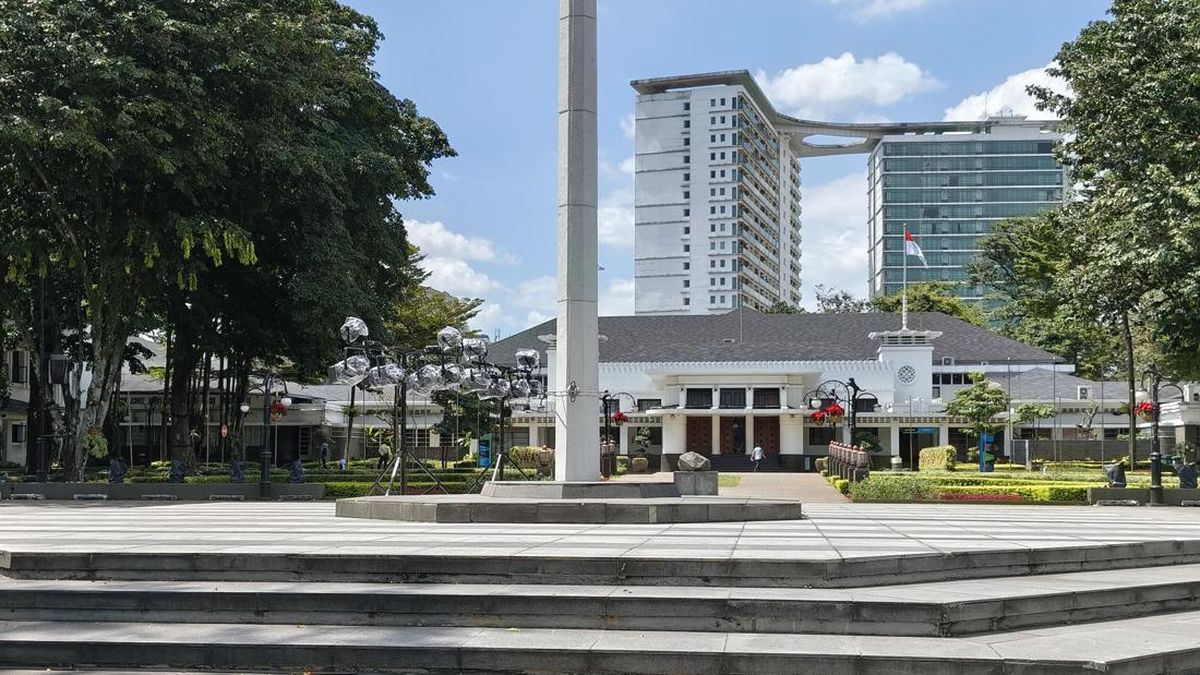
Bandung City Hall, locally recognized as Balai Kota Bandung, stands as a prime example of how municipal administrative centers can successfully integrate public recreation, historical preservation, and urban green spaces. Far from serving strictly as a conventional government office for the mayor and civil servants, the sprawling complex on Jalan Wastukencana has evolved into an inclusive, community-centric destination. Offering an array of engaging activities—from navigating intricate hedge mazes and jogging along tree-lined paths to exploring regional history and enjoying local arts—the landmark attracts thousands of domestic travelers and local residents weekly.
Understanding the evolution of Balai Kota Bandung requires a look into its rich historical context. Constructed during the Dutch colonial era in the early 20th century, the complex originally served as the Gemeentehuis (Municipal Hall) of Bandoeng. Designed by architect E.H. De Grave Whoojer, the main building prominently features a blend of European architectural design adapted to tropical conditions, characterized by high ceilings, thick walls, and classic neoclassical pillars. Over the decades, as Bandung transitioned from a colonial administrative outpost to the capital of West Java province and a modern metropolitan hub, the surrounding grounds underwent multiple revitalization phases. These urban renewal projects transformed strictly guarded government perimeters into accessible public parks, aligning with the city’s broader initiative to increase its green open space (Ruang Terbuka Hijau or RTH) ratio.
Among the primary recreational features within the complex is the popular Taman Labirin (Labyrinth Garden). Designed to test spatial awareness and patience, the labyrinth consists of neatly trimmed, high green hedges forming complex pathways. Visitors, particularly families and younger travelers, can enter through four designated gates to navigate the winding corridors and locate the exit. Urban planners note that incorporating interactive elements like the labyrinth into public administrative spaces fosters a sense of playfulness and psychological well-being, effectively reducing the intimidation factor often associated with government buildings.
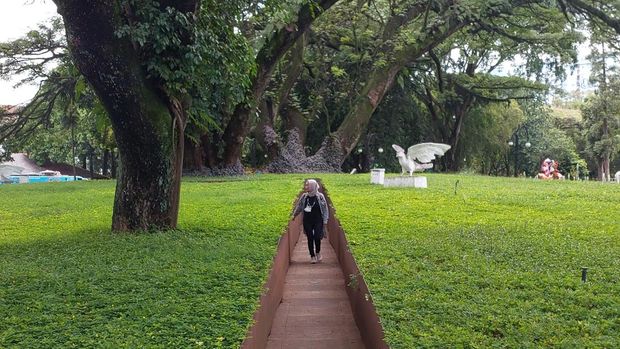
For fitness enthusiasts, the grounds offer dedicated jogging tracks and simple outdoor calisthenics equipment. Surrounded by mature, decades-old shade trees—including towering banyan and mahogany trees that help mitigate Bandung’s urban heat island effect—the jogging track provides a refreshing environment for morning and late-afternoon workouts. Local health initiatives by the municipal government have continually emphasized the importance of accessible physical infrastructure, making these public parks vital for community health outcomes.
Photography enthusiasts and culture seekers will find ample subjects within the compound. The colonial-era architecture of the main hall serves as a striking backdrop for historical photography, while modern additions such as the "love lock" installation and seasonal flower gardens provide varied visual aesthetics. Furthermore, the property is bisected by the Cikapayang River, a restored urban waterway that features shallow, clean flows where children can safely splash and interact with nature under the watchful eye of their parents. Environmental agencies have frequently highlighted the Cikapayang restoration project as a benchmark for daylighting urban rivers and reconnecting urban populations with natural hydrological systems.
The social fabric of Balai Kota Bandung is further enriched by its vibrant community presence. The expansive lawns routinely function as informal gathering spaces for diverse local groups, ranging from book-reading clubs and traditional dance troupes to parkour athletes and recreational football players. This democratization of civic space reflects a growing trend in Indonesian urban sociology, where city halls are reimagined as community living rooms rather than impenetrable bureaucratic fortresses.
Artistic and cultural expressions frequently animate the grounds. Depending on the timing of a visit, tourists may encounter spontaneous or scheduled local art performances, musical showcases, and traditional Sundanese dance exhibitions. These events are often coordinated in collaboration with local creative communities, positioning the city hall as an active incubator for Bandung’s renowned creative economy. Additionally, as a premier municipal venue, the complex regularly hosts official city festivals, historical commemorations, and civic exhibitions, offering visitors a firsthand glimpse into local governance and traditional celebrations.
Beyond immediate recreation, the historical significance of the area extends to adjacent cultural institutions. Visitors interested in deepening their understanding of the region can easily transition from the city hall grounds to the nearby Bandung Museum (Museum Kota Bandung). Located within walking distance, the museum chronicles the chronological development of the city from its prehistoric origins, through the colonial plantation era and the pivotal Bandung Sea of Fire (Bandung Lautan Api) historical event of 1946, to its modern designation as a UNESCO Creative City.
City officials and urban development experts have frequently analyzed the socio-economic implications of transforming administrative zones into public recreational spaces. According to municipal data from the Bandung City Tourism and Culture Office, public parks integrated with government offices experience higher foot traffic, which in turn stimulates micro-economies, including surrounding culinary vendors and creative street performers. This strategy aligns with the central government’s push for smart, people-centric urban planning, proving that civic infrastructure can simultaneously fulfill administrative duties, environmental conservation targets, and community recreational needs.