Socio Today
The geopolitical landscape of the Middle East has entered a period of unprecedented volatility following the publication of a provocative "target list" by Hamshahri, a prominent media outlet closely affiliated with the municipal government of Tehran and the Iranian establishment. The publication, which features thirteen high-ranking international political and military figures, identifies these individuals as primary targets for "severe revenge" in the wake of the death of the Islamic Republic’s Supreme Leader, Ayatollah Ali Khamenei. This development marks a significant escalation in the rhetoric emanating from Tehran, signaling a potential shift in Iran’s external strategy under its newly appointed leadership.
The list was disseminated via a graphic infographic that has since circulated widely across regional social media platforms. It depicts the thirteen individuals—primarily from the United States, Israel, and several European nations—clad in orange jumpsuits, a visual choice widely interpreted as a symbolic reference to prisoners or those awaiting execution. Among the most prominent figures featured are U.S. President Donald Trump and Israeli Prime Minister Benjamin Netanyahu, both of whom are depicted with illustrative crosshairs over their images, accompanied by messages affirming that Tehran considers their elimination a matter of national and religious duty.
The Catalyst: The Death of Ayatollah Ali Khamenei and the Transition of Power
The impetus for this aggressive media campaign is the reported death of Ayatollah Ali Khamenei, the long-standing Supreme Leader of Iran, following a coordinated military operation attributed to the joint forces of the United States and Israel. While the specific details of the event remain subject to intense international scrutiny and varying accounts, the Iranian government has characterized the incident as an act of supreme aggression and a violation of national sovereignty.
In the immediate aftermath of Khamenei’s passing, the transition of power was swift. Ayatollah Mojtaba Khamenei, the son of the late leader, has emerged as the new Supreme Leader. In his inaugural address to the nation, Mojtaba Khamenei struck a defiant tone, emphasizing that the "blood of the martyr" would not go unavenged. He stated that the demand for retribution is not merely a government policy but a "mandate from the Iranian people." While the new leader did not explicitly name individuals in his public speech, the subsequent publication by Hamshahri is viewed by regional analysts as a localized articulation of the new leadership’s broader intent.
Detailed Profile of the Identified Targets
The list published by Hamshahri comprises a selection of Western and Israeli leaders who Iran perceives as the architects of its current geopolitical isolation and the direct orchestrators of the strike against its former leader. The thirteen figures include:
- Donald Trump (President of the United States): Tehran has long held a grievance against Trump, dating back to his withdrawal from the JCPOA (Nuclear Deal) and the 2020 assassination of Qasem Soleimani. His return to the presidency and his "maximum pressure" rhetoric make him a primary target.
- Benjamin Netanyahu (Prime Minister of Israel): As the leader of Iran’s primary regional adversary, Netanyahu is viewed by Tehran as the chief instigator of military actions against Iranian interests in Syria, Lebanon, and within Iran itself.
- Israel Katz (Defense Minister of Israel): Responsible for the oversight of the Israel Defense Forces (IDF), Katz is linked to the strategic planning of the operations that led to the current escalation.
- Pete Hegseth (U.S. Secretary of Defense): As the head of the Pentagon, Hegseth represents the military might of the United States and the coordination of assets in the Middle East.
- Marco Rubio (U.S. Secretary of State): Known for his hawkish stance on Iran, Rubio’s inclusion highlights Tehran’s animosity toward the diplomatic and economic sanctions regime led by Washington.
- Emmanuel Macron (President of France): Macron’s inclusion reflects Iran’s frustration with European powers that have maintained pressure on Tehran regarding its ballistic missile program and regional influence.
- Keir Starmer (Prime Minister of the United Kingdom): The UK’s historical role and recent naval presence in the Persian Gulf have made its leadership a point of contention for the Iranian state.
- Friedrich Merz (Chancellor of Germany): Representing the largest economy in the European Union, Merz is targeted due to Germany’s alignment with U.S. and Israeli security interests.
- Giorgia Meloni (Prime Minister of Italy): Meloni’s government has been vocal in its support for Israeli security, leading to her inclusion in the infographic.
- Mike Huckabee (U.S. Ambassador to Israel): His diplomatic role and staunch support for Israeli sovereignty over disputed territories have made him a symbolic target.
- Brad Cooper (Commander of CENTCOM): As the commander overseeing U.S. military operations in the Middle East, Vice Admiral Brad Cooper is viewed as the operational hand of American intervention.
- Gideon Sa’ar (Foreign Minister of Israel): Sa’ar’s role in shaping Israel’s international coalition against Iran places him high on the list of political adversaries.
(Note: The original Hamshahri list contained a redundancy regarding the German leadership, reflecting the fervor and perhaps the rapid production of the propaganda material).
Analysis of the Symbolic Imagery and Propaganda Tactics
The use of orange jumpsuits in the Hamshahri infographic is a calculated psychological tactic. Historically, this attire has been associated with detainees at the United States’ Guantanamo Bay detention camp. However, in more recent years, it was co-opted by extremist groups such as ISIS for their execution videos. By portraying world leaders in this manner, the Iranian-affiliated media is attempting to flip the narrative of power, suggesting that those who currently hold global authority will eventually find themselves at the mercy of Iranian justice.
Furthermore, the "crosshair" motif placed over the heads of Trump and Netanyahu serves as a direct threat of assassination. This is not the first time Iranian media or officials have used such imagery; similar threats were directed at Trump and former Secretary of State Mike Pompeo following the death of Qasem Soleimani. However, the context of the death of a Supreme Leader raises the stakes significantly, moving the rhetoric from symbolic grievance to what some fear could be operational intent.
Chronology of Recent Escalations
The publication of the target list is the latest in a series of events that have pushed the Middle East to the brink of a broader conflict:
- The Strike: A high-precision operation, reportedly utilizing advanced stealth technology and intelligence, targeted a secure location in Iran where Ali Khamenei was present.
- The Announcement: Iranian state media confirmed the "martyrdom" of the Supreme Leader, triggering a national mourning period and an immediate mobilization of the "Axis of Resistance" (Hezbollah, Houthis, and various militias).
- The Succession: Mojtaba Khamenei was quickly elevated to the position of Supreme Leader, a move that had been speculated upon for years but was accelerated by the crisis.
- The Speech: Mojtaba Khamenei’s first public address focused heavily on "Hard Revenge" (Sard-e-Sakht), a term used to describe military and asymmetrical retaliation.
- The Hamshahri Publication: Shortly after the speech, the municipal media outlet released the "Thirteen Targets" infographic, providing a visual face to the state’s calls for vengeance.
Regional Security and the Strait of Hormuz
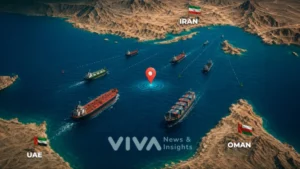
The threats issued by Tehran have immediate implications for global energy security and maritime trade. Historically, Iran has utilized its influence over the Strait of Hormuz—a narrow waterway through which approximately 20% of the world’s oil passes—as a strategic lever.
In response to the current tensions, various nations have already begun taking precautionary measures. India, for instance, has issued advisories prohibiting its citizens from working on vessels transiting the Strait of Hormuz, citing the high risk of seizure or kinetic attacks. The Iranian Parliament has also reiterated that the security of the region is contingent upon "arrangements" that respect Iranian sovereignty, often a veiled threat that they could close the strait if pushed further.
International Reactions and Official Positions
While the Hamshahri list has caused a media firestorm, it is important to note that the Iranian Foreign Ministry has not officially endorsed the list as a formal document of state policy. In diplomatic circles, such publications are often viewed as "domestic consumption" propaganda intended to satiate the public’s desire for a strong response without committing the state to specific military actions that could trigger a full-scale war.
However, Western intelligence agencies are not taking the threats lightly. The U.S. Secret Service and European security details have reportedly increased protection levels for the individuals named. In the United States, spokespeople for the State Department have frequently noted that any attempt on the life of a U.S. official or citizen would be treated as an act of war.
In Israel, the government has remained largely silent on the specific list, focusing instead on maintaining high alert levels along its northern border with Lebanon and continuing its operations against Iranian proxies. The prevailing sentiment in Jerusalem is one of "maximum readiness" for any retaliatory strike, whether it be a direct missile attack or asymmetrical terrorist operations abroad.
Broader Implications and Future Outlook
The inclusion of European leaders like Macron, Starmer, and Merz indicates that Iran no longer views Europe as a potential mediator or a "neutral" party in its conflict with the U.S. and Israel. This suggests a hardening of the "East vs. West" divide, with Iran leaning more heavily into its partnerships with Russia and China for economic and military support.
The "target list" also serves to unify the various factions within the Iranian political establishment. By identifying a common set of external enemies, the new leadership under Mojtaba Khamenei can consolidate power and suppress internal dissent during a vulnerable period of transition.
As the international community watches the situation unfold, the primary concern remains the potential for a miscalculation. While the Hamshahri list may be propaganda, the rhetoric of "severe revenge" creates a political environment where the Iranian leadership may feel compelled to act to maintain its domestic and regional credibility. Whether this action takes the form of cyber warfare, maritime disruption in the Strait of Hormuz, or targeted attacks remains the critical question facing global security analysts in 2026.