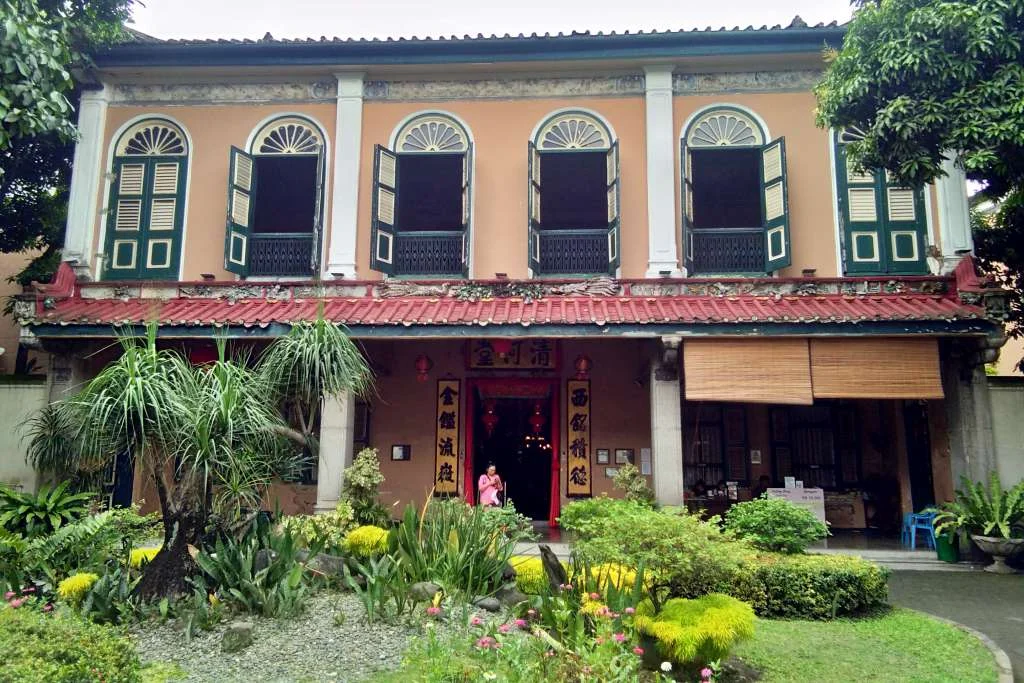
The historic district of Kesawan in Medan, the capital of North Sumatra, offers a captivating glimpse into Indonesia’s colonial past, anchored by the architectural and cultural marvel known as Tjong A Fie Mansion. Built during the height of the Deli plantation boom, this heritage landmark stands as a testament to the profound historical intersection of commerce, multiculturalism, and visionary philanthropy. Originally constructed as the private residence of the prominent 19th-century tycoon Tjong A Fie, the mansion has evolved into a vital cultural touchstone, drawing tourists, historians, and architecture enthusiasts eager to explore the sophisticated hybrid of Chinese, European, and Malay architectural design styles.
Architectural Splendor and Urban Integration in Kesawan
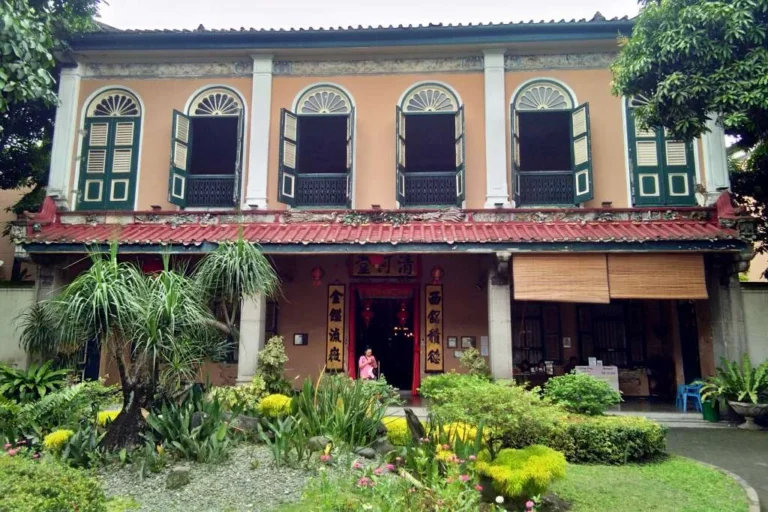
Located at 105 Jalan Ahmad Yani within the Medan Barat district, the Tjong A Fie Mansion is seamlessly integrated into a revitalized urban landscape. Recent infrastructural enhancements by the municipal government, notably the widening and modernization of pedestrian sidewalks along the Kesawan corridor, have elevated the area’s walkability and accessibility. Visitors navigating the historic corridor are greeted by an authentic architectural transition that culminates at the mansion’s entrance.

The facade of the property immediately establishes its Peranakan Tionghoa heritage. The main entryway features a meticulously crafted gateway flanked by traditional stone guardian lions, echoing motifs commonly found in East Asian temples, while vibrant red lanterns hang overhead to complete the composition. Stepping past the security and ticketing pavilion—where daily admission is fixed at 35,000 Indonesian Rupiah—visitors enter a lush, verdant front garden that buffers the bustling city streets from the tranquil interior of the estate. The mansion’s operating hours are structured to maximize public access, welcoming guests daily from 9:00 AM to 5:00 PM, with closures exclusively observed during the Lunar New Year celebrations.
The Life and Legacy of Tjong A Fie
Inside the sprawling two-story residence, the interior functions as an immersive museum chronicling the extraordinary life of Tjong A Fie, who was born in the Meixian district of Guangdong, China, in 1860. Arriving in the Deli region at the tender age of 17 during the late 19th century, Tjong A Fie initially joined forces with his older brother, Tjong Yong Hian. Through relentless determination and business acumen, the brothers capitalized on the booming agrarian economy spearheaded by Dutch entrepreneurs such as Jacobus Nienhuys, who had secured vast tracts of land for tobacco cultivation under concessions granted by Sultan Mahmud Perkasa Alam.
Over subsequent decades, Tjong A Fie’s business empire expanded exponentially beyond agriculture. His corporate holdings eventually spanned real estate, mining, banking, railways, and diversified plantations producing rubber, palm oil, tea, coconut, and sugar. This vast commercial network positioned him not merely as a wealthy taipan, but as a central architect of Medan’s early modern economy. In recognition of his leadership within the ethnic Chinese community—to which he was appointed leader in 1911—the Dutch colonial administration honored him with the prestigious title of Orde van de Oranje-Nassau.

Beyond his commercial successes, Tjong A Fie remains widely revered as an exemplary philanthropist whose worldview transcended ethnic and religious boundaries. Operating under a guiding philosophy encapsulated by his own words—"Success and glory consist not in what I’ve gotten but in what I’ve given"—he financed the construction of schools, hospitals, houses of worship, and civic infrastructure for the entire population of Medan. His passing on February 4, 1921, marked the end of an era, prompting widespread mourning across diverse communities in Sumatra.
Preservation Efforts and International Collaboration
The enduring legacy of the Tjong A Fie Mansion is largely attributable to sustained, multi-layered preservation efforts. Officially designated as a cultural heritage asset by the Mayor of Medan on October 28, 2021, the estate has undergone significant structural restorations to counteract the natural weathering of time and tropical elements.
A pivotal milestone in the mansion’s modern preservation occurred in 2013, when the property received substantial financial assistance from the United States government through the Ambassadors Fund for Cultural Preservation (AFCP). This targeted grant facilitated comprehensive structural stabilization, notably the painstaking restoration of the complex roof system and the meticulous repainting of interior and exterior elements to preserve their original hues.

These preservation milestones have not gone unnoticed by the broader cultural community. In October 2016, the Tjong A Fie Mansion was honored with the Purwakalagrha Museum Awards in the category of "Engaging Museum" (Museum Cantik), validating its role as an interactive and educational space rather than a static repository of artifacts.
Socioeconomic Implications and Cultural Impact
The preservation and ongoing operation of the Tjong A Fie Mansion carry broader implications for cultural tourism and urban identity in North Sumatra. By maintaining a site that seamlessly blends Chinese, European, Art Deco, and Malay architectural elements, Medan reinforces its identity as a historically pluralistic society.
Experts in urban heritage management note that sites like the Tjong A Fie Mansion serve as vital educational tools, demonstrating how early immigrant communities integrated with indigenous populations and European administrators to forge a resilient local economy. Furthermore, the property acts as an economic anchor for heritage tourism in the Kesawan district, encouraging visitors to spend time exploring surrounding historical structures and supporting local enterprises.

Ultimately, the Tjong A Fie Mansion transcends its physical boundaries as a preserved colonial-era residence. It stands as a physical archive of Sumatra’s economic history, a tribute to cross-cultural harmony, and a living reminder of a visionary leader whose philanthropic footprint continues to resonate throughout Medan more than a century after his passing.